Exercise
Capture ‘the beauty of artificial light’ in a short sequence of shots (‘beauty’ is, of course, a subjective term). The correct white balance setting will be important; this can get tricky –but interesting – if there are mixed light sources of different colour temperatures in the same shot. You can shoot indoors or outside but the light should be ambient rather than camera flash. Add the sequence to your learning log. In your notes try to describe the difference in the quality of light from the daylight shots in Exercise 4.2.
Research
For this exercise I was thinking ahead to the creativity section of this part of the course. I wanted to capture the light around my place of work which is on the Southbank of the Thames in central London, but I didn’t want to capture the typical sights that normally get taken. I did a google search of London at night and got this result.
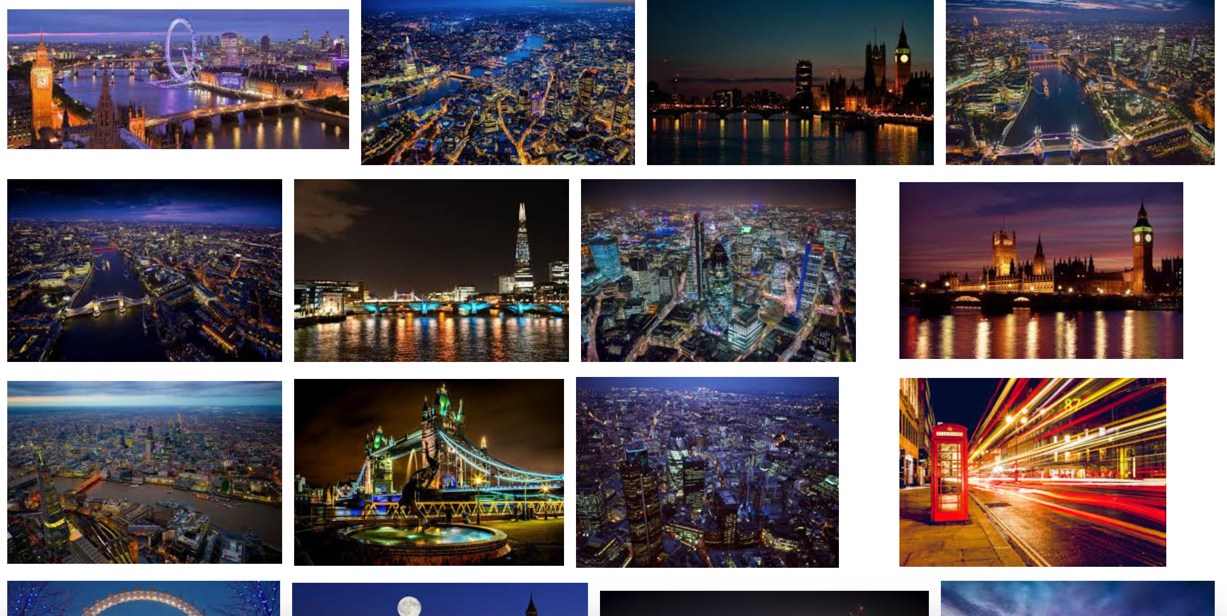
What struck me is that there are many shots of Big Ben, The Shard, London Bridge and The Eye along with high up views taken from various sky scrapers. All these sights are very close to where I work and so I could have fallen into a trap of replicating some of these but I was determined to try to expose something different.
I had also researched:
Sato Shintaro whose images are striking and show various cityscapes. Sometimes his images are close framed, such as in his series ‘Night Lights’ and other times he shows complete city skylines. The lights he has captured are striking and it is this style that more aligns to my thinking for this exercise than that of Luxembourg.
Rut Blees Luxemburg whose images I find stunning both in their aesthetic look but more importantly in the emotion that they provoke and in what they leave to the imagination of the viewer. These images may well inspire me for the assignment at the end of this module. Thinking back to my research on natural light, these images remind me the intent of Mann in that I think Luxemburg is intending to evoke emotion more importantly than creating an accurate record of the scene.
After the google search and my research into the two photographers I decided that I would return to my original thought and show some of what is around my place of work. The view is almost returning to the Square Mile concept from Assignment 1, but this time my square mile is where I work. As the exercise is about the light itself, I wanted to capture a record of it, rather than evoke the emotion of the mile.
Technique
Shooting at night can require long exposures and therefore demand a tripod to achieve sharp results. However, I wanted to portray the area by dynamically capturing what I saw as I walked around; I felt a tripod would make the images more static.
I chose to set the camera to ISO 800 and also my lens included Nikon’s Vibration Reduction. With a medium aperture of f7.1, I found that I could achieve a shutter speed of around 1/25s which although a little slow, I found I could achieve sharp shots.
Images
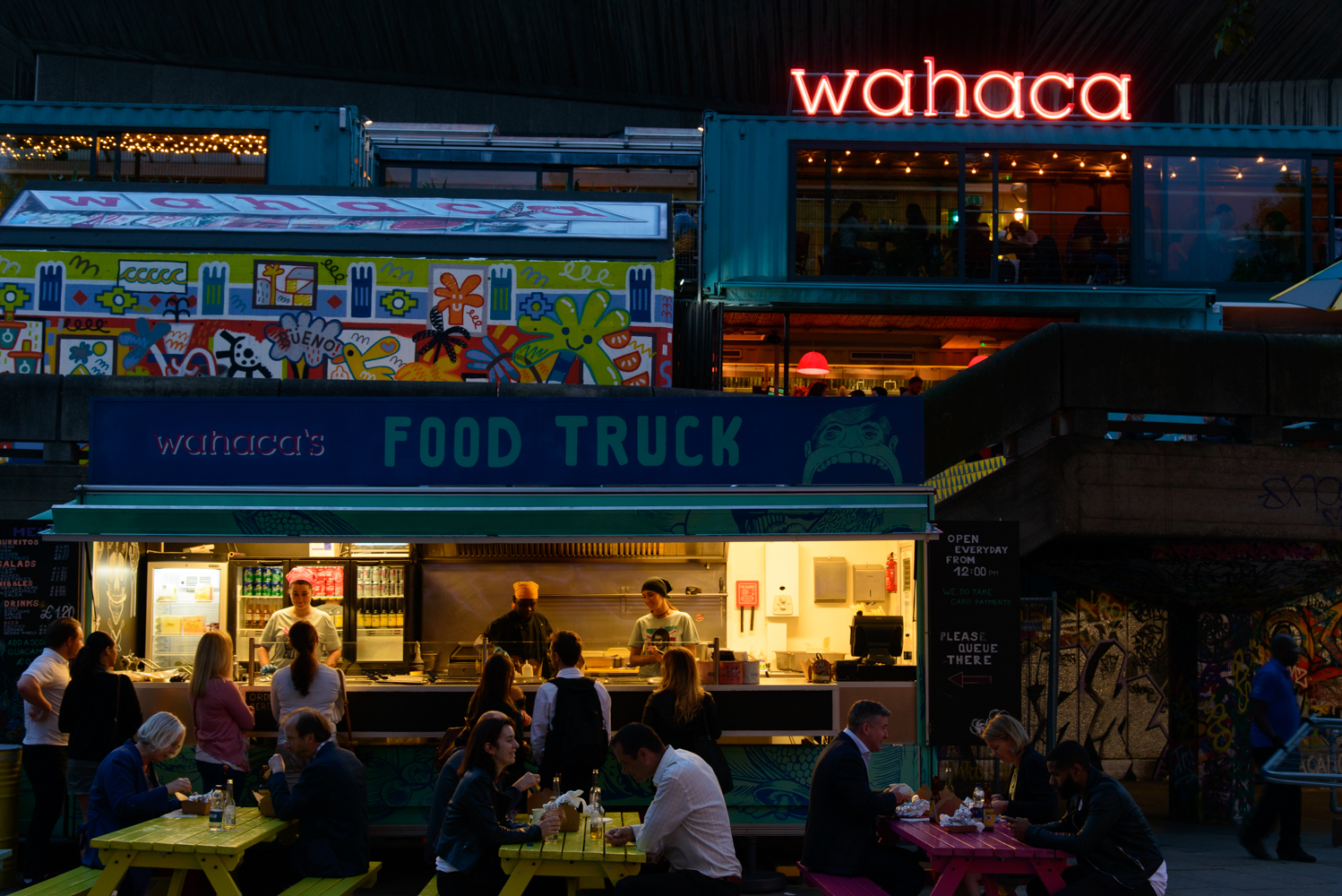
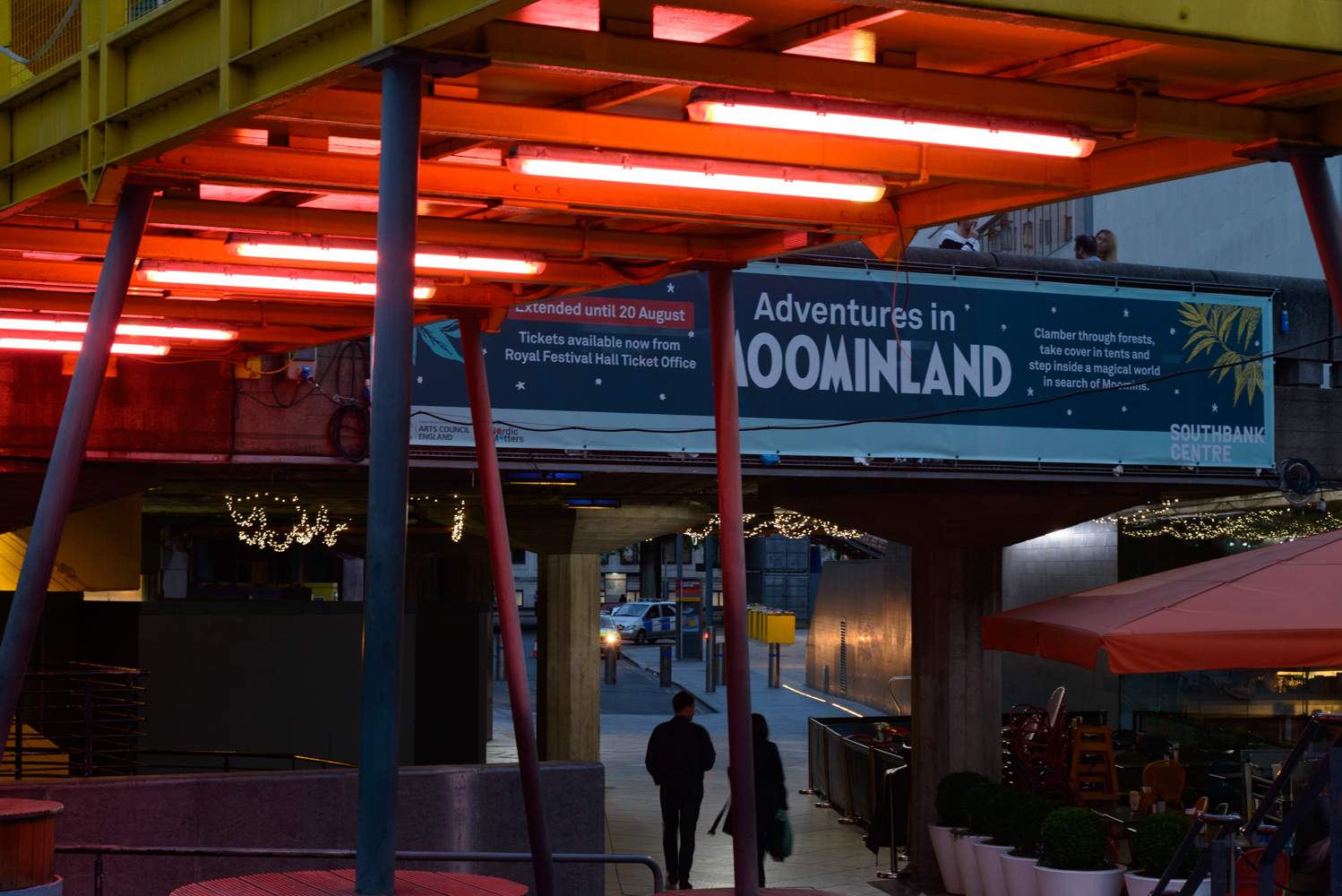
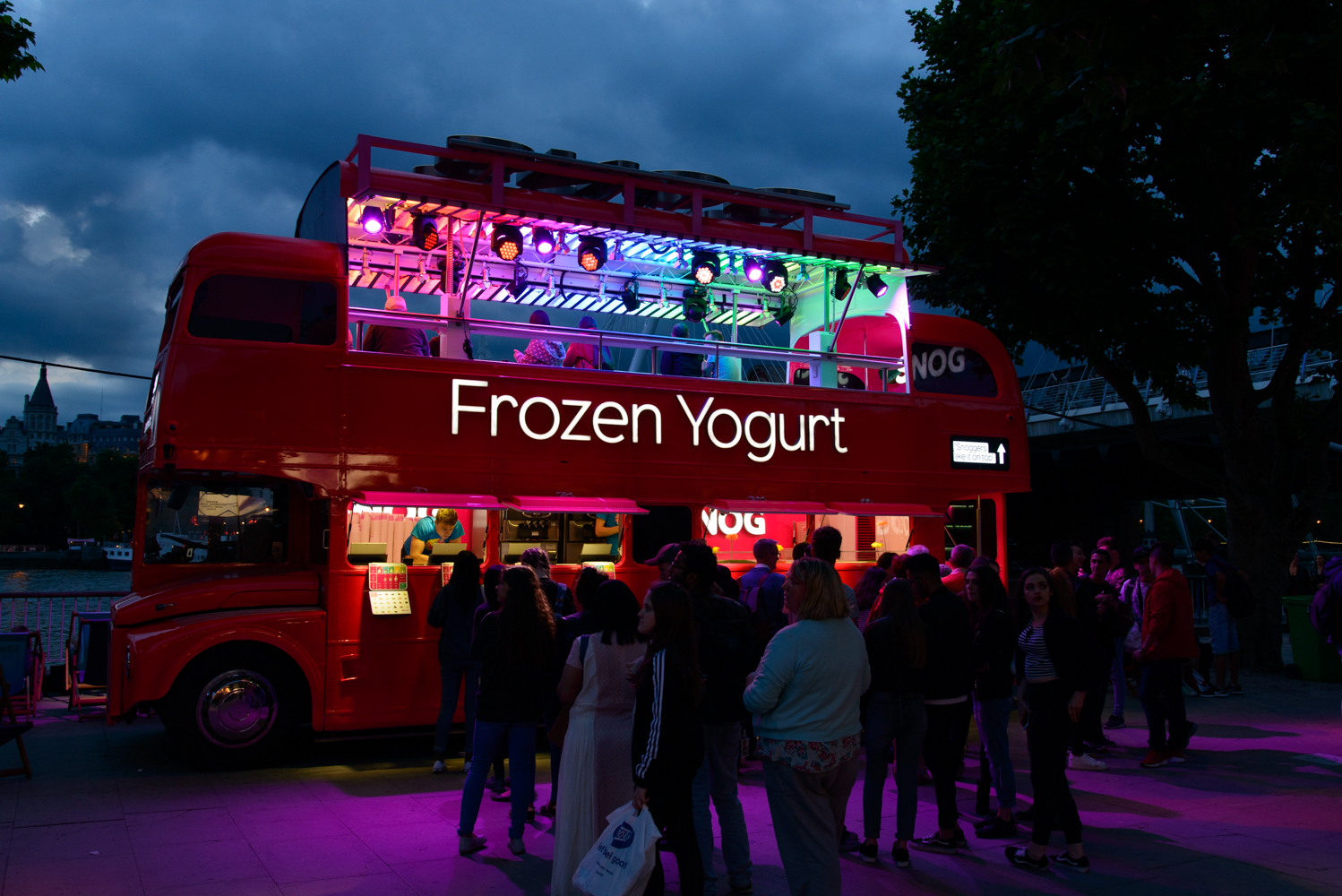
My selected images are shown below.
In terms of the quality of the light.
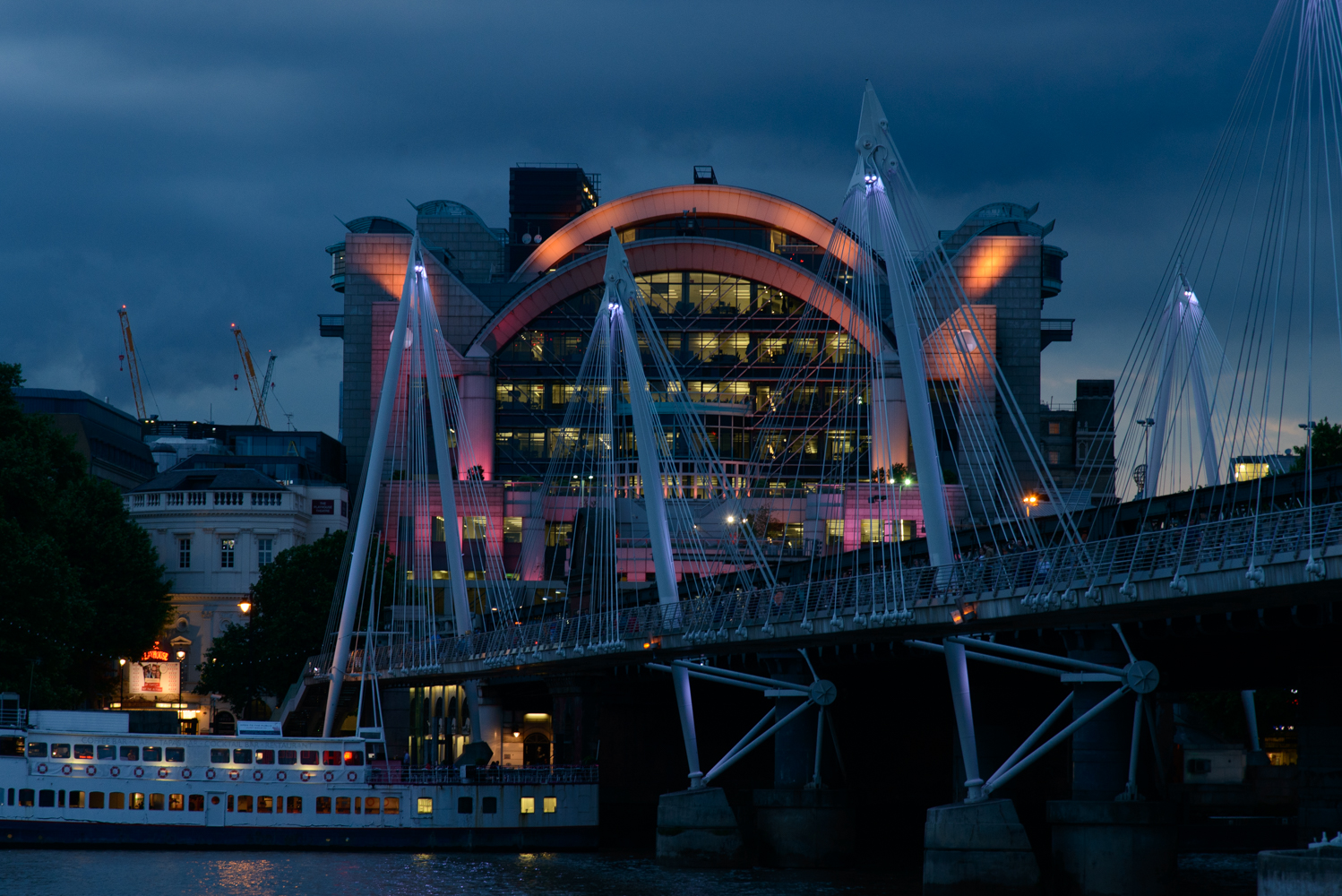
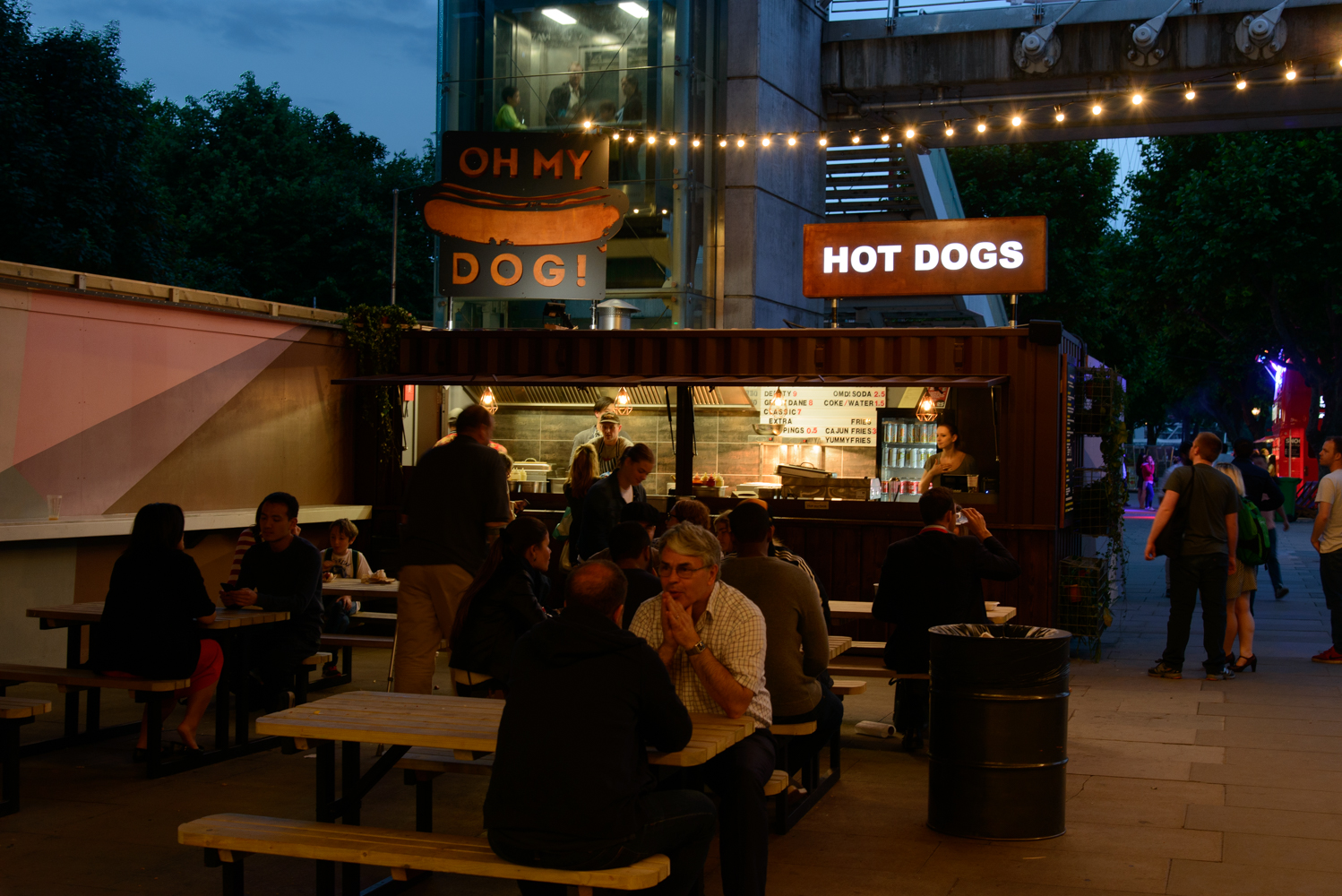
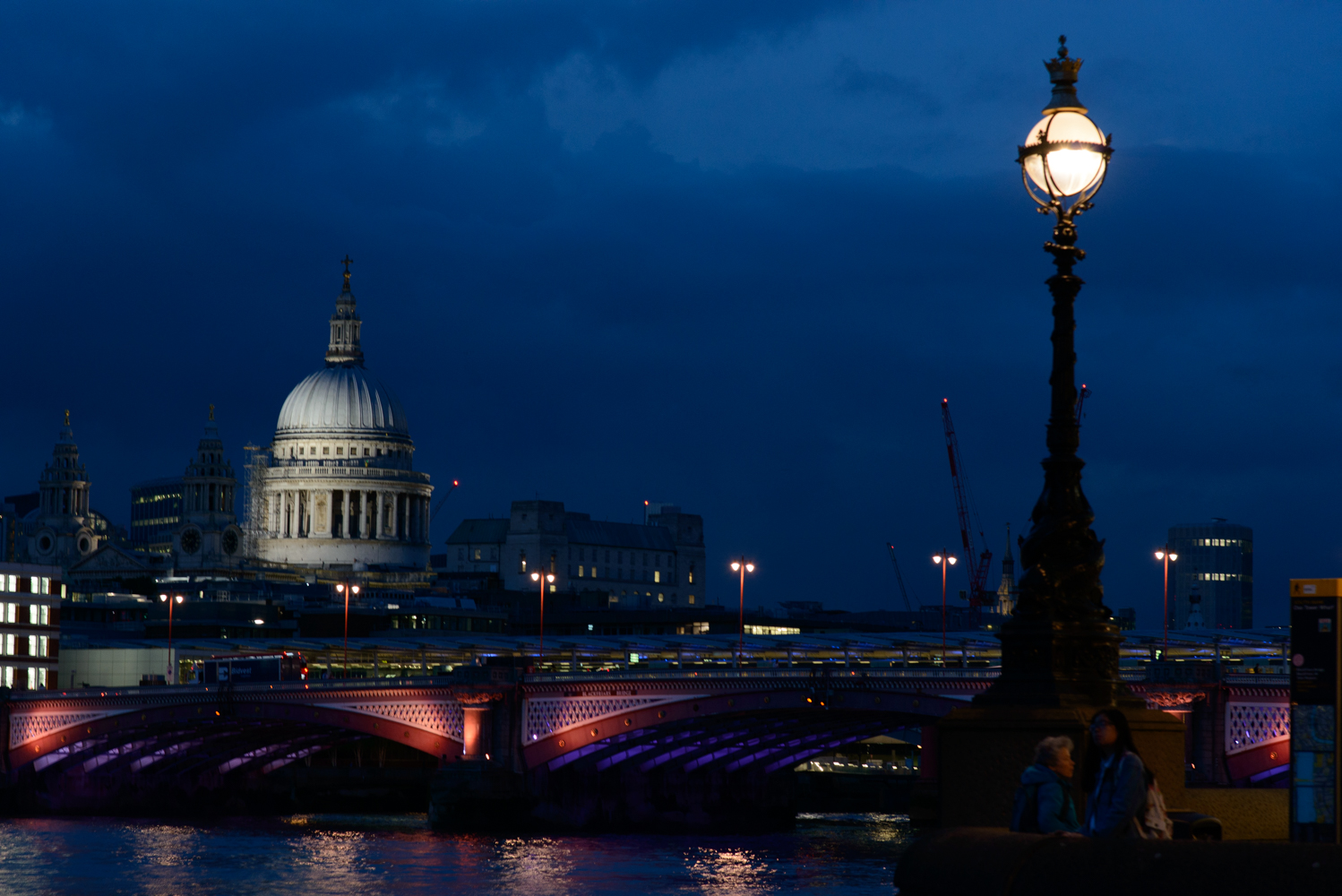
Ambient Light – I started taking these shots at 2120 which was 20 minutes after sun set. The images are shown in the order they were taken and it is possible to see that the ambient light is reducing over the hour and half that I was shooting. The ambient light is creating a blue cast to most images and this gets stronger as time moves on.
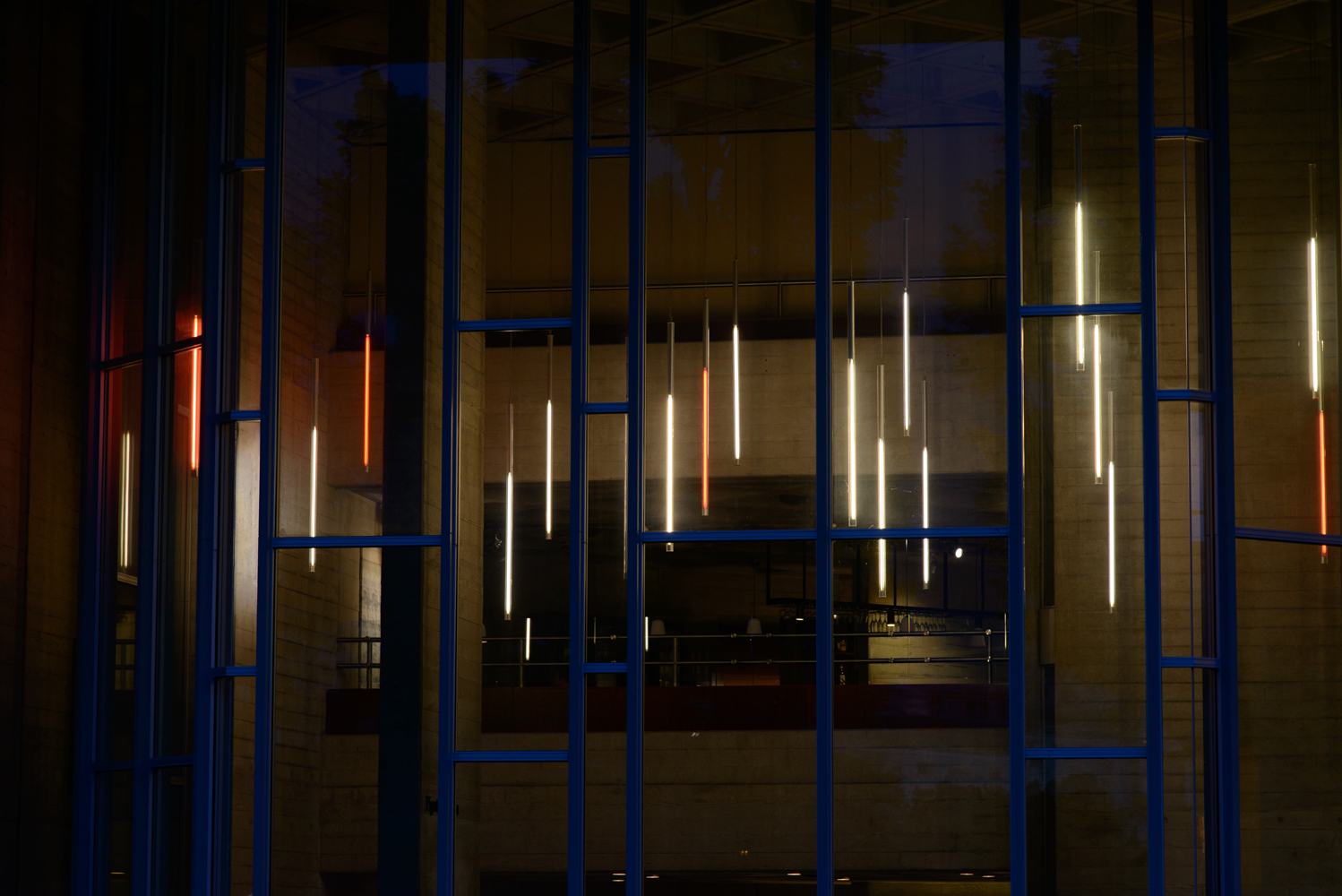
Artificial Light – The impact of the light varies between shots. In Images 1, 2, 3, and 5 the light is bright and bold and the colours are vivid. In Images 4, 6, and 7 the light is much more subtle. In fact Image 4 is Charring Cross station and it was the subtle and soft lighting on its face that caught my attention.
Learning
I have learnt that, just as for the day time shots, at this time of day which is not long after sunset, it is still necessary to consider the background or ambient light and therefore the timing of the shot. In particular if a series of shots is being taken, it may be necessary to consider the changing light even within the same shoot.
The artificial lights themselves can play three different roles:
- They can be part of an overall scene as in Image 1 where they play a bold graphic part of the image itself but the image is still more than just the lights.
- They can be an enhancement to a scene that would stand even without them as in Image 4 which would still be a nicely framed shot even without the facade of the station being lit.
- Or, as shown in Image 6, they can be the basis of the whole image; without the lights, this shot which is looking through a window at the National Theatre would have no value at all.