Exercise (Part 1)
Set your camera to any of the auto or semi-auto modes. Photograph a dark tone (such as a black jacket), a mid-tone (the inside of a cereal packet traditionally makes a useful ‘grey card’) and a light tone (such as a sheet of white paper), making sure that the tone fills the viewfinder frame (it’s not necessary to focus). Add the shots to your learning log with quick sketches of the histograms and your observations.
Outcome (Part 1)
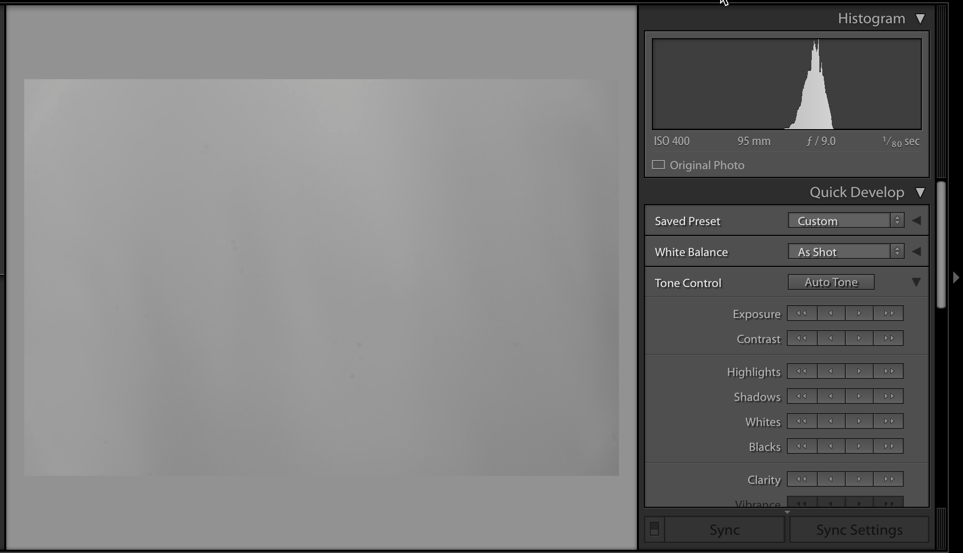
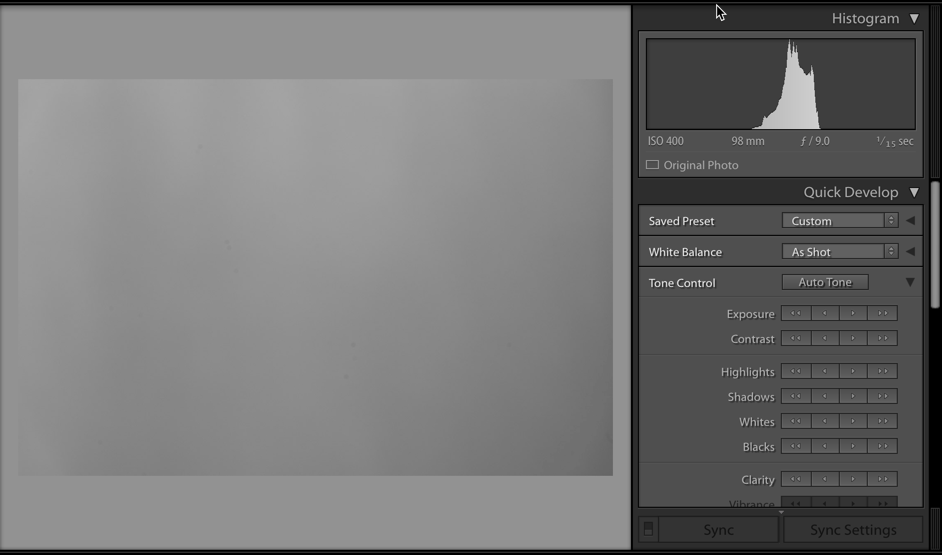
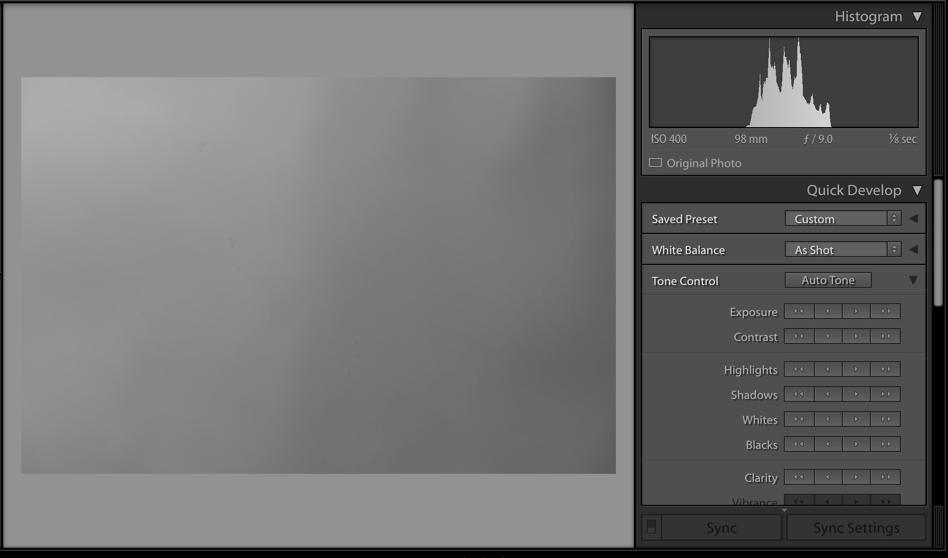
I was a bit sceptical about this exercise even though I have read about this effect before in magazines. However, the three images below show the predicted outcome. The camera has exposed for the mid tones and set the exposure so that the histogram is in the middle of the scale, irrespective of the card used. The result is that all three images look the same.
The black card had a few creases on it and this has led to light reflecting at slightly different brightness levels, in turn that is caused a slightly broader peak in the histogram.
Exercise (Part 2)
In this part, manual control has been taken of the camera. I used shutter speed to vary the exposure and the on-camera histogram to judge the correct amount of adjustment – for white the peak should be at the right and for black to the left.
Outcome (Part 2)
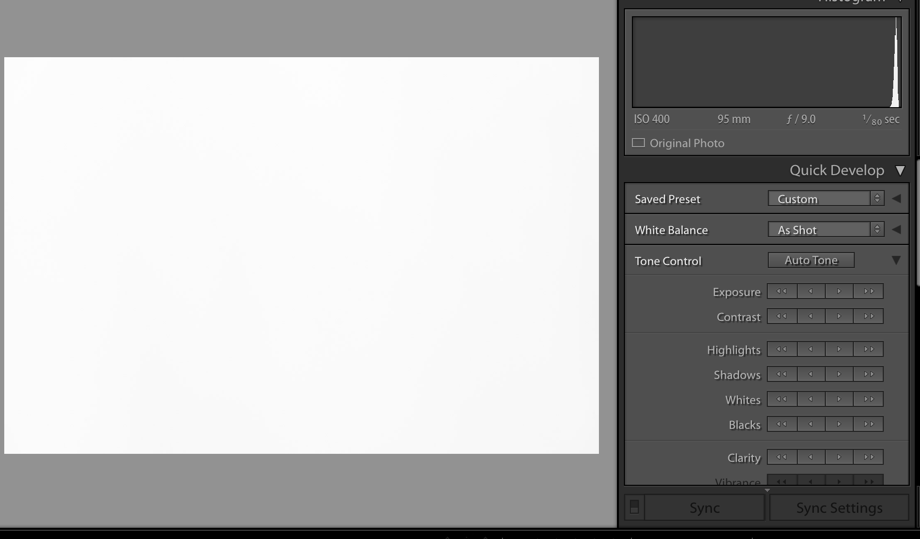
For the white card, I had to slow down the shutter by three stops to place the histogram across to the right hand side. The image shows that the card is now depicted as white.
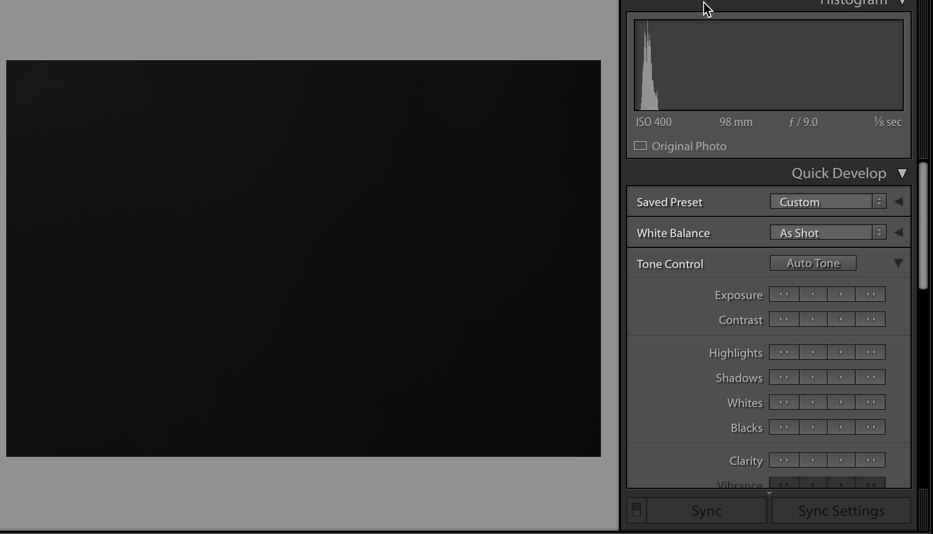
For the black card, I had to speed up the shutter speed by four stops to achieve a peak at the left hand edge and a fully black image.
What I learned
First of all I learned that this effect is not a myth!
Importantly, I learned that for my specific camera, a Nikon D800, darks will require slightly more adjustment then lights in order to achieve an exposure that represents the scene. In reality, what is most important when taking a shot, is to remember to check the histogram and make sure that its general bias is what should be expected for the general brightness of the scene.