Exercise
Take a number of shots using lines to flatten the pictorial space. To avoid the effects of perspective, the sensor/film plane should be parallel to the subject and you may like to try a high viewpoint (i.e. looking down). Modern architecture offers strong lines and dynamic diagonals, and zooming in can help to create simpler, more abstract compositions.
Thinking
I took a look at some of the images taken by other students for this exercise and saw that many are taken from the top of car parks or the like and are of the faces of tall buildings. I wanted to push myself beyond this and see if I could create flat images from something more distinct.
On Southbank in London, around the area of the National Theatre or Festival Hall, there is a set of buildings that were built in the 1960’s, are all made out of concrete and somewhat lacking in classical architecture. However, with age, they are very distinct and are made up of lots of straight edges. I decided to take my pictures for this exercise here.
Pictures
All pictures are taken on the same day and taken using my small Sony CSC camera which I find very useful for walking around a town with, and certainly for taking to work and using at lunchtimes (which is what I did here!). No adjustments are made to these images other than some very minor adjustment to contract and saturation and then to export them as jpeg files as they were shot in raw.
Image 1 – Stairs or Stripes?
This image is taken looking down on some stairs on the ground. It is taken from about 5 stories up on a balcony.
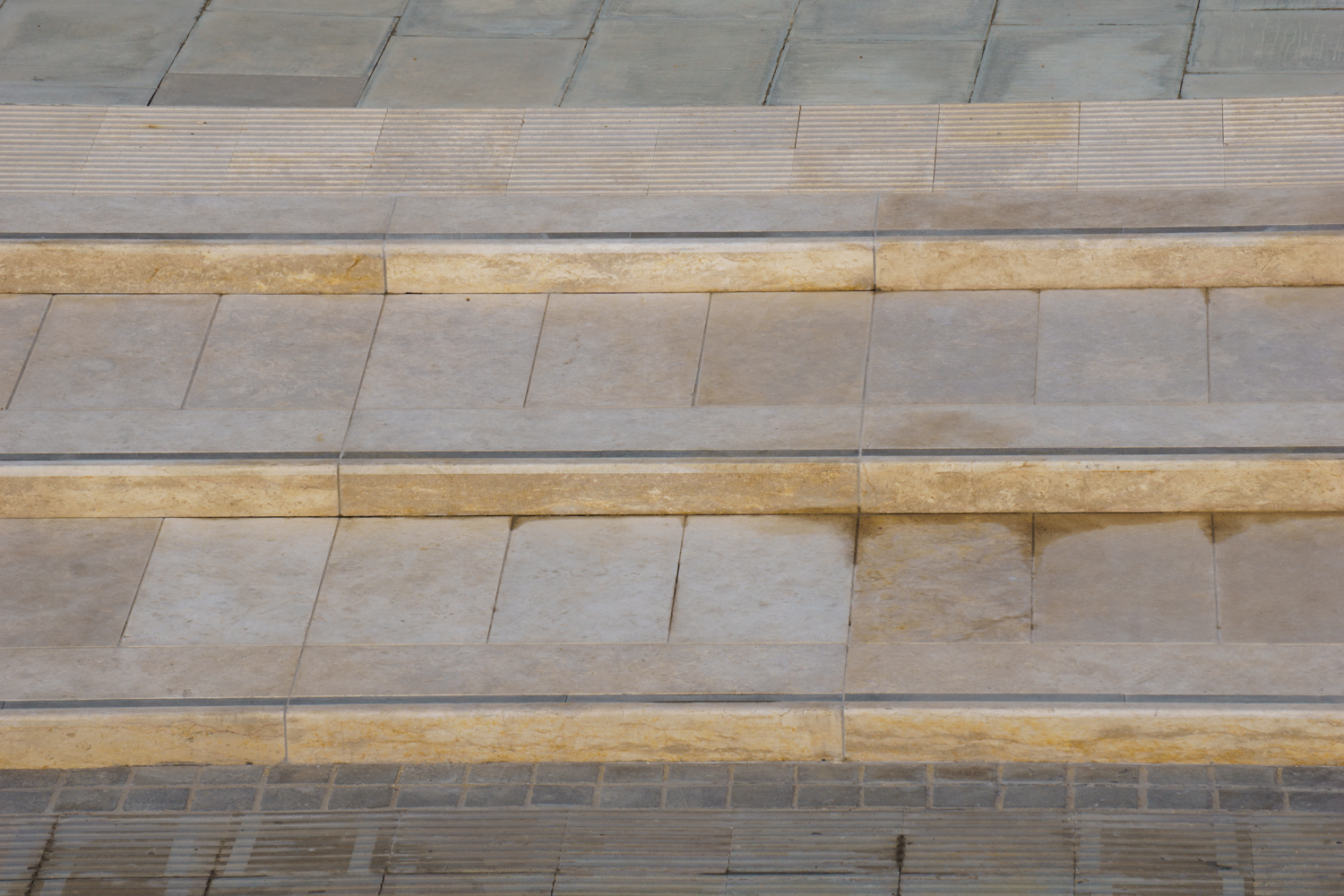
I think the image is successful in terms of creating something flat. The major lines extend straight out of the picture on both sides and divide the frame into a series of rows. The paving slabs create more minor lines on the vertical axis and add some nice detail to the image.
The image seems intrguiging to the mind because once you suspect that it is stairs, you know that the image isn’t flat, and yet it looks flat. The perspective on each step tells you that this is stairs but you cannot tell if they are going up or down, or is it a bench with the centre piece being raised up as a backrest? Or is is simply a flat surface with stripes? You cannot tell.
Image 2 – Angles
This image looks onto the side of Waterloo Bridge and is taken from the building next to it at a level half way up the side of the bridge.
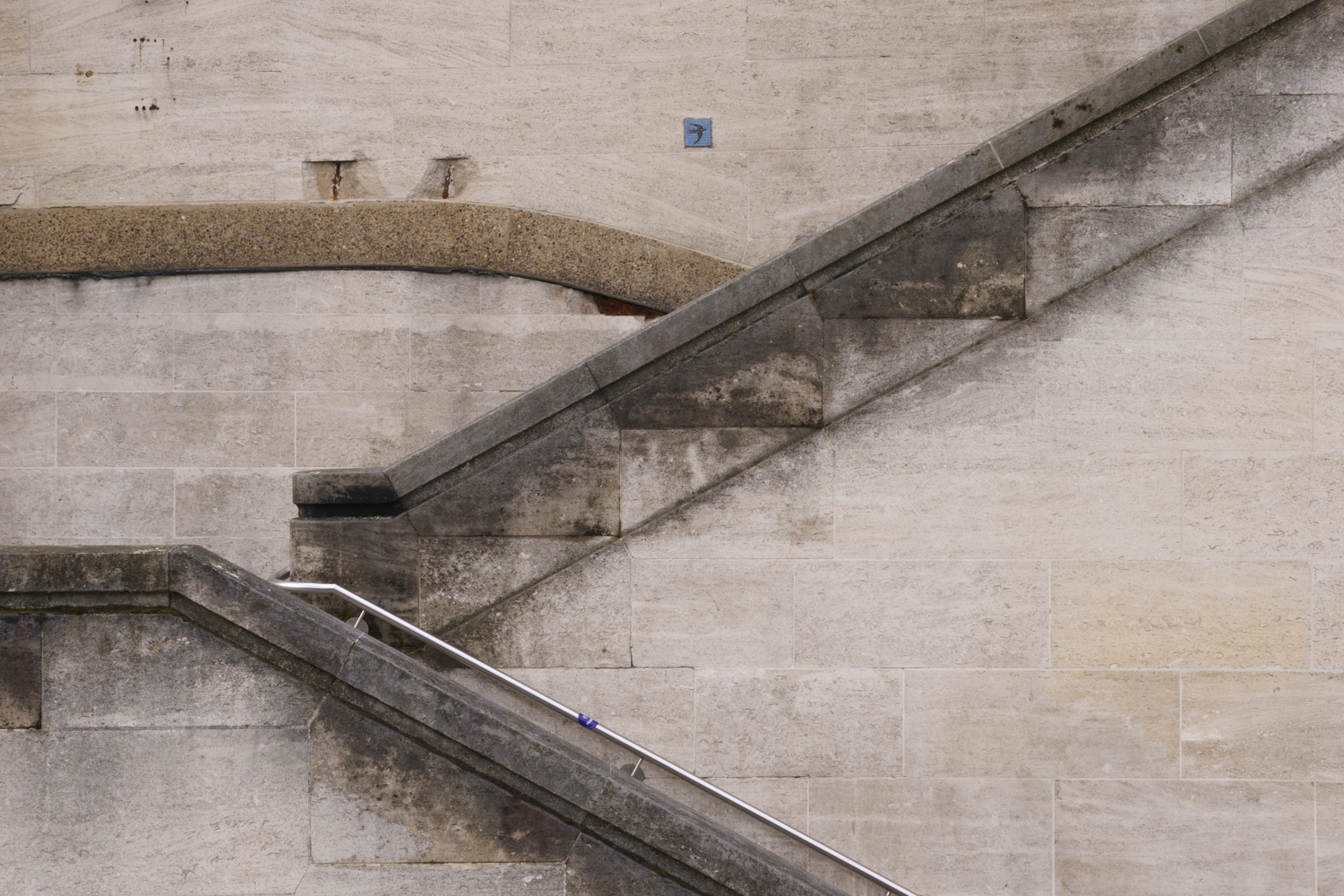
This is my most successful image in terms of being flat to the eye. As the picture is taken absolutely level with the bridge, it is not possible to see the top of the bottom of anything which would have given a hint towards depth.
You can tell that the image is a set of stairs up the side of the structure (certainly the handrail gives this away) but there is no way of knowing how deep the staircase is, or even if there really is one at all. In fact, the stairs are about 6 people wide, but you cannot tell that from this image.
I like this image because of the a way in which lines head in different directions and create a nice geometrical pattern. Even though the lines travel out of the frame, it feels like they emanate from the place that they meet on the left and when my eyes move out, they return to this point.
Image 3 – Confusion
This image is taken of the National Theatre and is typical of its structure with its many angles and platforms.
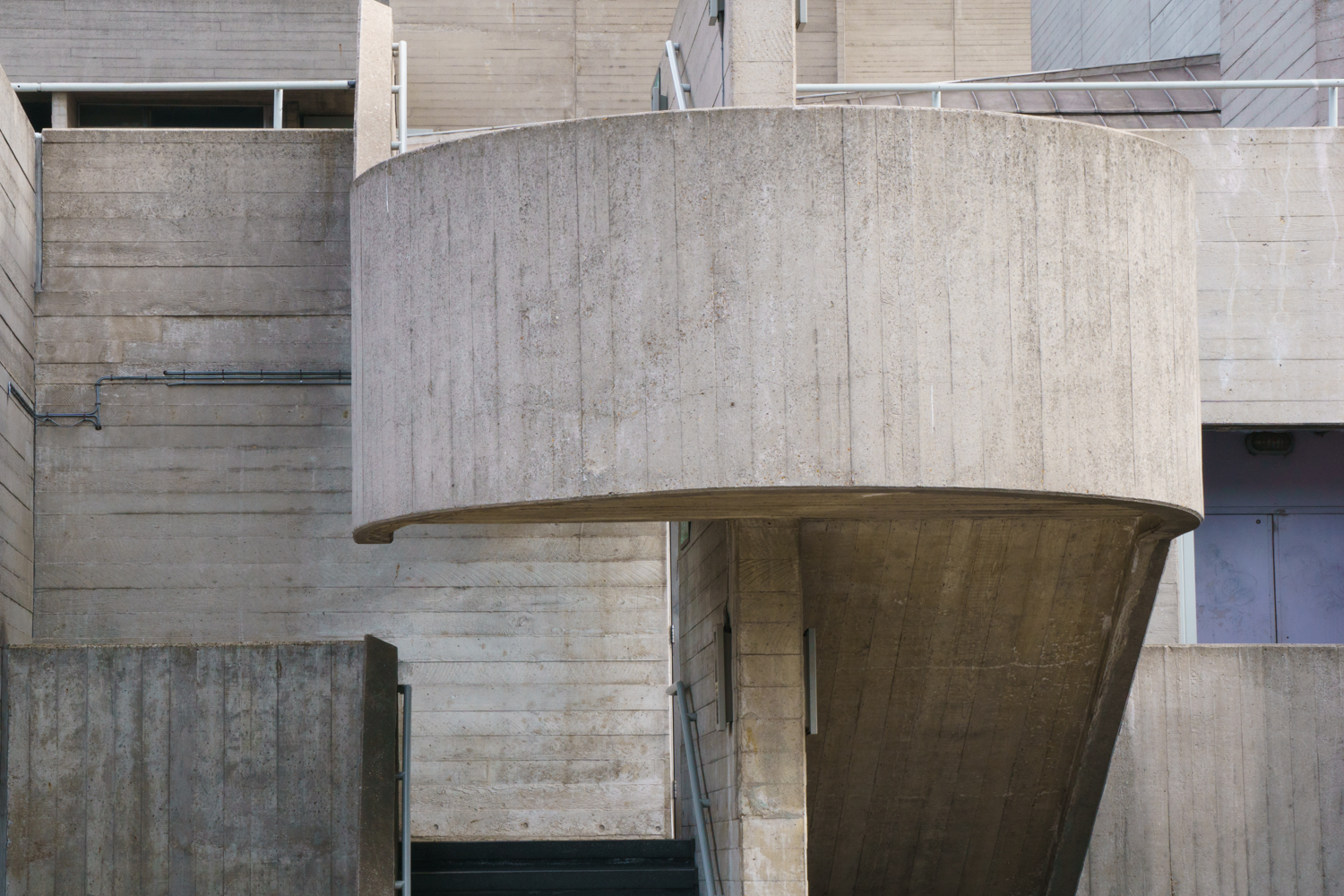
I feel that the image is successful in terms of creating something that is appealing to the eye and creates something confusing that takes some time to study and work out what is what. There are many lies travelling in multiple directions and I have isolated this image so that no line actually goes anywhere.
In terms of flatness, this image is the least successful though. Because it is taken from below the centre of the curved balcony, you can see the underneath of it and see that it is in shadow. To the hitman mind, these are enough clues to work out that the curved structure is sticking out from the rest of the building. It is actually sticking out a lot more than it looks in the image so there is some success, but, you can tell this is not a flat surface.
For the lines themselves, there are many, in all directions, and the majority leave the frame. Because there are so many lines in so many different directions, I find my eyes constantly dart around the image rather than follow a line off the side.
What I learnt
I enjoyed this exercise immensely. I would normally be looking for lines to act in a leading capacity and so finding lines to act in the way they do here was a surprising pleasure.
What I have learnt is that by isolating points of reference and perspective, it is possible to create something that is either flat, or that the viewer can deduce is probably not flat but is unable to tell where the depth is or the direction of something (as with Image 1).
I have also learnt that any hint of perspective is sufficient for the mind to work out what depth is where even if the full information is not available within the image to work it out with 100% certainty.
I am glad I decided to take the approach that I did, I do not think that I would have learned these lessons simply photographing hi-rise buildings from a roof top. I think the learning is valuable and I feel inspired to investigate this style of photography further.
Very interesting and I like number 2 best
Thanks Zoe