The Exercise
Take a number of shots using lines to create a sense of depth. Shooting with a wide- angle lens (zooming out) strengthens a diagonal line by giving it more length within the frame. The effect is dramatically accentuated if you choose a viewpoint close to the line.
Setup
For this exercise I took all of my picture at Courts Garden, Holt, a beautiful garden in Wiltshire and well worth a visit for anybody that is in the area. The garden has a mixture of formal and informal areas and my thinking ahead of time was to make use of the formal path and grassed areas to complete this task.
I took my Nikon D800 camera and was using my walkabout 24-120mm lens.
The Images
Image 1
This is my first image taken at a wide 24mm an which makes use of a long grass area leading up to a small building.
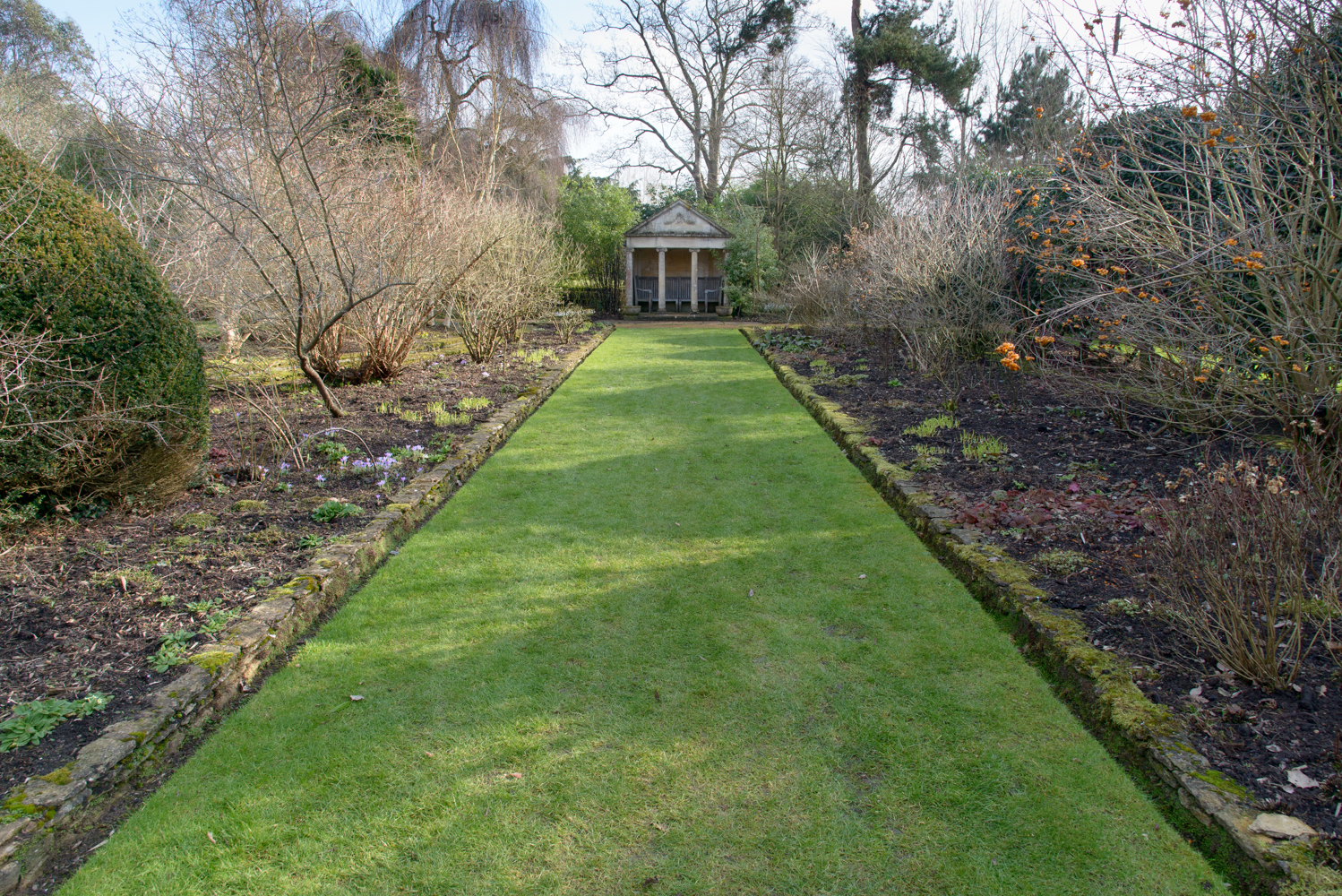
I framed the edges of the pathway to meet at two bottom corners of the picture and there is certainly a sense of depth as . That said, because the grass section does not have any detail or anything to look at, I find that once my eyes have followed the path up to the building, they stay at the building. So what have I have really ended up with is an image that just makes the building look far away, the lines have created depth, but they seem only to accentuate that the building is far away in the shot, I feel myself wanting to be closer to it.
Image 2
In this second image I have used a path with a building at the end of it similar to Image 1 however there is more detail in the path. I took this image with my lens at 50mm as despite wanting to portray depth, I wanted to compress the image a bit and make the building closer.
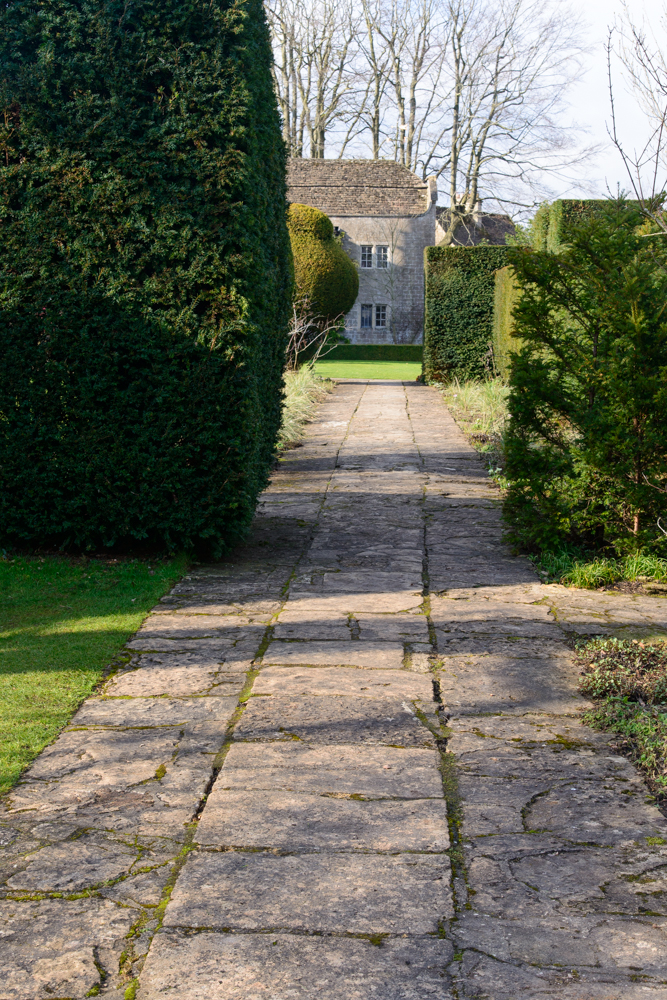
As well as using a slightly longer lens to bring the building forwards, I also took this picture in portrait format to accentuate the run along the path. I find that this image has a lot more depth to it than Image 1. I think there are a number of differences:
- The lines along the edge of the path start along the sides of the photograph, this makes me feel like I am already on the path whereas Image 1, I feel like I am stood at the end
- There is interest along the path, both in terms of the surface of the path and there are hedges along the way, I find my eyes do stop at each of the hedges but then cary on along the path. With the interest along the path, I feel that it is part of the image and my eyes move up and down it, creating a feeling of depth. I didn’t get this in image 1, where I simply felt that I was too far away from the building.
- The longer lens has brought the building closer and I feel content that I can see it as part of the overall image.
For me, it is point 2 that is the important point here, having interest along the path is causing me to look up and down it which is creating an enhanced feeling of depth (as well as a more interesting image).
Image 3
For Image 3, I decided to experiment with curved leading lines.
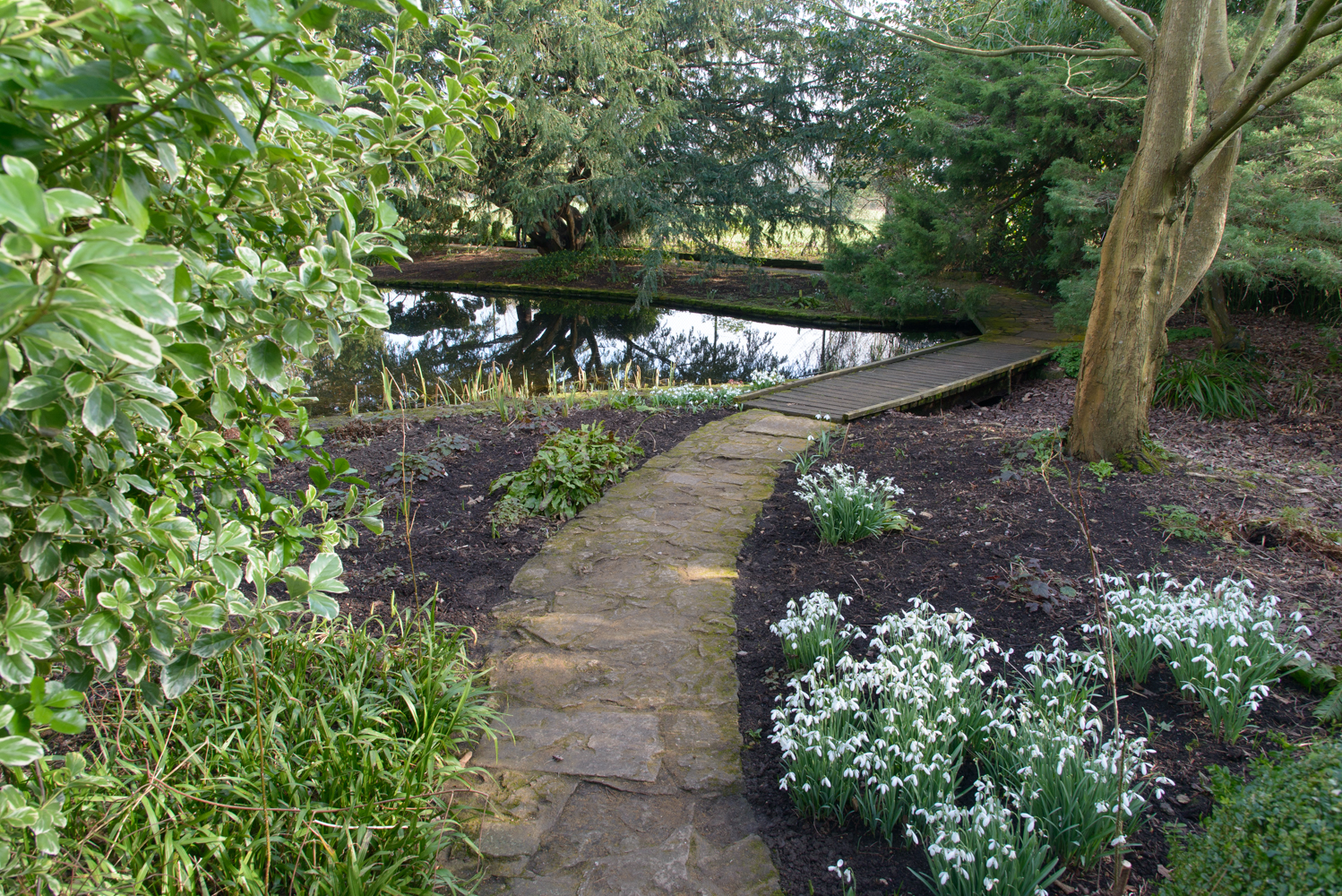
This image again uses the path but this time, it curves first across a bridge and then over to the left of the image around the lake.
Looking at the image, I find my eyes move in the same direction that I just described. I took the image in landscape format but even despite this, I feel a sense of both depth and width when looking at this image as that is the way the line flows.
Like Image 2, there are things to look at along the path and so I find that I look up and down the path multiple times which accentuates the feeling of depth.
Image 4
For this image, I took a slightly different perspective. This image uses the absence of anything to create a leading line.
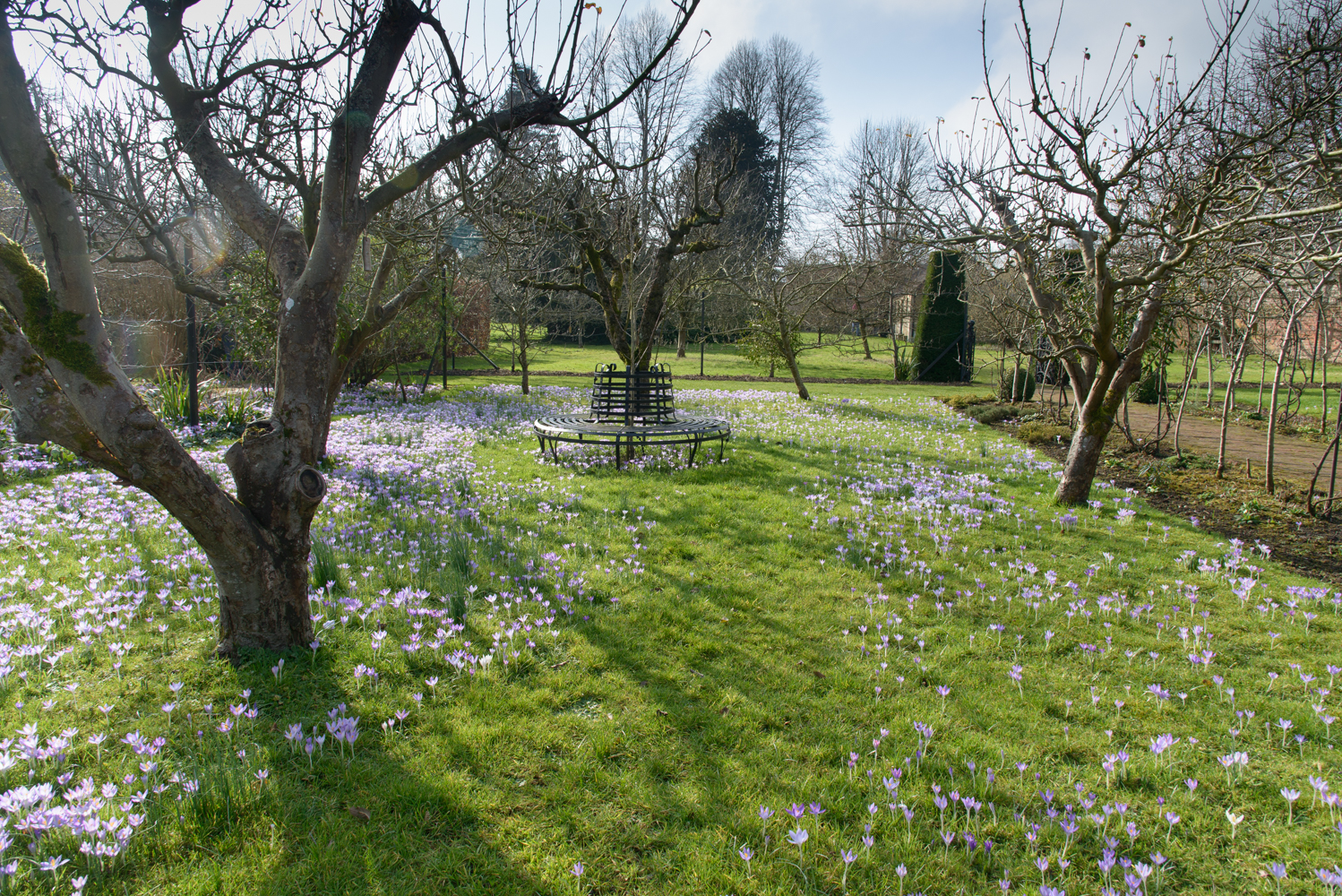
Taken in the less formal part of the garden, I was lucky enough to come across this area in sunshine and at a time when crocus were in full bloom; it evoked a lovely feeling of spring.
I noticed that the walkway to the park bench was created by the absence of crocus blooms rather than by a formally marked path. This absence creates a path and a leading line.
When looking at the image, I do feel a good sense of depth, my eye is drawn to the bench but I see the periphery of the flowers at the same time, and the tree to the left is also along the journey of the path to get to the bench, There is also more garden to the rear of the bench which the eye is drawn perhaps by momentum as it looks along the path.
As with Images 2 and 3, I think this image works because there is detail along the depth created by the line. I was interested in the ability to create a leading line through the absence of what is elsewhere in the picture.
What I Learnt
Before assessing these images properly, I took a quick look and thought that Image 1 would be the one with most depth as it has the strongest set of leading lines. After further analysis, I found it has the least depth for me.
What I have learnt is that as well as the good leading lines, it helps greatly to have interesting things along the line. The line serves to guide the eye, but the interest in the picture helps keep the eyes moving back and forth along the line, rather than getting stuck at the end.