Exercise
Take two or three photographs in which a single point is placed in different parts of the frame. (A ‘point’ should be small in relationship to the frame; if it’s too large it becomes a shape.)
How can you evaluate the pictures? How do you know whether you’ve got it right or not? Is there a right place and a wrong place for the point? For the sake of argument, let’s say that the right place shouldn’t be too obvious and that the point should be clear and easy to see. As there’s now a ‘logic’ to it, you can evaluate your composition according to the logic of the point.
Set Up
I decided to take these pictures in my back garden as I wanted to make the thought process of the exercise about the point, rather than about the content of the overall picture itself. I set up my camera with a tripod so that all the pictures would be the same as each other and leave me free to move the point around.
I also chose to use a very bright item to create the point so that there would be little doubt that the point would be clearly visible in the photograph. I was also interested to see if the bright point overpowered the rest of the image, irrespective of its position.
Part 1 – Random Framing
Take two or three photographs in which a single point is placed in different parts of the frame.
I was conscious that as positioner of the point, I was aware of where I was putting it in relation to the frame. Therefore, to achieve random positioning for these photographs, I walked around the frame carrying the point whilst using a random timer on my phone. When the timer went off, that is where I placed the point. There is only one image I discarded with this technique as the point turned out to be exactly on a Rule of Thirds intersect and that is an image used in Part 2.
Image 1
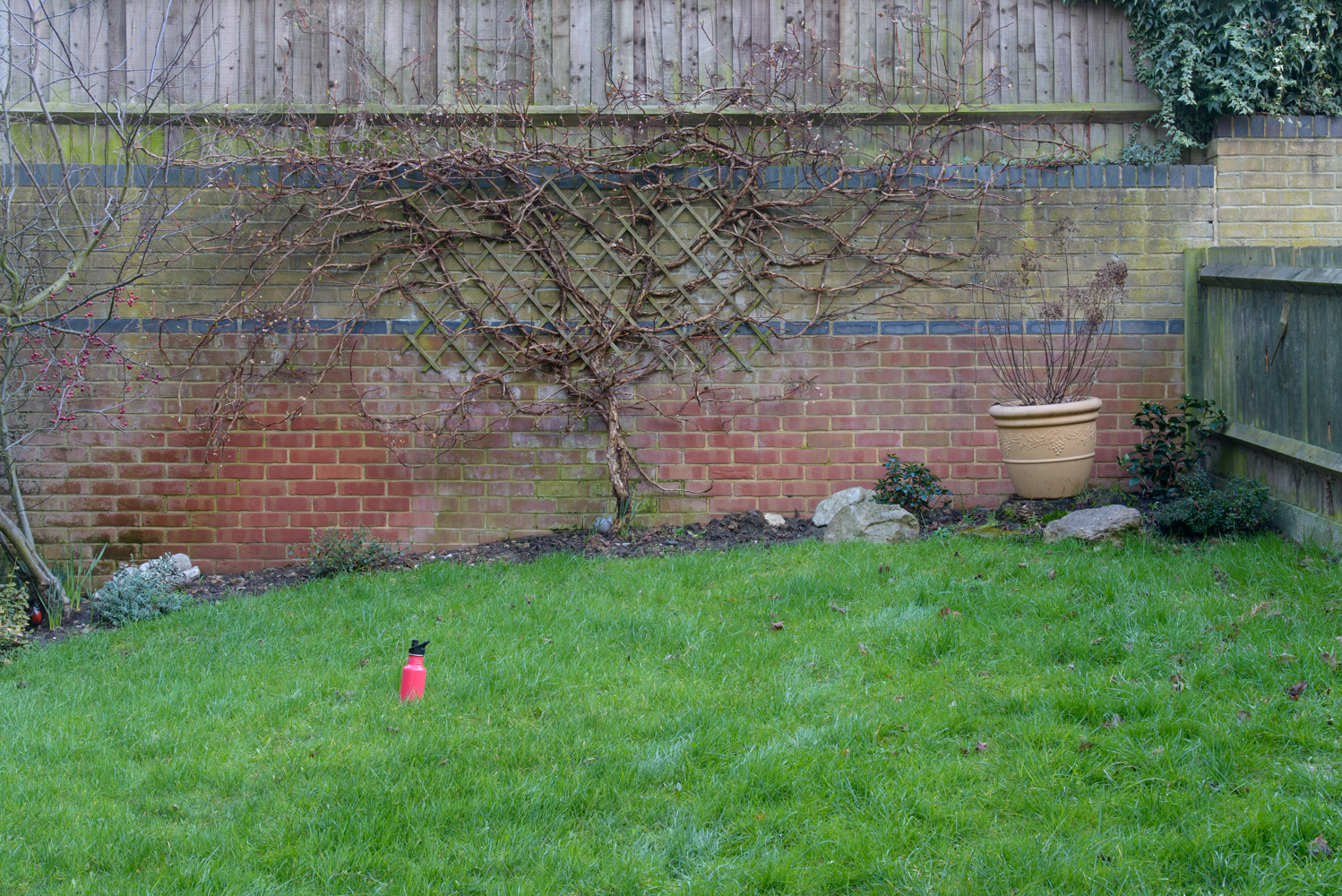
In this image, the point has ended up in the lower part of the image but central on a horizontal access. I find that my eyes are drawn first to the point but then they travel up to the rest of the picture. This eye movement seems to create a sense of depth, the movement makes it clear that the point is further forward than the rest of the picture. I don’t find that my eyes are captured by the point, simply that it serves as an entry point to the image before my eyes travel elsewhere. This is actually quite a useful effect for a real picture.
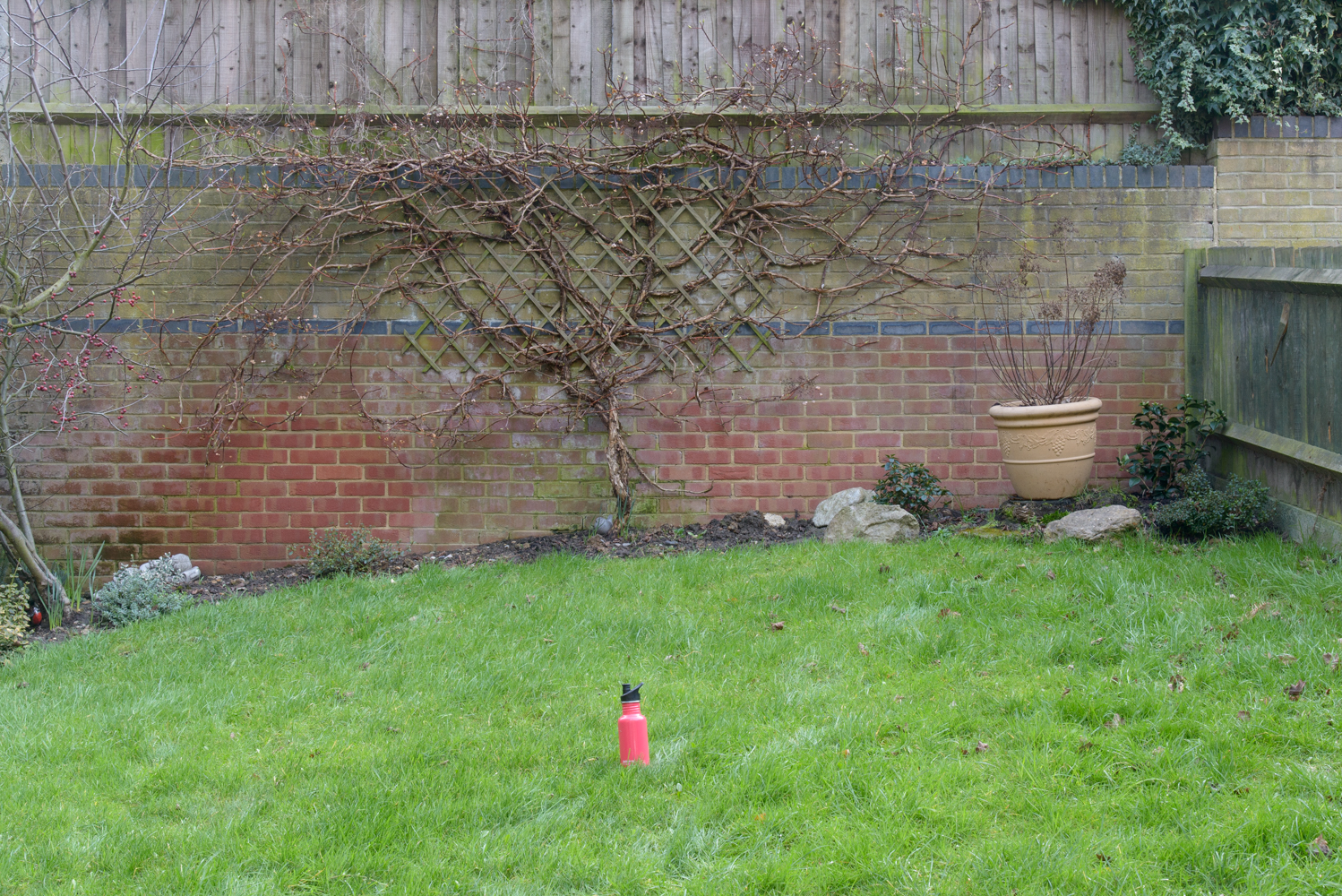
Image 2
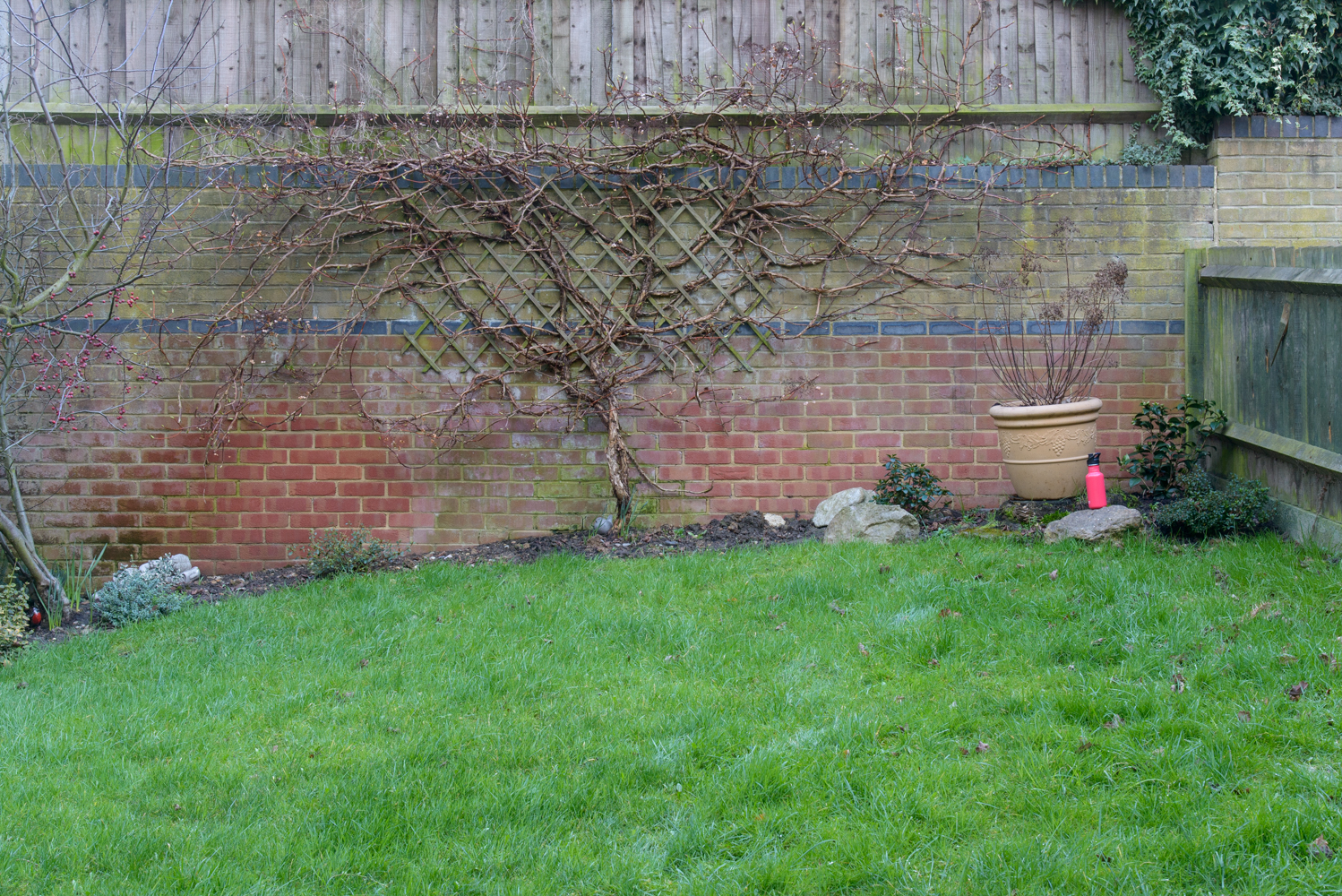
Here the point has ended up on the vertical centre but across to the right on the horizontal. In this position, the point is clear and it does draw my eye to it, but only after looking at the overall image as a whole. It feels as if the point is drawing me away from looking at the complete image, I find myself wanting to go back to the centre but cannot as it means that I would not then be able to see the point. I can’t quite make my mind up as to where to look and it is like I am having to stretch a piece of elastic to look over to the right.
This effect is probably not something that I would want to create deliberately in an image.
Part 2 – Deliberate Framing.
Take a number of images in which a point is placed in relationship to the frame.
Image 3
In this image, the point is right at the edge and bottom of the picture, in fact spilling over the edges. I find that the point really grabs my attention when placed here because it is interrupting the otherwise uniform edge. I feel my eye drawn off the picture, almost is if I am trying to see what is to the left of the point, I feel cheated that the picture finishes where it does and that I cannot see what lies beyond.
If this was a real image I would be frustrated that the framing appears to be wrong as it doesn’t feel natural to be there. This is a feeling that should not be allowed to happen by accident. With deliberate framing it could be avoided if this effect was not desired or it could be used deliberately to intrigue the viewer if that is the intent.
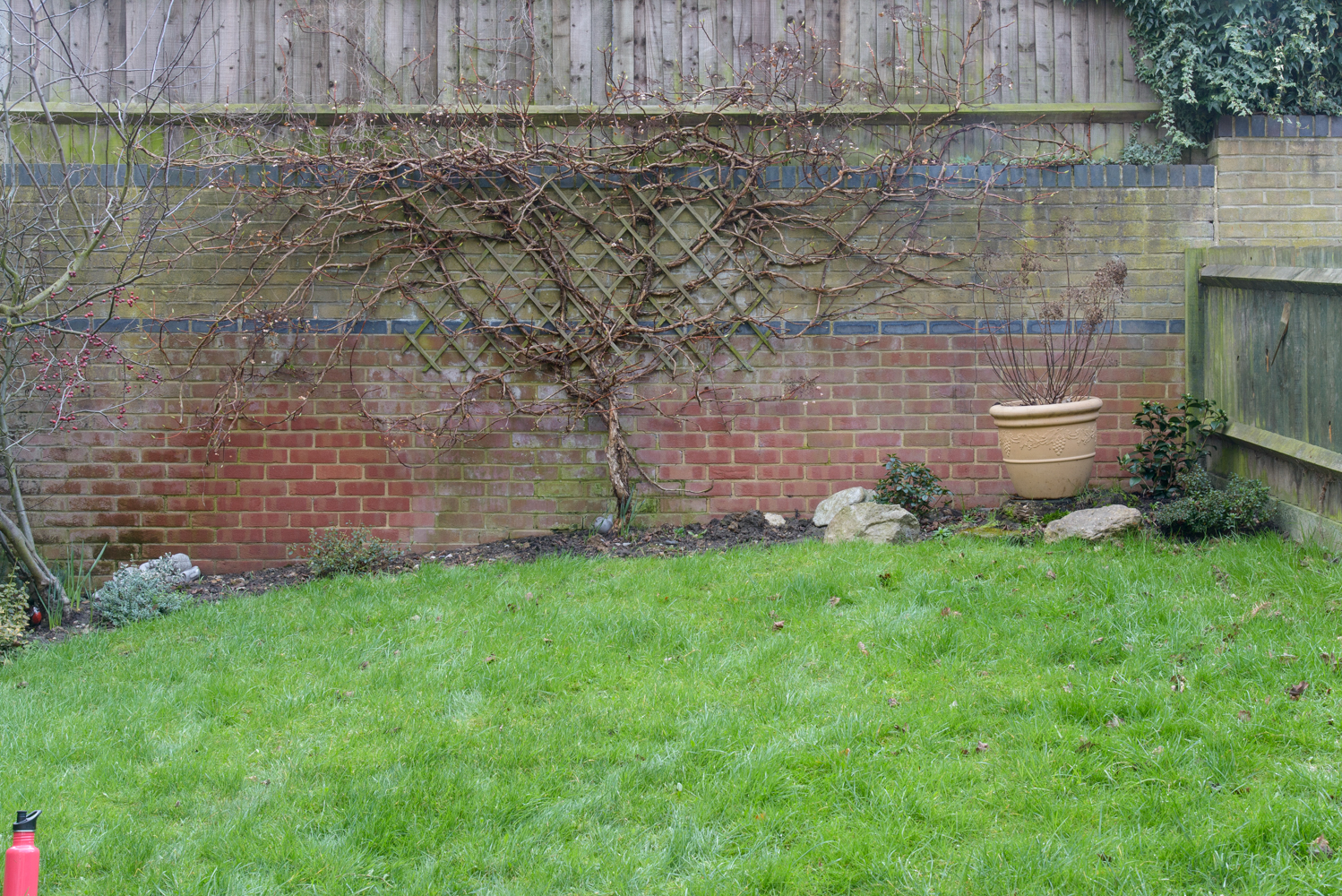
Image 4
In this image, the point is placed exactly in the middle of the frame. When looking at the image, my eyes tend to lock onto the point and do not move anywhere else; I am not particularly conscious of what else is in the frame. When I deliberately choose to look elsewhere in the image, as with Image 2, it is like a piece of elastic draws me back to the point. This time that feeling is less frustrating as the centre of the image seems like a normal place to be drawn to.
I think this effect is heightened by the use of a very bright point however I think that without anything to draw the eye elsewhere, this could be replicated with a less bright point; perhaps this is something I can explore in future. Again, this effect could be used or avoided depending upon the intent of the framing.
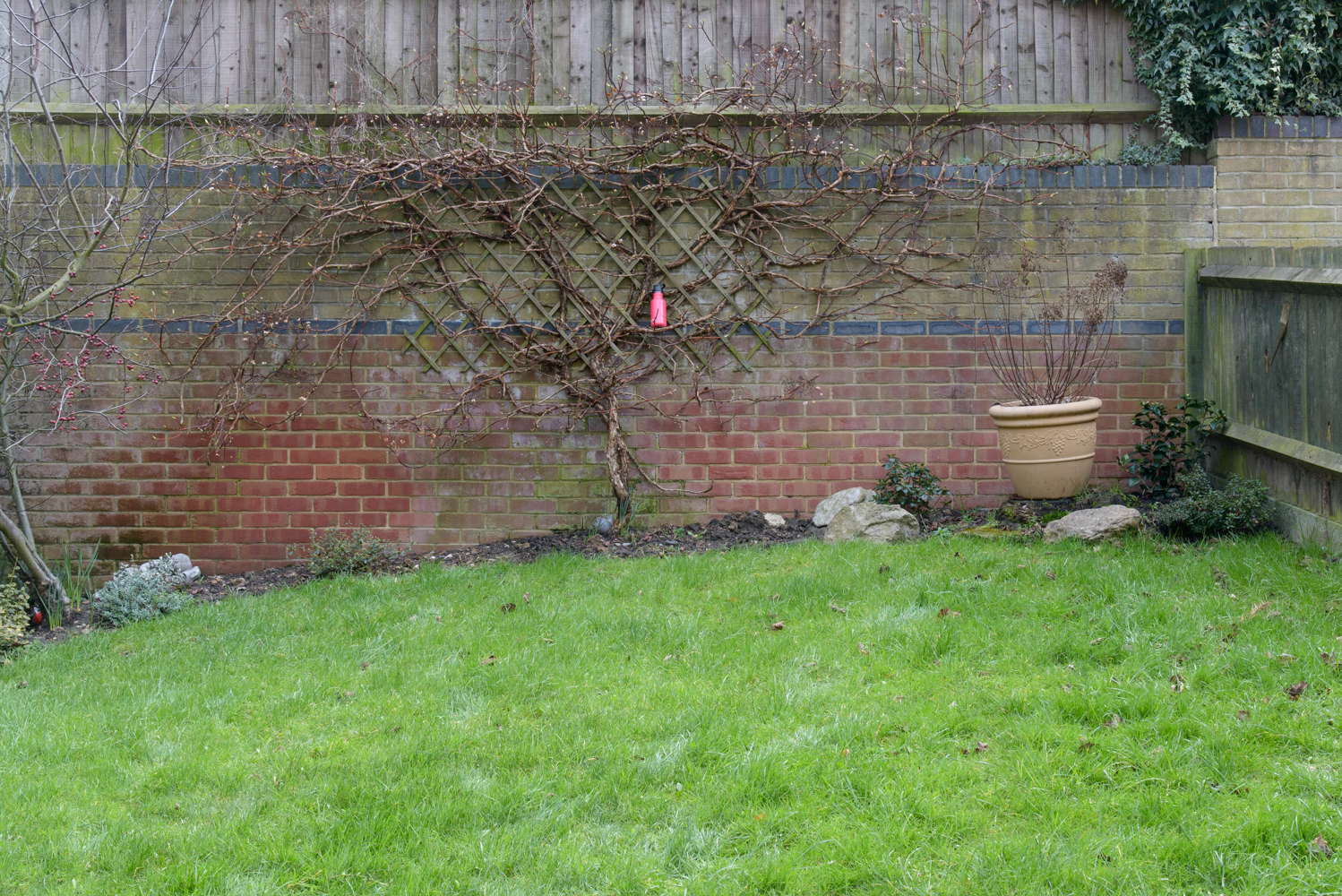
Image 5
In this image, the point is placed on the bottom left intersection of the ‘Rule of Thirds” grid. Here I find that my eye is naturally drawn to the point, maybe because of its brightness, but it is not fixed there. After looking at the point, I still take the time to see what else is in the rest of the image; the effect is not the same as the image with the point dead centre where I feel that my eyes are totally locked to the point. The effect this time is that it feels like I can take in the whole image and the point at the same time. The point feels to be ‘in a natural place”. I am not entirely sure if this is the natural effect of placing something on that intersect or if it is just my sub-conscious confirming that the point is ‘in the right place’.
I have been aware of the Rule of Thirds for some time and generally would try to put the subject on an intersection. What I have found interesting about this exercise is the effect created by other positions – and the idea that one could choose to deliberately achieve or avoid those effects. This is more of a considered decision making process than simply choosing to follow the classical rule, or not.
Overall Learning
In doing this exercise I have learnt about the different effects that can be generated even with a very simple point being moved around a frame. The effect is greater than I had imagined it would be.
In particular, and in the past, I would have restricted my thinking solely to whether or not to follow the Rule of Thirds, and that decision itself would not have been based on the kind of effects described in this task. Understanding the different effects upon the eyes and even on emotions is an important aspect of framing an image and can be used to evoke more than I had anticipated. This learning is something I wil consider more thoroughly when framing images in the future.