I went to see Radical Eye – a collection of photographs from Elton John’s personal collection that was on display at the Tate Modern. I visited on 12th May 2017.
Overall Impression
The approximate date of most of the photographs on display was typically early to mid 1900s. The images were ordered into portraits, creative effects, reportage, and objects. Given the age, all of the images were (I think) captured on film and so the viewing was of original prints. I found this fascinating to see such an impressive set of images created so long ago and reflected on how hard it must have been to create so many of them in the days when finite rolls of film were used, images could not be viewed until later and there certainly was no photoshop to create some of the effects I saw.
The images shown in this blog entry are taken from exhibition catalogue (Baker et al., 2016.) as no photography was permitted at the gallery itself.
Portraits
Two key observations from this section.
1.. Whose Expression?
Many of the portraits were taken by Man Ray who I had not heard of before this exhibition but is now on my list of photographers to research. A significant number of his portraits were of artists (in the broadest sense so I include actors, painters, other photographers etc.) and his question in capturing these images was essentially ‘If I am photographing an artist, then who is capturing who?”. This is my paraphrase of what was written on the wall in the gallery and its provenance was not given. Figure 1 below shows an example portrait from Ray of Matisse.
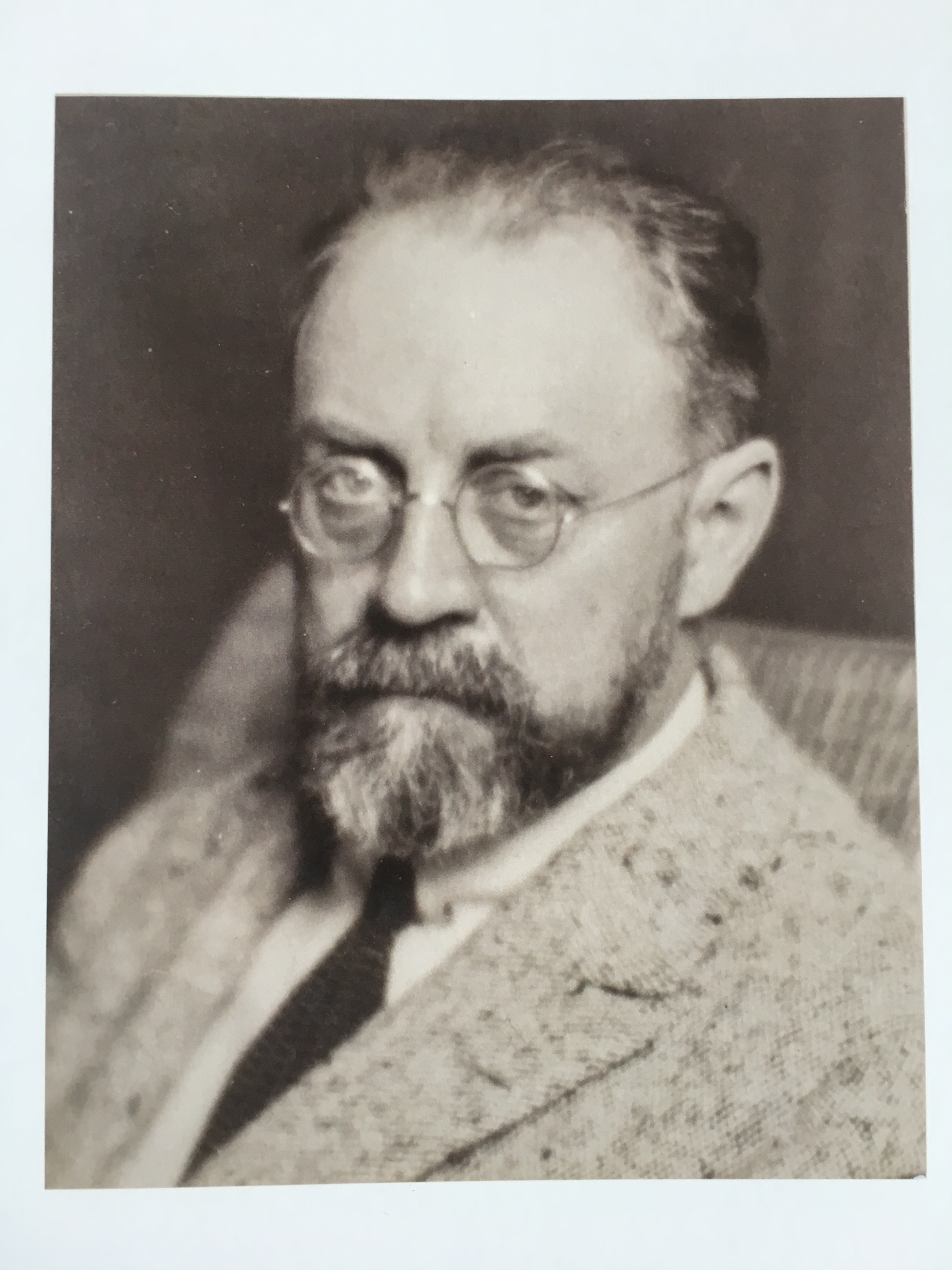
The idea captured my imagination. At the time I visited the exhibition, I was studying the part of the EYV course related to the notion of a Decisive Moment. My thinking on that which I had already written up was that I am not so convinced about the concept – or certainly that it is not the only train of thought that could be used to capture an image. Applying Ray’s question to this concept one could reach the question, whose decisive moment is captured in an image? Is it the photographer’s or the subject of the image? Or, thinking back to my investigation into long exposures and Exercise 3.2, can an image capture a decisive moment that has been and gone but left a trace?
Lots of thoughts in this area and I plan to explore them in Assignment 3.
2. Shifting Responsibility
Some of the portraits were from a photographer called Irving Penn. His thinking was that he wanted to remove all distraction from the portrait, leaving only the subject themselves. He created a V-shape by pushing two white studio boards together and captured his portraits with the subject stood on the inside of the V. It was up to each subject to adopt the pose or stance that they wished, to express themselves.
This intense focus on the subject creates an astonishing set of images. The laser like focus on nothing but the individual leaves the viewer studying every detail of them. It seems that the subjects realise this. Some seem to revel in this idea such as Joe Lewis the boxer who, despite being boxed in to the V appears larger than life, happy and confident to put themselves on display. Others, such as Noel Coward, appear to be boxed in, shrinking into the corner, quite put off by the whole idea. Salvador Dali is also shown but he seems to have insisted that the set is reconfigured to give himself a larger space!
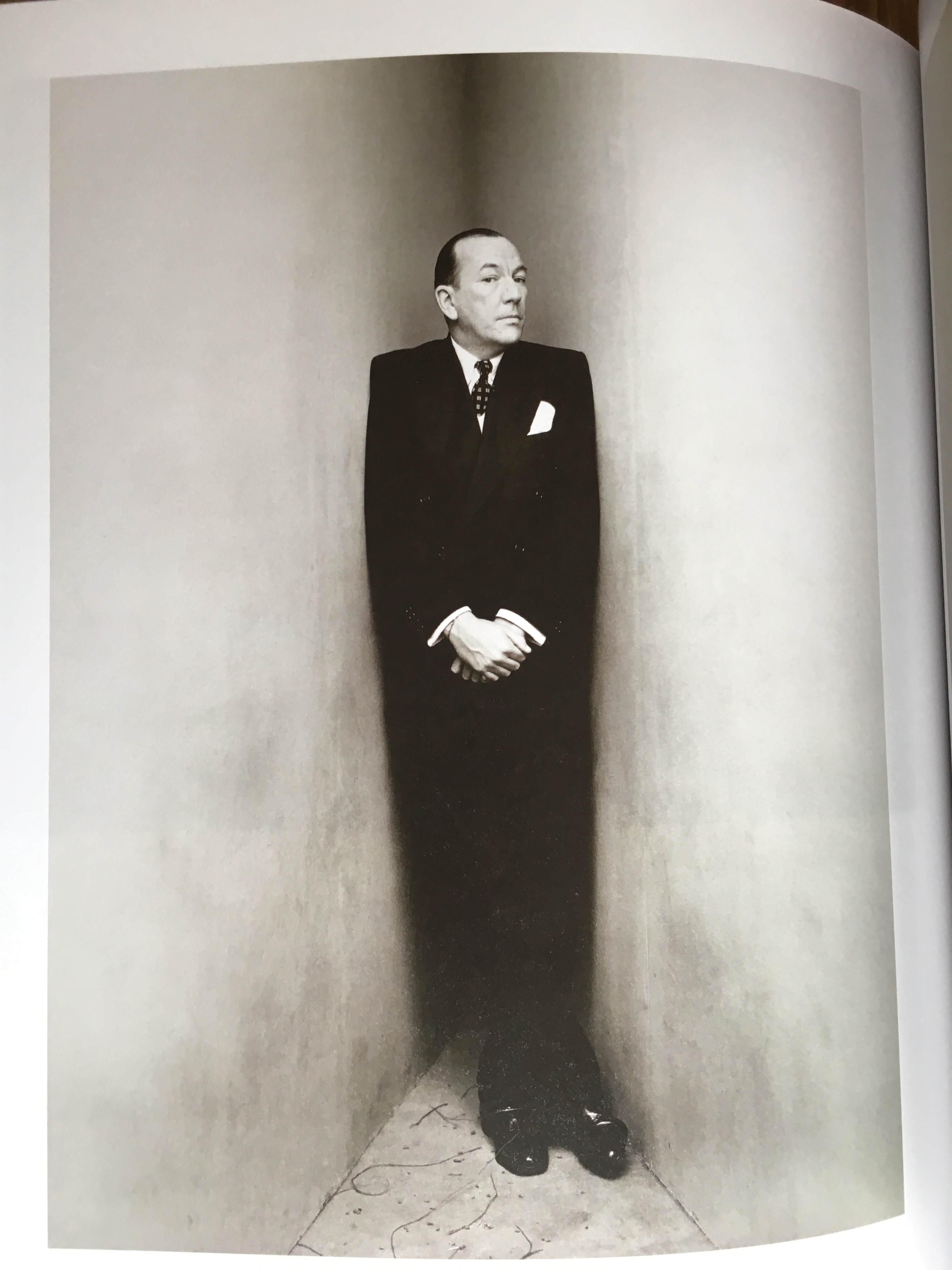
I found myself reflecting to Man Ray’s question, who is it that is responsible for showing their character? The photographer or the subject? In Penn’s approach, he has clearly shifted that responsibility onto the subject.
Reportage
In this section there were many images and approaches to image capture that I recognised easily even this early into my degree programme – those of Ansel Adams or Walker Evans stood out easily along with many of the images showing a shift to the general reportage style of 35mm film with a 3:2 aspect ratio and a reasonably wide lens.
What struck me in the section was just how much I have learned only half way through the first module of the degree programme and how I was able to appraise the images in more detail and with more insight than I would have been able to just six months previously.
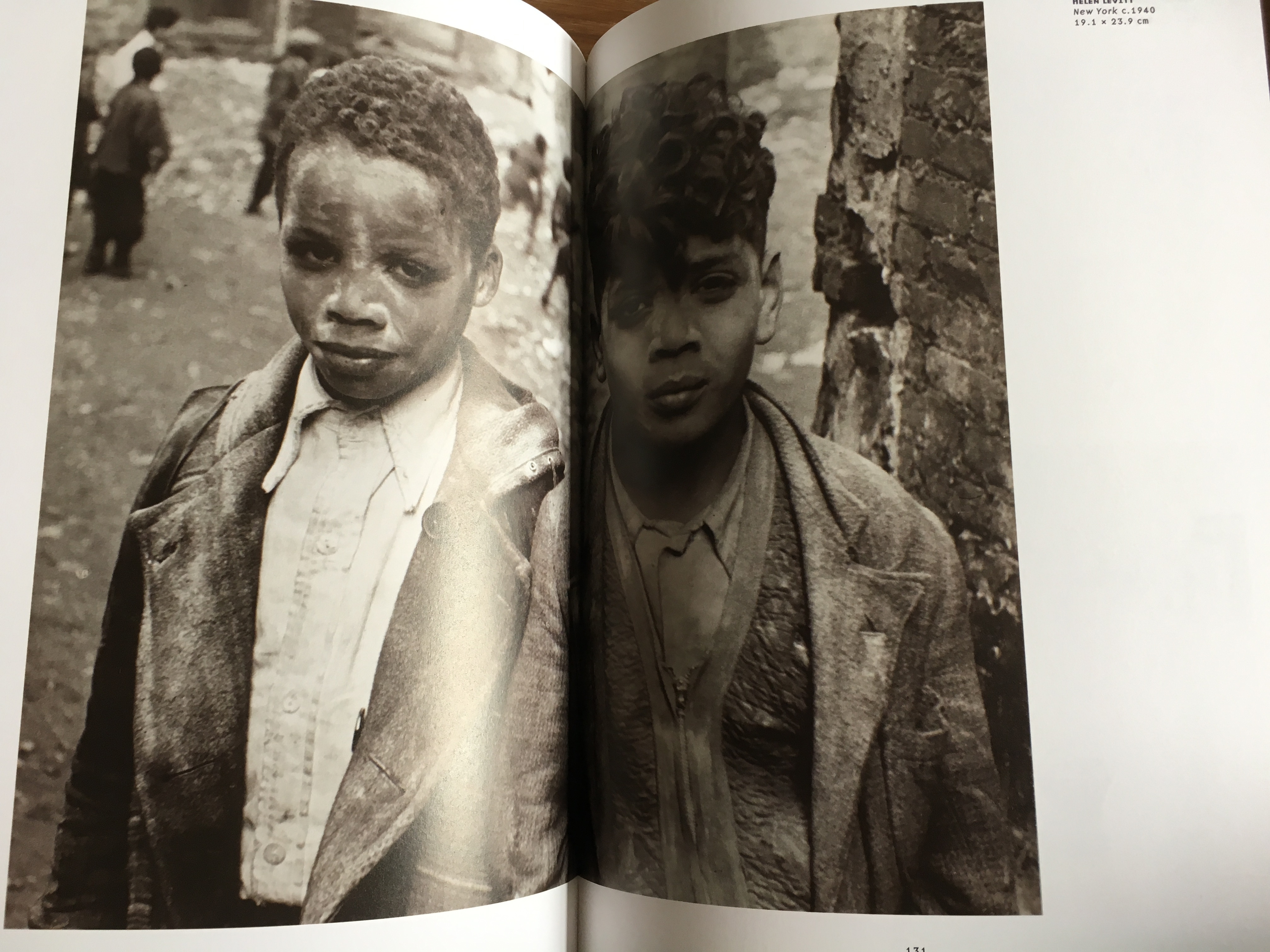
A set of images that caught my eye were those of Helen Levitt. Again, a photographer that I have not heard of before but who I intend to research. Her images of New York street life showed a gritty reality of the harsh conditions in the 1930’s in America and she has managed to capture intense feelings of desperation or depression in many of her subjects. At the same time though, she has also captured the ‘human spirit’ of life with children shown smiling despite their difficult situation. Figure 3 below certainly catches the grit of the street, but no smiles in this case.
Objects
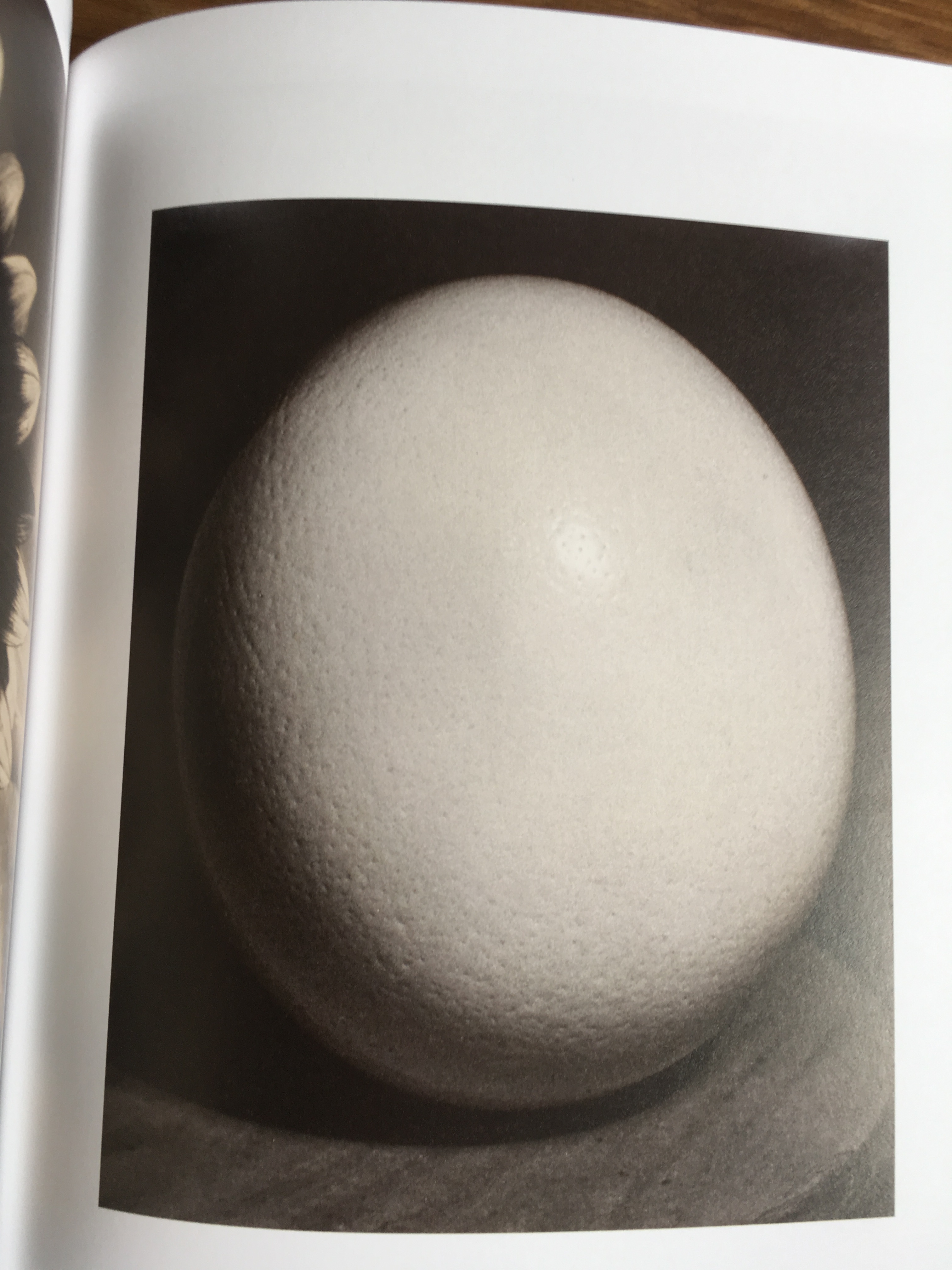
I am about to start Part 4 of EYV and so have been reading ahead and looking at the lighting exercises. Many of the images in this section of the exhibition play with the fall of light onto objects. An image by Man Ray of an ostrich egg taken in 1944 shows this to great effect with tiny dimples of the egg’s surface accentuated to a great degree. I will come back to this image when I start Part 4.
Bibliography
Baker, S., Mavlian, S., Harbin, N. and John, E. (2016). The radical eye. 1st ed. Tate Publishing.
Figures
Figure 1 Ray, Man (1923) Henri Matisse [photograph] in Baker, S., Mavlian, S., Harbin, N. and John, E. (2016). The radical eye. 1st ed. Tate Publishing.
Figure 2 Penn, Irving (1948) Noel Coward, New York (2 of 3) [photograph] in Baker, S., Mavlian, S., Harbin, N. and John, E. (2016). The radical eye. 1st ed. Tate Publishing.
Figure 3 Levitt, Helen (1940) New York [photograph] in Baker, S., Mavlian, S., Harbin, N. and John, E. (2016). The radical eye. 1st ed. Tate Publishing.
Figure 4 Ray, Man (1944) Osterich Egg [photograph] in Baker, S., Mavlian, S., Harbin, N. and John, E. (2016). The radical eye. 1st ed. Tate Publishing.