Introduction
For this exercise I took my inspiration from my research into Sugimoto. Researching his images taken over the entirety of a film screening, I was taken by two things:
- The idea that a single image can in one glance show the viewer an extended period of time.
- The fact that the visitors to the cinema during that screening did not show up in the picture. For me it is very thought provoking that the viewers were there yet do not show, it represents their fleeting impact on the physical place, leaving no trace at all.
I wanted to explore point 2 with this exercise.
I decided to take some long exposures at Waterloo Station. My thinking ahead of the exercise was that crowds are there all day every day, but within those crowds, there are individuals. This in turn reminded me of my Assignment 2 where I found individuals in the crowd and I wondered – what is it that makes an impact on the station? Is it the crowd, the individuals, both, or neither. Could I explore these ideas, along with expressing the passing of time, all in a single image?
Setup
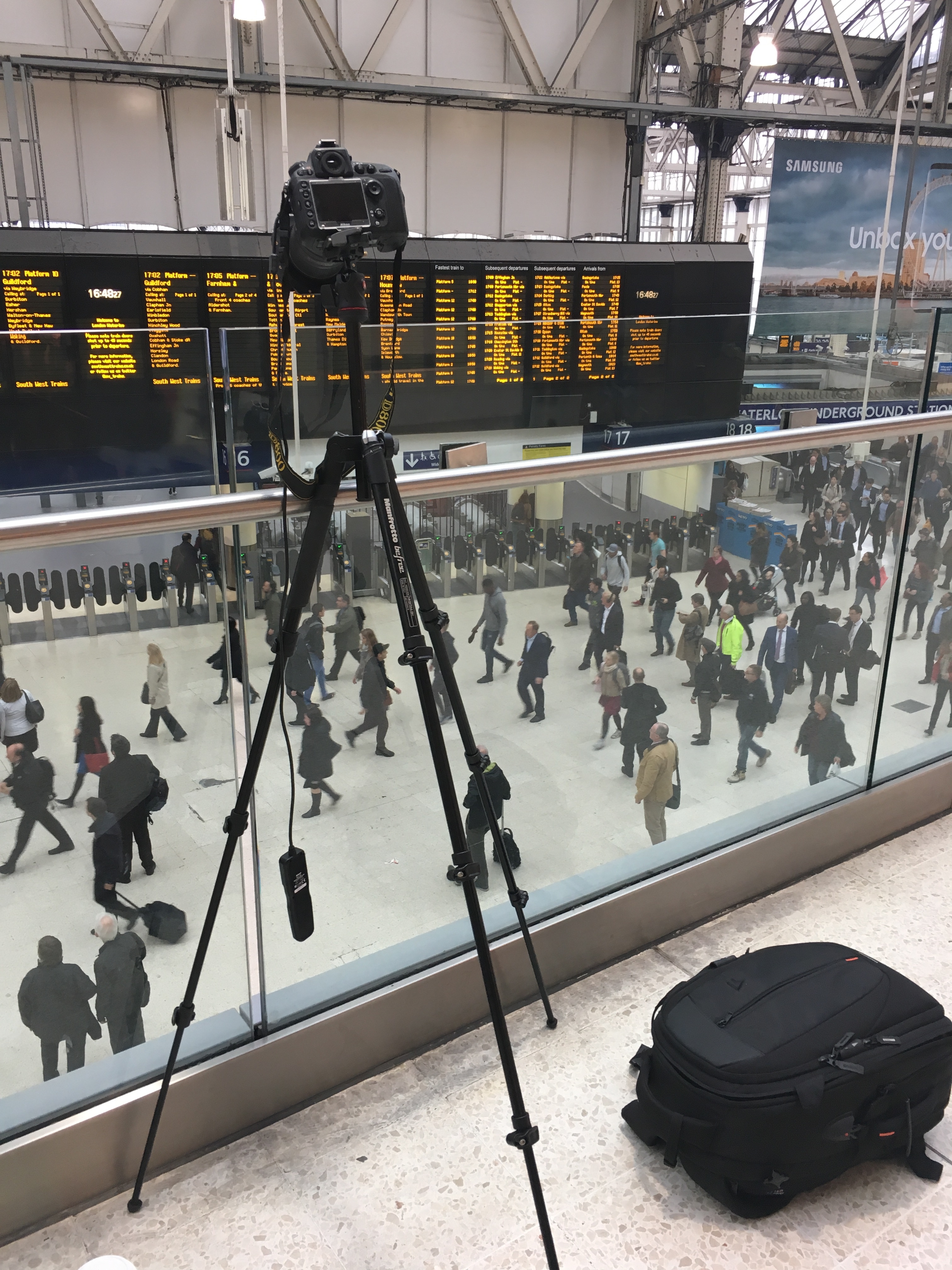
I found a high vantage point on a balcony where I could look down on the crowds, specifically it was in front of the station departure boards so it was a place that people tend to stand and wait. The image below shows my camera on a tripod leaning over the balcony looking down, I made very sure the camera was screwed on tight! All the shots were taken from this position. It is worth reading my thank you note at the end of this post to the station for allowing me to do this.
I knew that I wanted to take long shots so I planned on using a Big Stopper filter – an ND 10 stop- to lengthen the exposure time.
Using an iPhone app, I worked out what a normal exposure would be needed to create a 16 minute exposure using the filter (the answer is 1 second).
Then I framed the image and noted that the lens was focussed to infinity to capture the crowds, I was therefore able to use aperture size to adjust exposure without needing to worry about depth of field.
I set the camera for a low ISO and a small aperture to achieve a 1 second exposure. Then fitted the filter.
During the shooting I needed to achieve faster exposure times than simply widening the aperture could achieve as I only had the very strong ND filter. I found that I could also use ISO settings to adjust down to the required exposure time.
Using a remote release with a built in shutter timer, I set the camera to bulb mode and took a 16 minute shot. Slowly widening aperture and adjusting ISO to shorten the exposure time, I took a number of shots at different lengths between 1 second and 16 minutes, the results are below.
Results
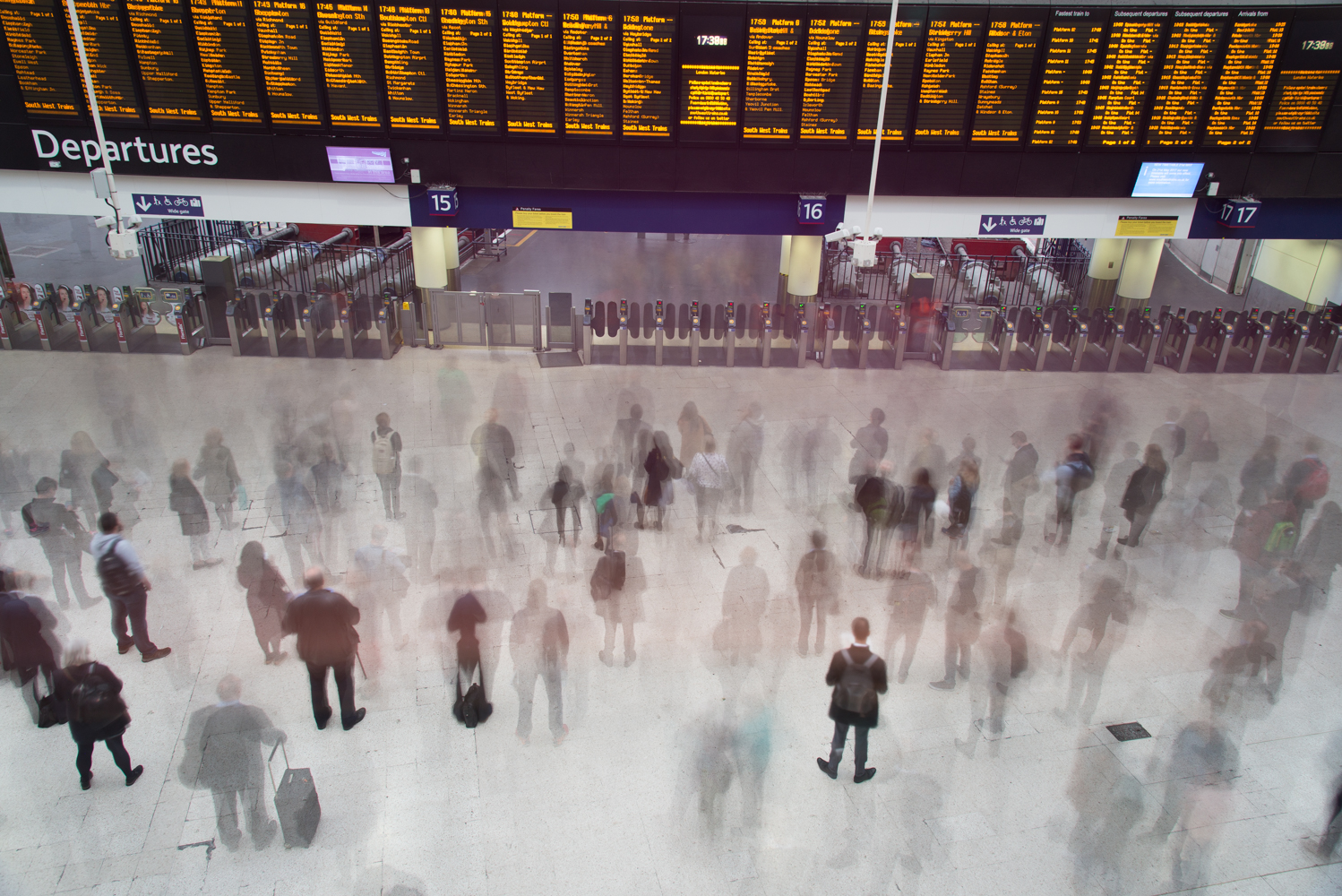
Figure 1 is a 16 minute exposure. I do not feel that this image has achieved my desired outcome. Although there is a feint trace of the crowd, it has essentially disappeared and only one individual is identifiable at all. I want to show that the crowd has an impact, that the crowd is made up of individuals, and that neither is permanent compared to the station itself; I don’t feel this image achieves that. The orange stripe across the bottom third of the image also spoils the picture and is a reflection on the floor of the departure board I think.
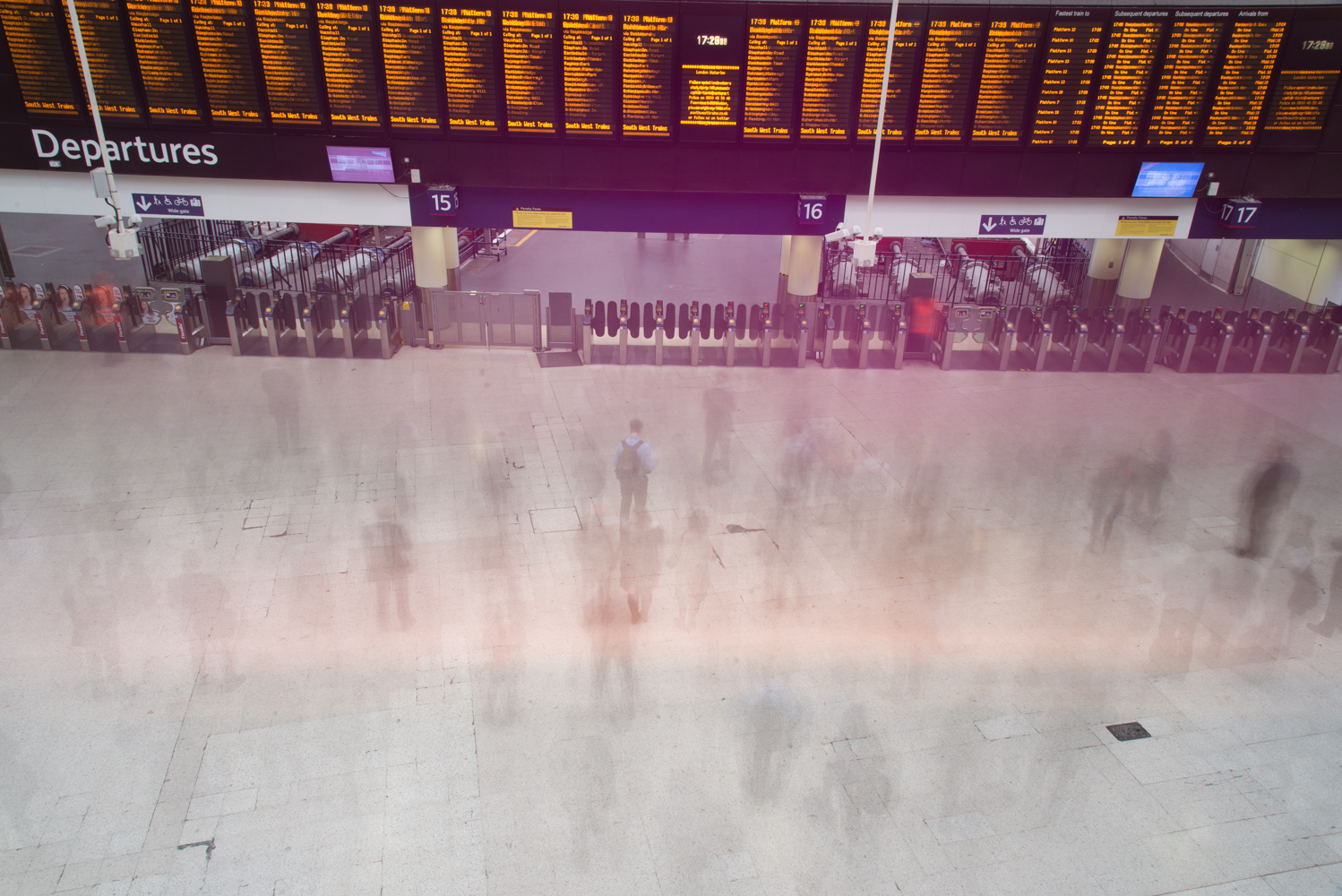
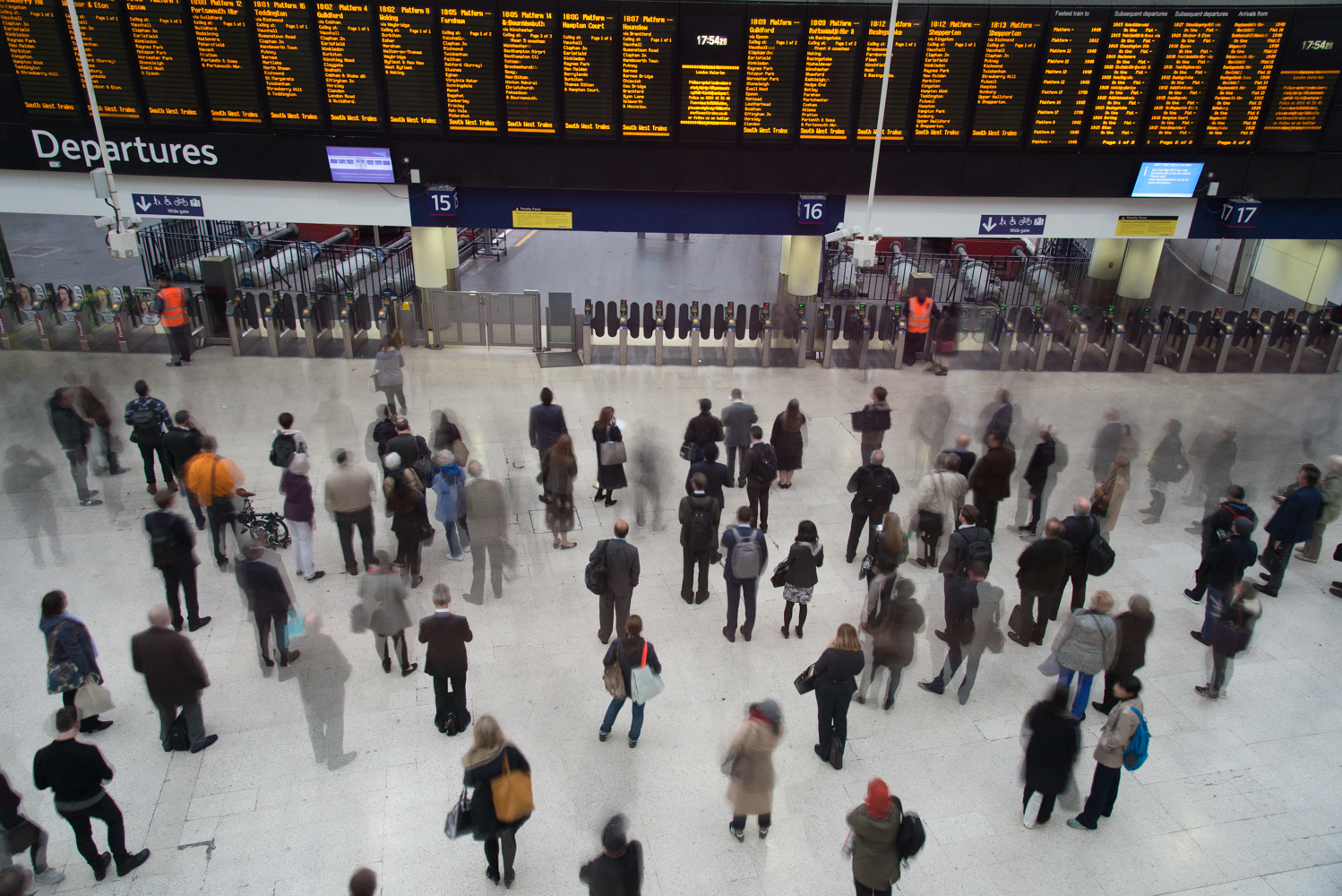
Figure 2 is taken from the other end of the range of shots I took. The shot has a 1.6 second exposure time. In this shot, individuals are present with some clear and some seen multiple times as they walk across the shot during its exposure; I am not sure why the moving people are not a smooth blur and instead show as a series of traces. Again I do not think this image achieves my aim. This image does highlight individuals and their lack of permanency, but I don’t feel that it shows a crowd. The shot is also slightly blurred, the camera may have been knocked during the exposure.
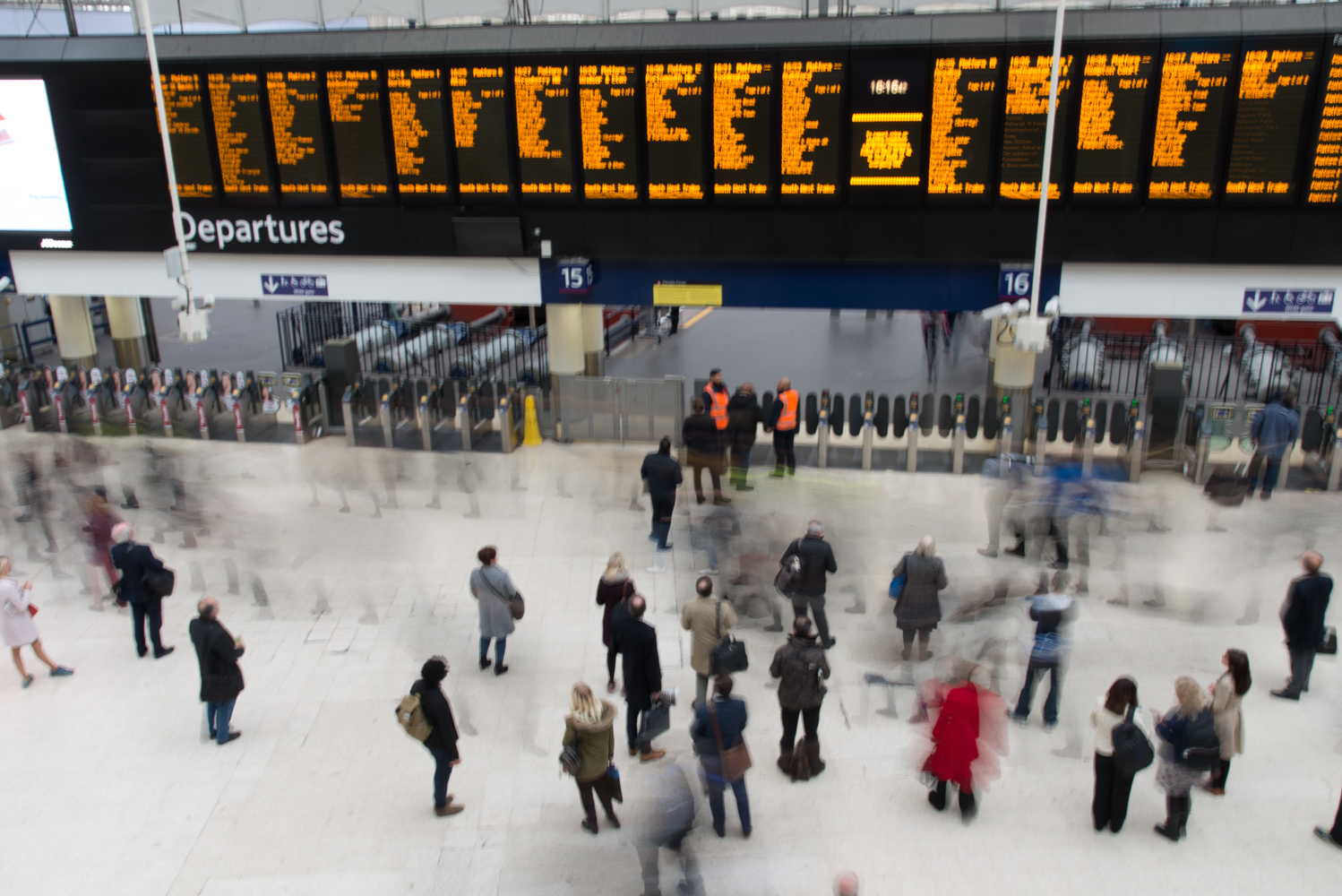
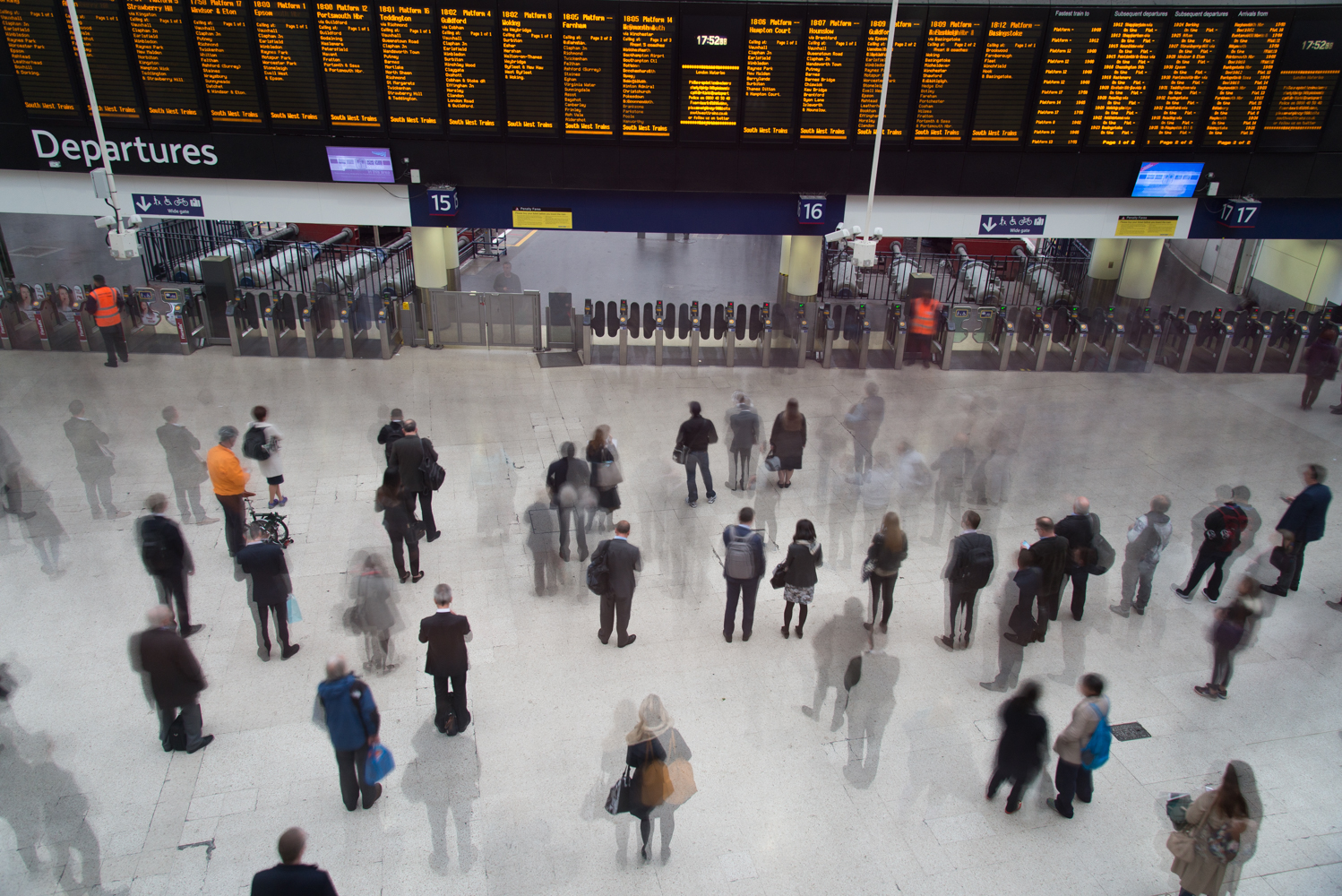
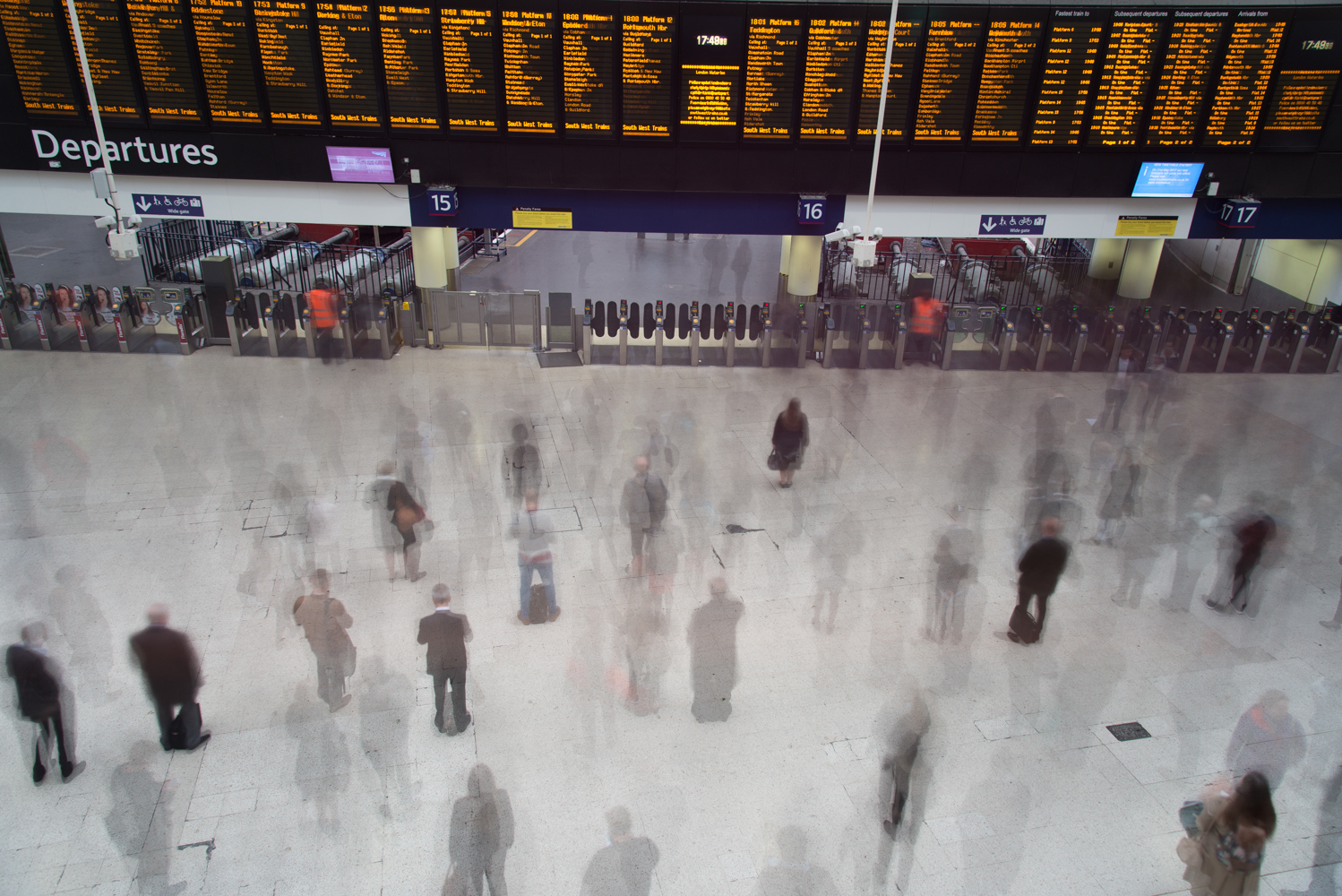
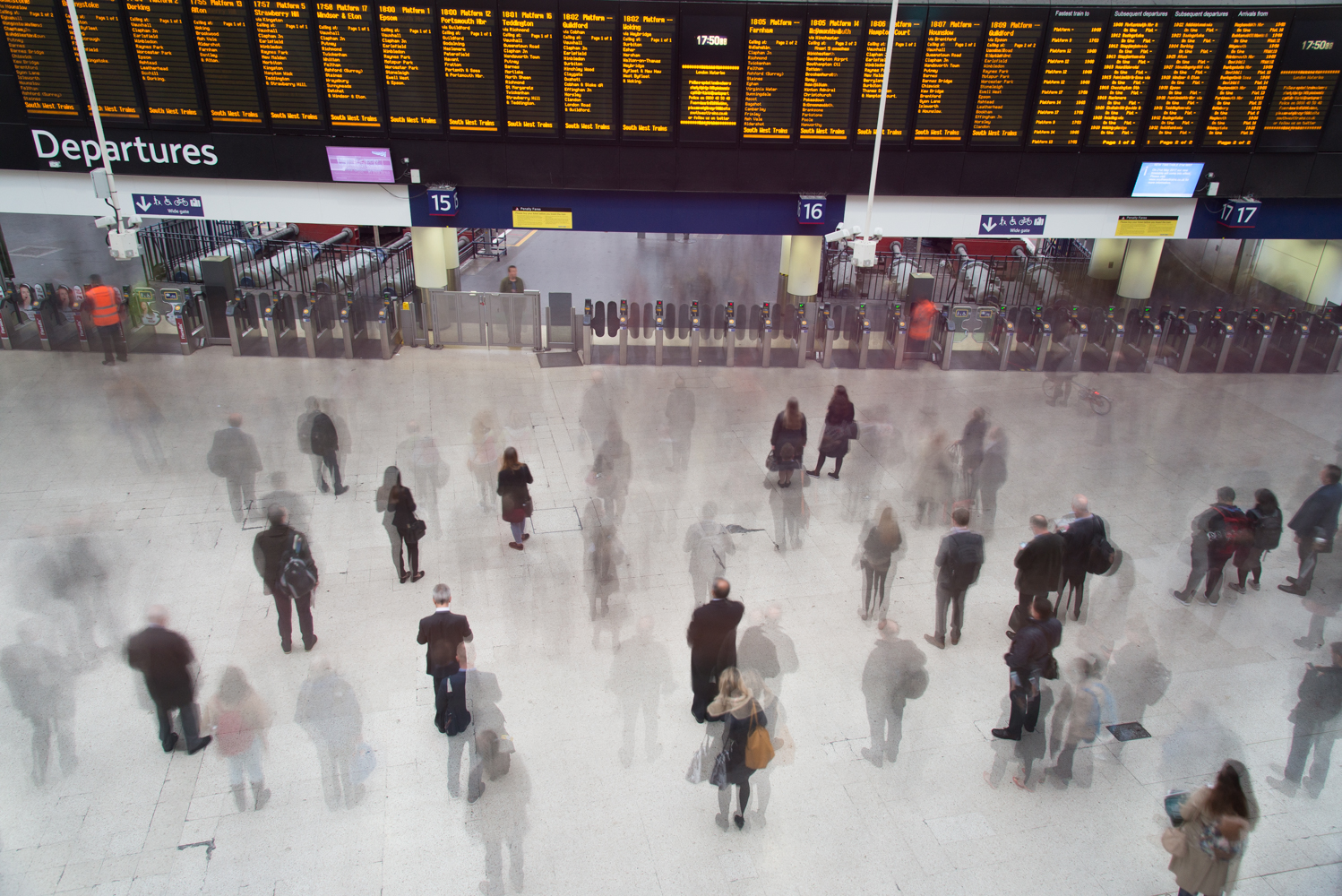
Figure 3 is my select. The image exposure length is 60 seconds. I feel that this image shows the trace of the crowd (there is even a trace going up through the gates to get to a train) and it shows individuals. The impression that individuals will fade into the crowd and that the crowd will gradually fade way creates a ghost like feeling to the image. Other shot lengths do show variations of this but I feel that this shot expresses my vision the most and that the impermanency of the people is emphasised. At the same time, because I can see both the crowd and the individuals in the same shot, I think it shows my idea of crowds and individuals being one and the same.
Other shot lengths are shown at the bottom of this post.
What I learned
- First off, I learned what it is like to be visible doing photography versus lurking in the side-lines. Explaining what I was doing, getting permission etc. was an entirely new experience for me and the outcome has given me confidence to try again in the future. (see my thank you note below).
- I learned that if I am going to experiment with long shots, then start with the shorter end and work up. My select was a 1 minute shot but to get to that point, I had taken multiple 16m, 8m, 4m, and 2m shots. On this occasion, I was conducting a learning exercise so I did not mind, but on other occasions I may not have the time to do that.
- I had a specific expression objective in mind. I could have stopped at 16 minutes and concluded that the idea did not achieve the expression I wanted. I learned to keep on trying and making small adjustments if I don’t succeed at first.
- I also got to practice my technical skills in using strong ND filters. At these extremes, one stop exposure change can be the difference between a 16 minutes exposure or a 32 minute exposure. Of course, this is nothing compared to the 4 year exposures of Wesley where one more stop would require 8 years!
Thank You Note
Setting up a tripod and camera and leaning over the balcony of a busy station can be viewed with suspicion in today’s environment. Indeed, within 2 minutes of setting up there were security guards asking to see my pass and to take down my camera.
However, the guards were friendly and so I was friendly back. They explained to me where I needed to go to see the station manager and get permission. I packed up, went to the office, explained what I was trying to do, showed my NUS card and driving licence. The station manager was kind enough to issue me with a media pass giving me free reign to take whatever I liked in the station for the rest of the day.
I want to thank the station staff for their diligence and for taking the time to listen to me and to help me. I think I got a great result that could so easily have been lost.
Other Shots