Background and Approach
In my initial thoughts, I describe how I decided to select ‘Crowds’ for this project.
Over a long weekend, I was travelling in the Cotswolds and stayed in a town called Bourton on The Water. I was in the area to look for a house to buy and my wife and I had been talking about avoiding Bourton due to the large crowds of tourists. Thinking of crowds, I chose Bourton as my subject.
I started with three factors in mind.
- After Assignment 1, I was mindful to avoid a sameness between my shots, I wanted each of my shots to be something different.
- My research into Gary Winnogrand and his approach to photographing crowds; his technique is to show his subject centre frame with the crowds behind for context. Considering this, I chose to select the long lens, wide aperture configuration which is ideal to isolate a subject from the rest of the crowd.
- My research into Saul Leiter and his use of colour. Whilst I was not setting out to photograph select colours, I did decide to take my shots with the intention of showing them in colour and was conscious to avoid any bright colour clashes.
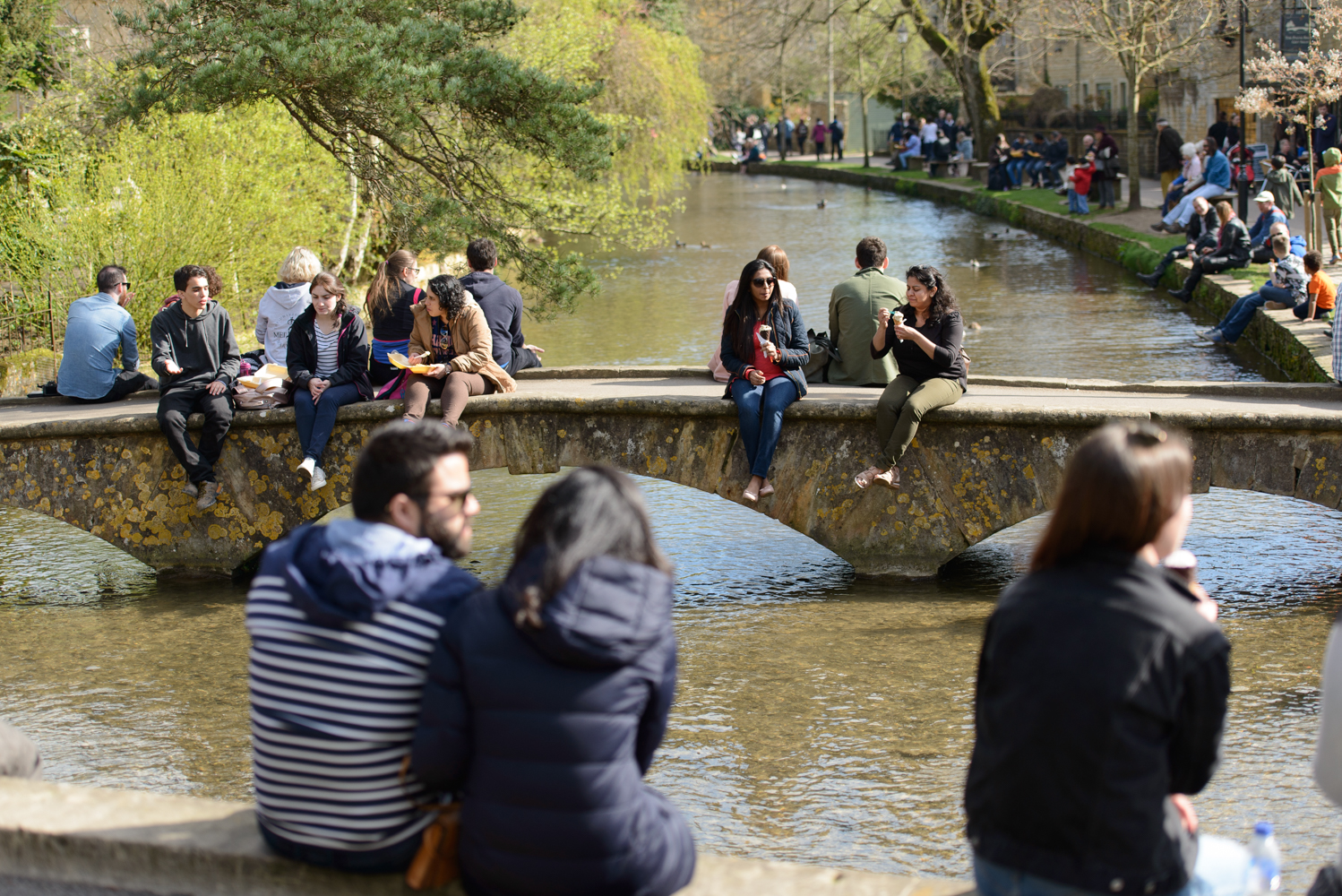
As I started taking my images, my conscious thought was on capturing the whole crowd and making sure that there was depth to the image so that much of it would be out of focus.
Over time, and as I sat watching the crowd, I came to realise that the crowd might be a mass of people but really, it was made up of lots of individuals and families who were there to make their own day and have their own experience; they just happened to be in the same place to make up the crowd.
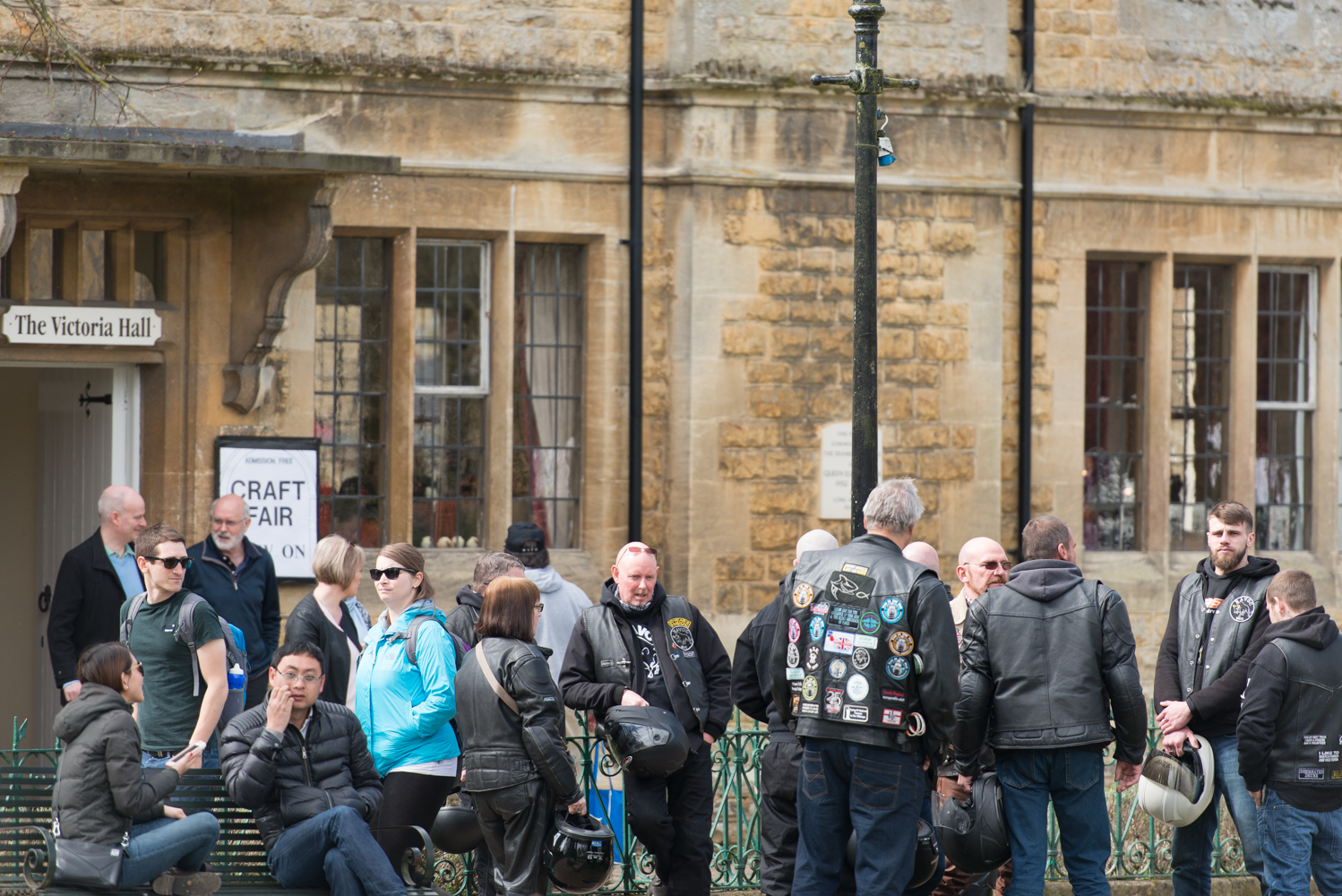
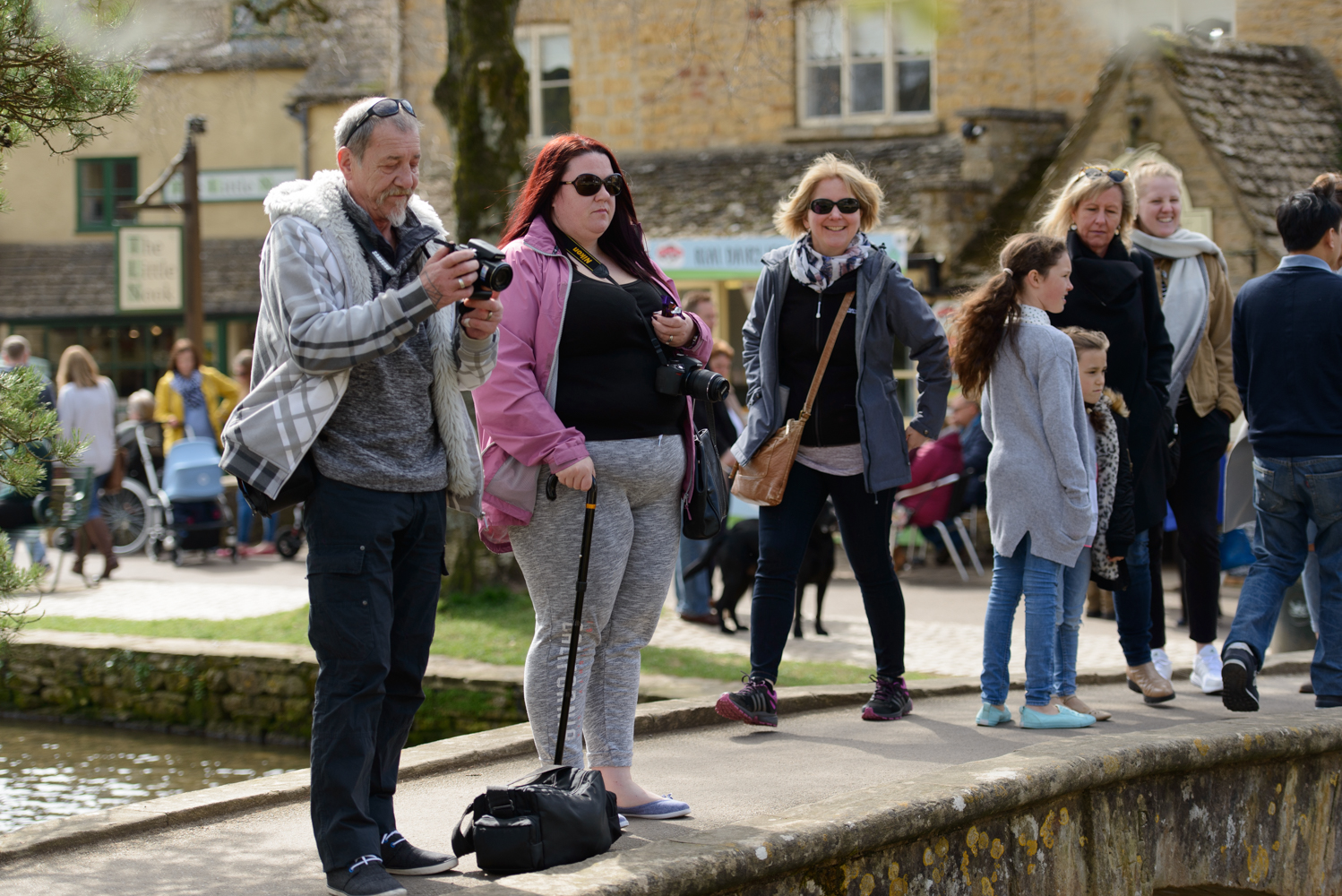
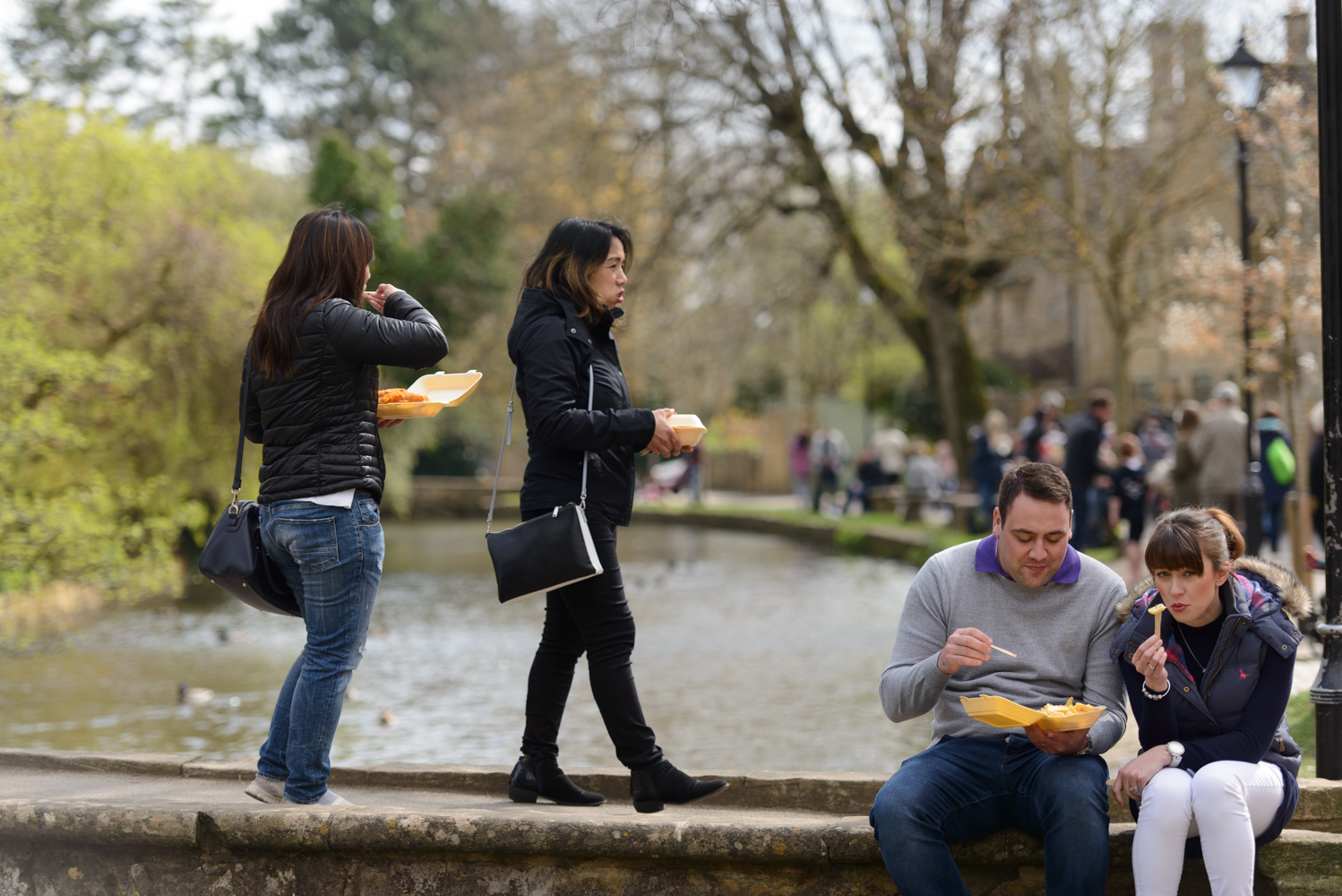
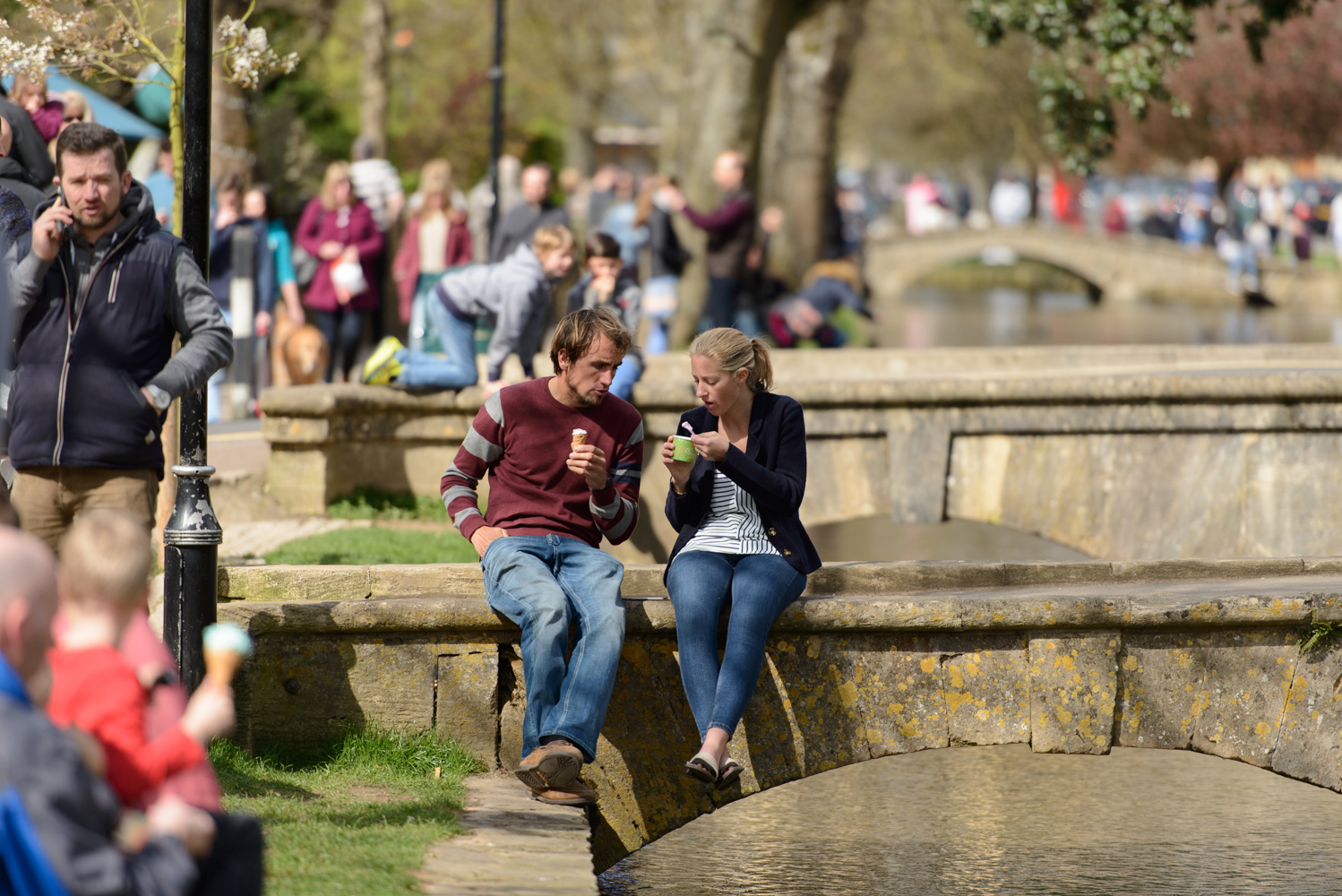
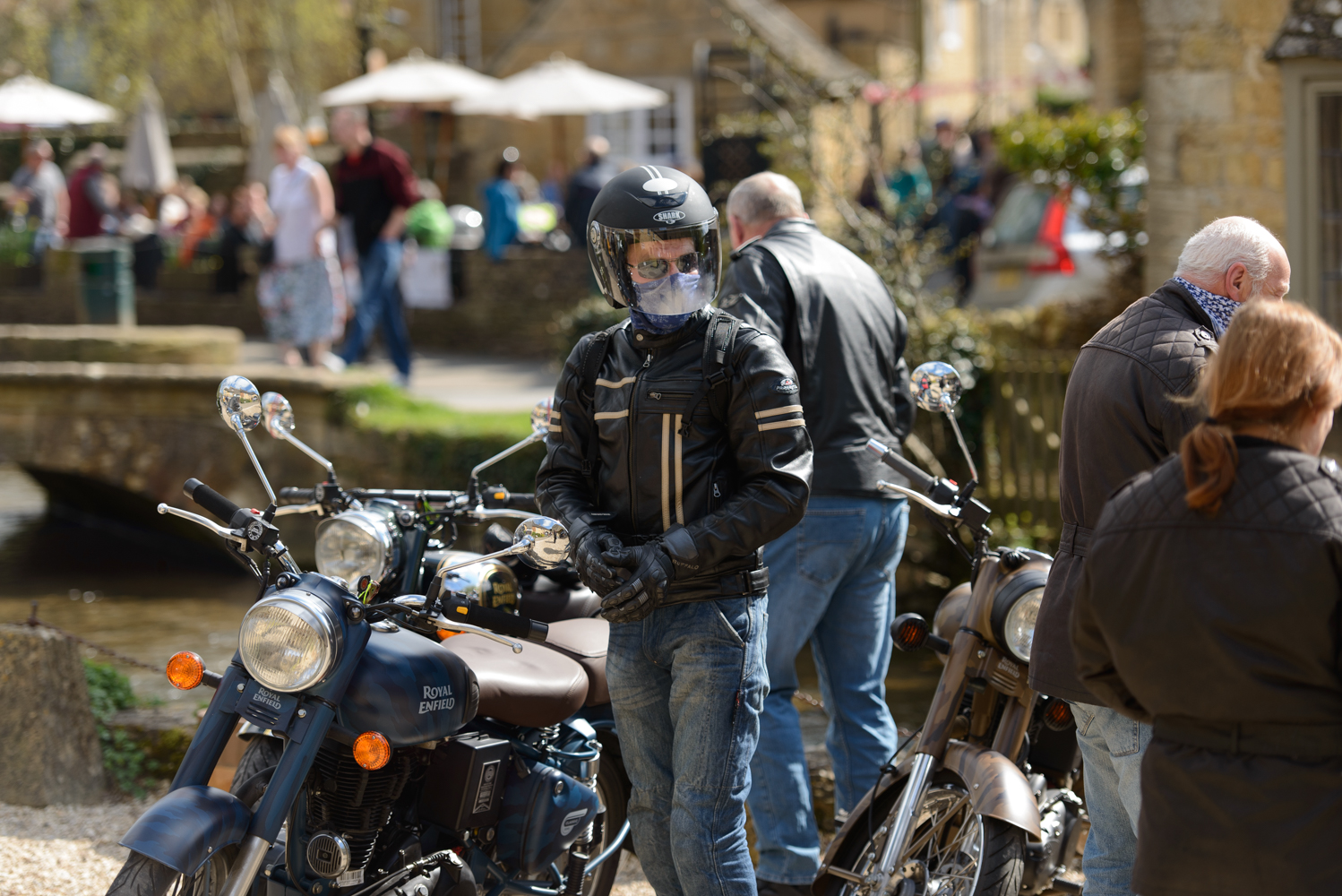
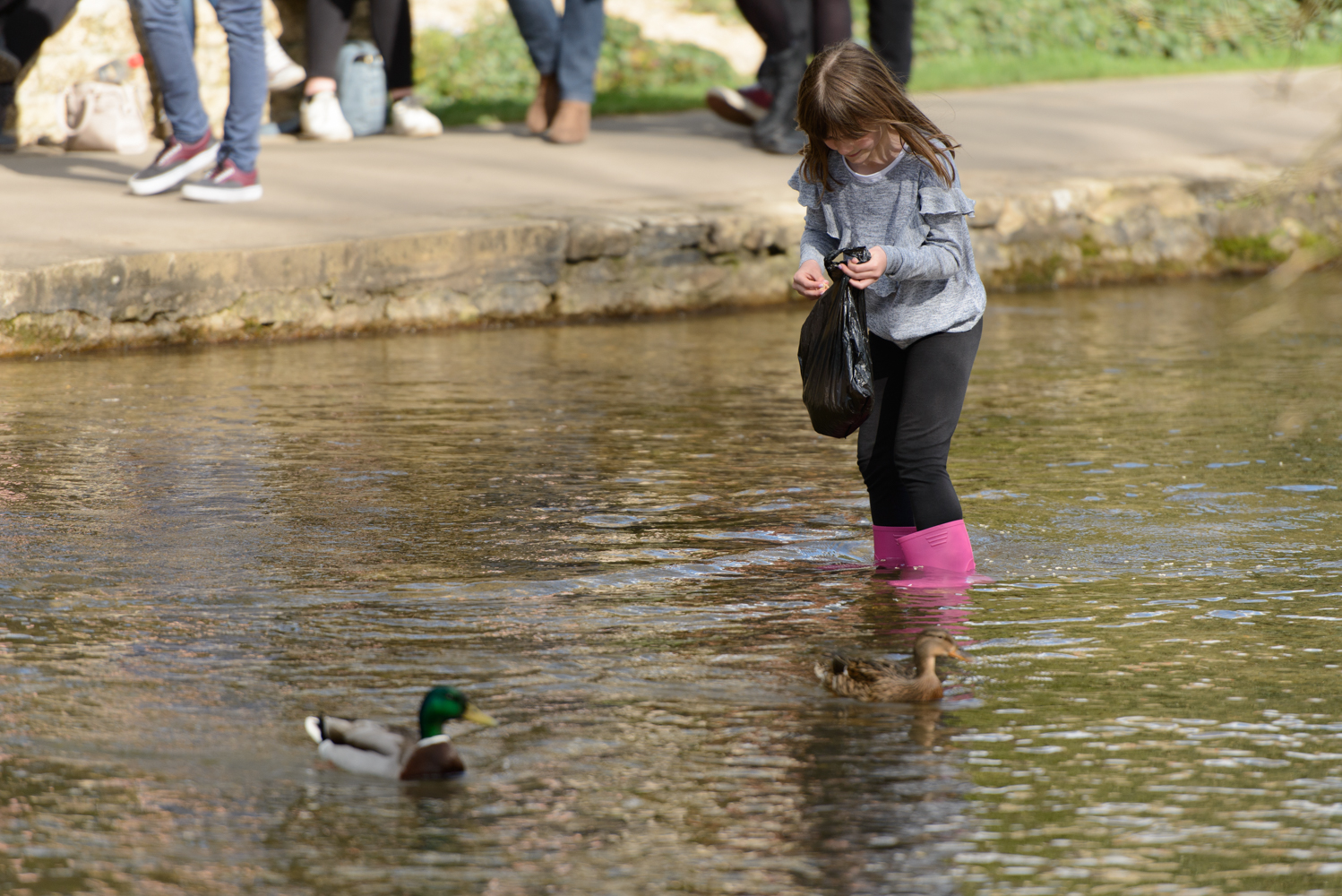
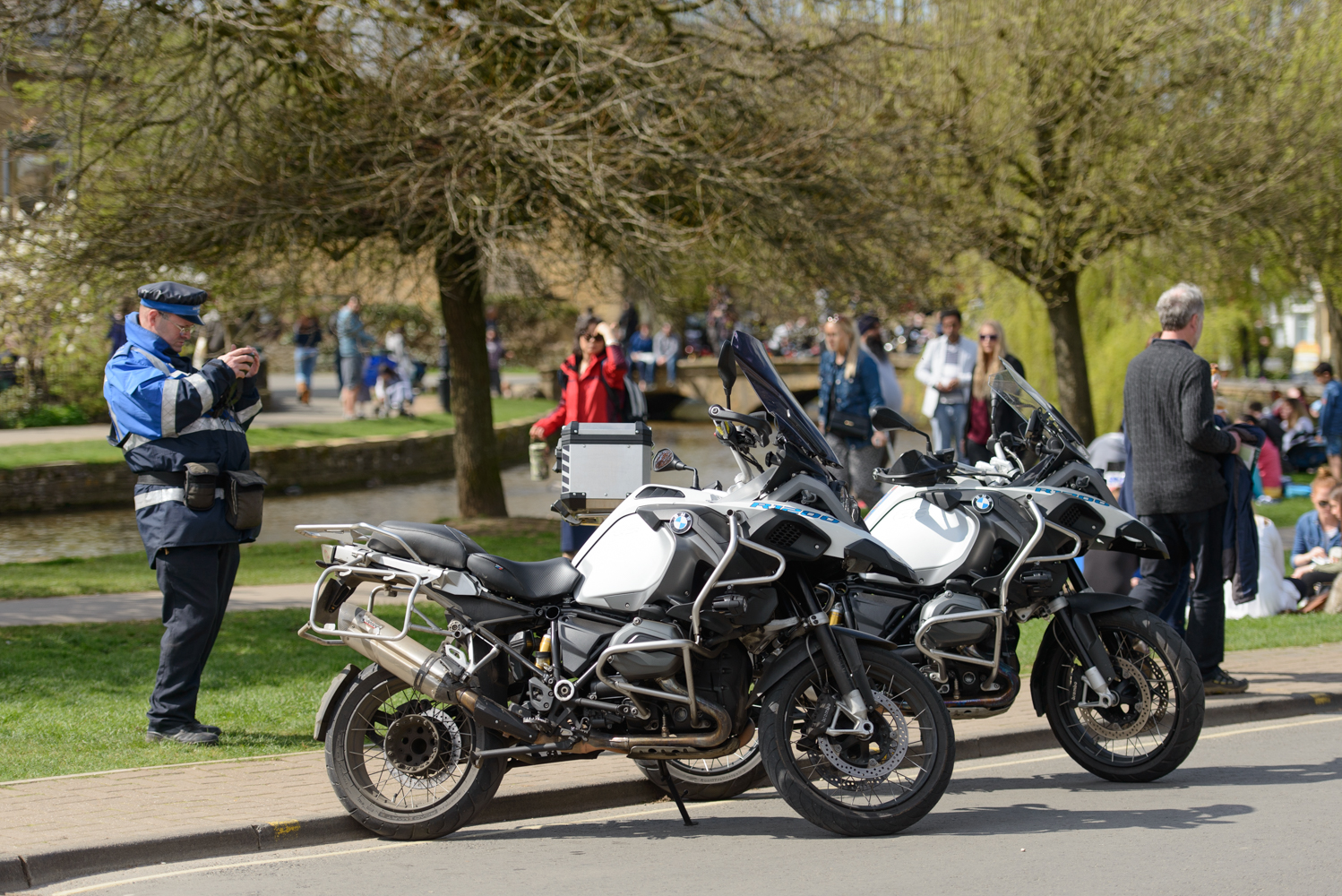
After making this realisation, I started homing in more specifically on groups, families and individuals. This change in perspective can be seen in the images that I have selected for my set which focus more on individuals whilst still showing crowds in the background.
Aperture, Focal Length and Viewpoint
As I was using focus to isolate the main subject of each image, I chose to use the maximum aperture of my lens. For all but one shot, that meant f2.8 using my 70-200 f2.8 lens.
To heighten the selection of the main subject further, shots were taken with a long lens. The widest any of my selected shots was taken at was 70mm with a large number being taken at 200mm the maximum length of the lens.
The viewpoint I chose for my shots has the subject at eye level, I wanted to give the observer the experience as they would have seen it at the scene rather than create an effect by raising or lowering my position.
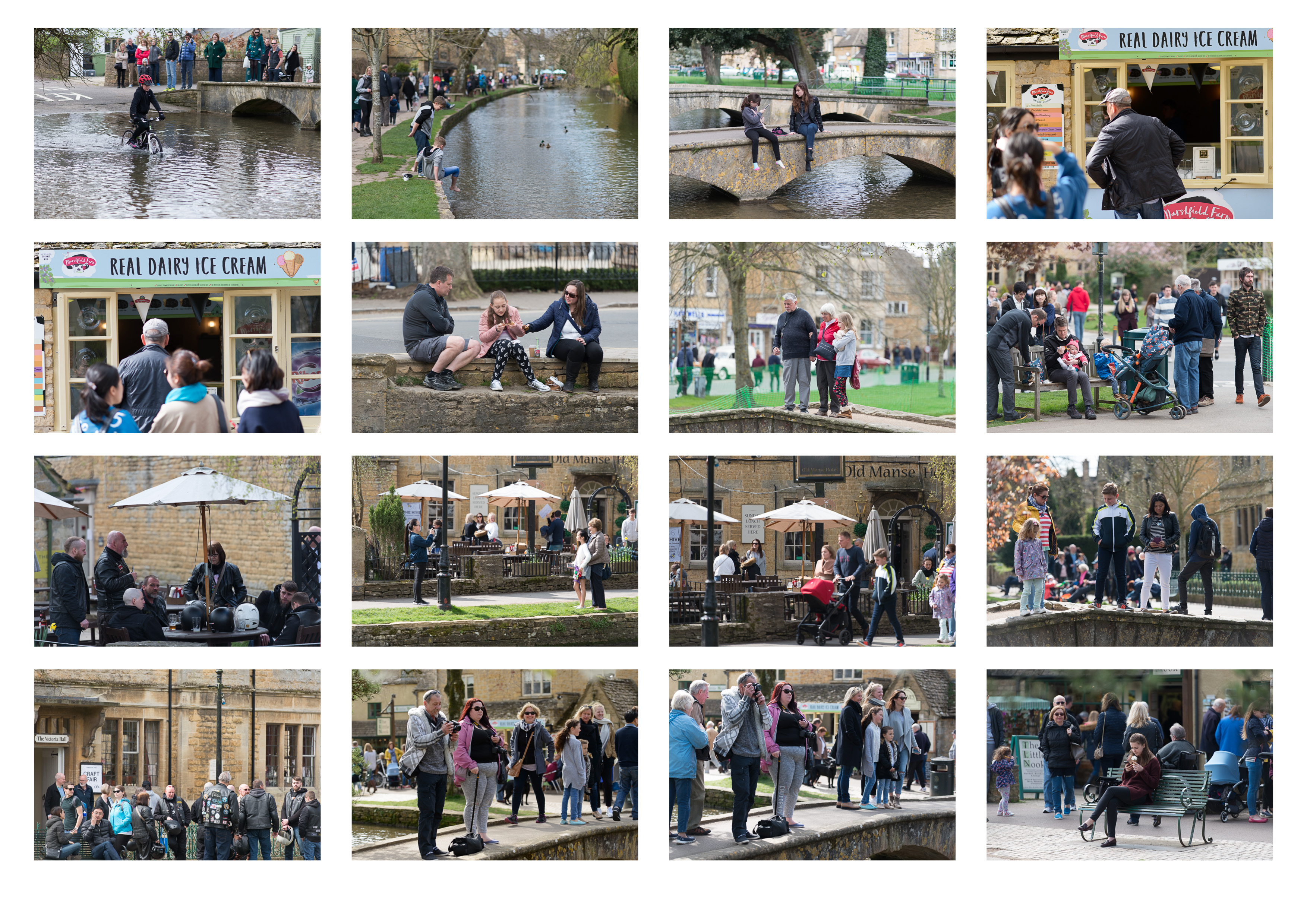
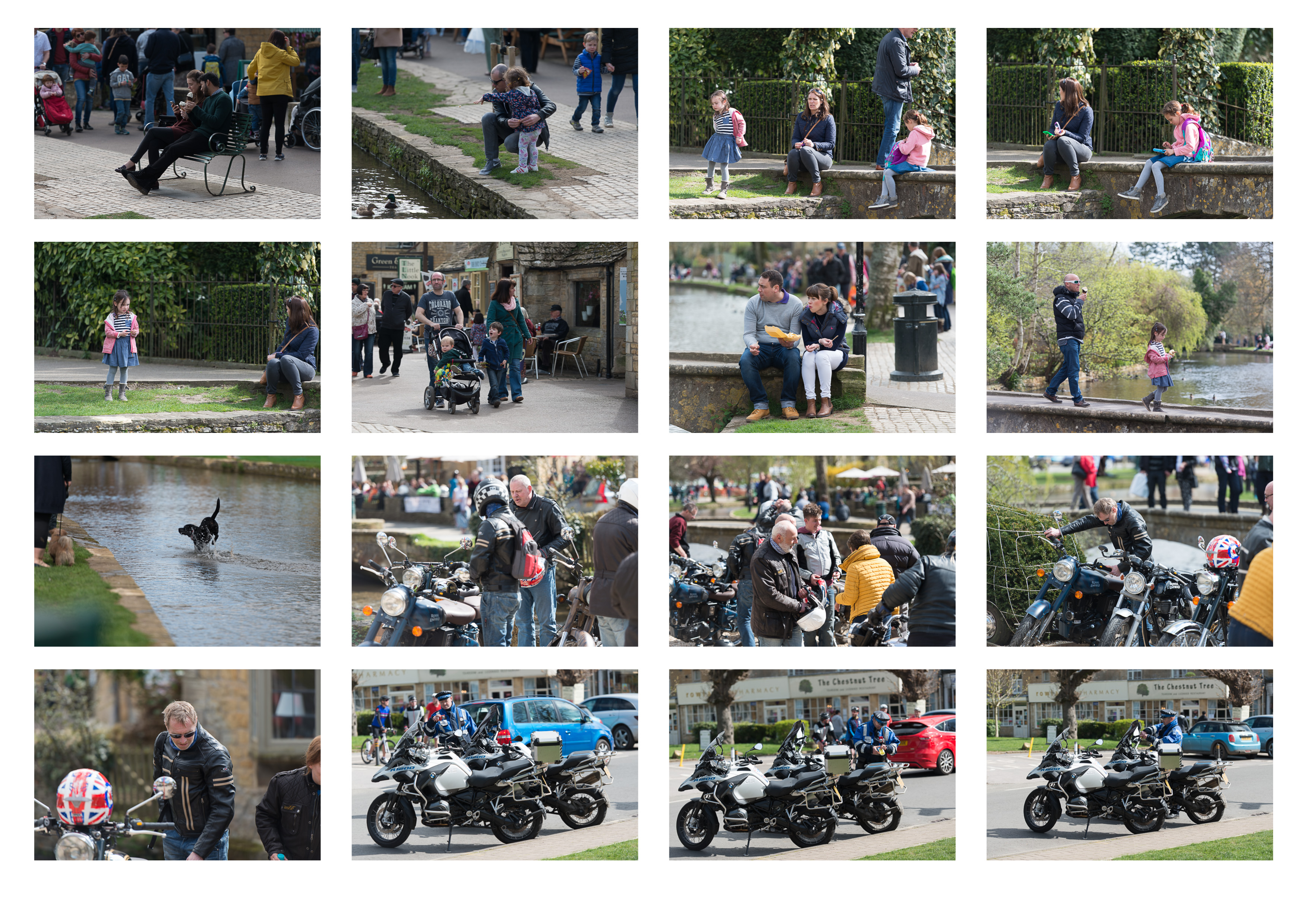
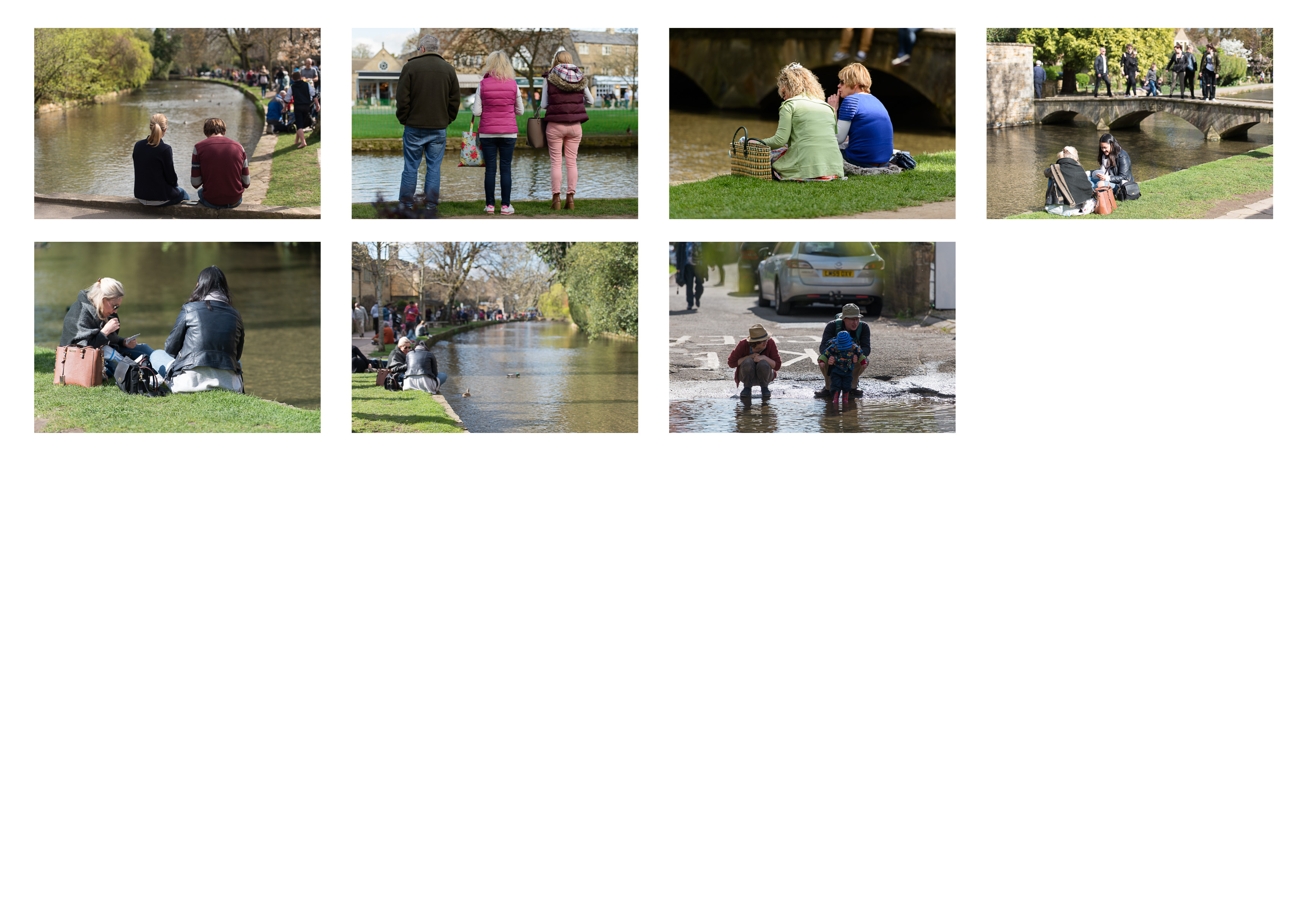
All of the images chosen and on my contact sheets display subject isolation.
What Worked Well
I am very pleased with the outcome of this piece of work. Before this course, with my landscape photographer hat on, I would have complained about all of the people in the town spoiling the view. Even visiting as a tourist I would complain of the crowds – the irony being that I was one of the same people!
The techniques selected for lens settings and the approach to capturing crowds from Winnogrand has made me see the crowds differently, now I see families having a fun day and I believe that the images capture the ‘energy’ of the town in a way that I would not have achieved before.
I think that the images that show people interacting with the town, or its offerings, work the best. This is an observation that I had when I visited the Landscape Photographer of the Year exhibition. I did not capture this consciously at the time but I see it now and have learned to remember this in future.
I think that I have achieved a good variation in the set whilst achieving congruency of the images.
The focus effect that I set out to achieve is successful in all my selected images and those on the contact sheets.
What Didn’t Work So Well
There are some I have not chosen but which could have been great images if only I had framed them differently. I am learning that even for this style of photography, that is bordering on street, the importance of a slight pause, to check the frame and correct, before pressing the shutter.
Some shots use a very long lens to get the subject close, as the subject is therefore far away, the difference between them and the background is not sufficient to create the focus differential I was looking for. I could have corrected this by walking closer to the subject, even if that meant a shorter lens. On some occasions this was not possible because the river was in the way but on others it would have been but I chose not to so that I did not need to get too close to people. I am not used to photographing people and so this is something I will need to work on.
What Could be Improved
In the future this series could be improved by addressing the focus issue described just above by getting closer to my subjects. Additionally, had I taken slightly longer in my framing, some of the subjects that I really liked would not be lost to me. Whilst this later point is not apparent in the set chosen as I had more than sufficient images that I thought were worthy of the set, it could have meant that I was short of images and as the images were taken on a specific day, it would have been difficult to create supplementary images had that been necessary.
Images
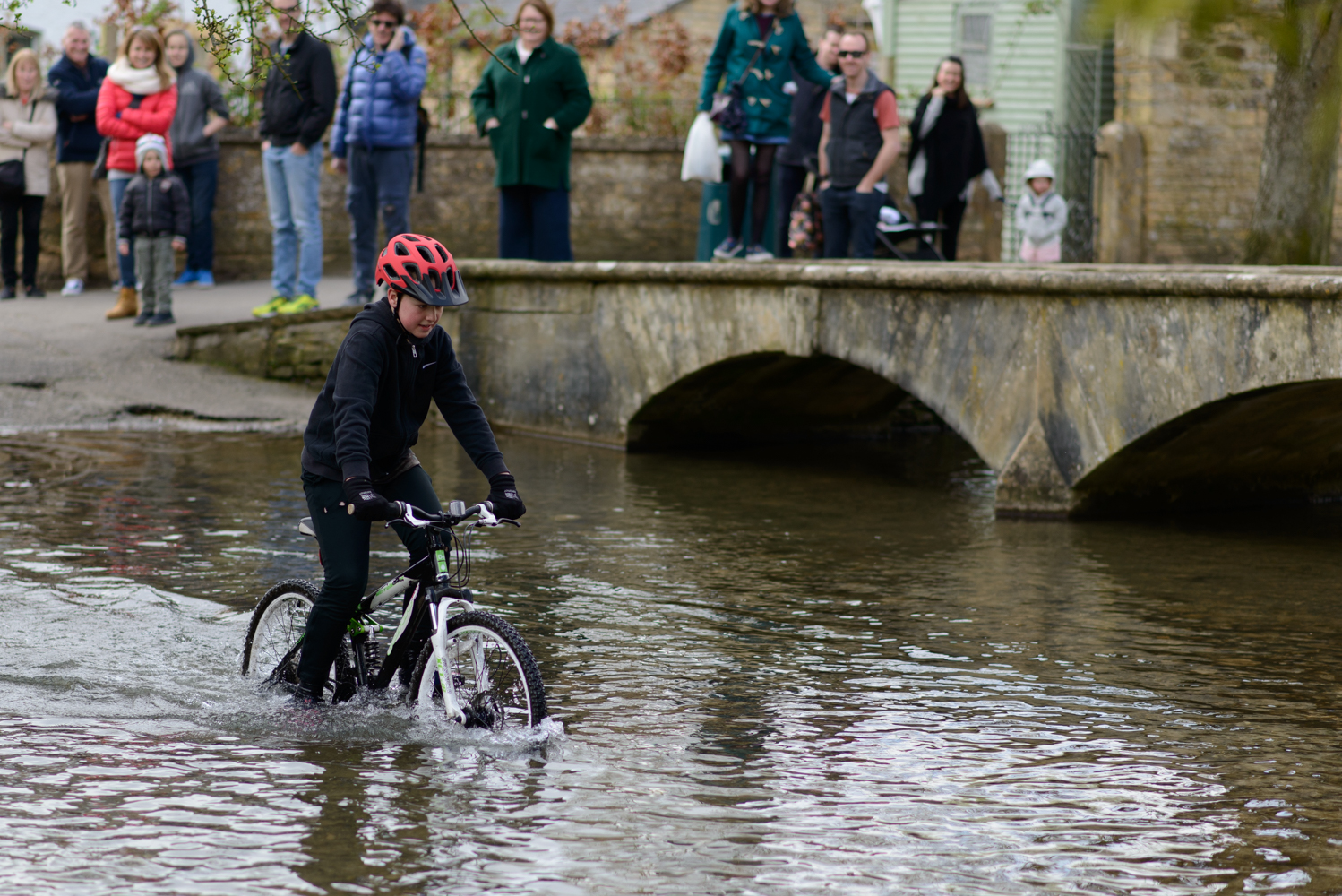
Presentation Layout
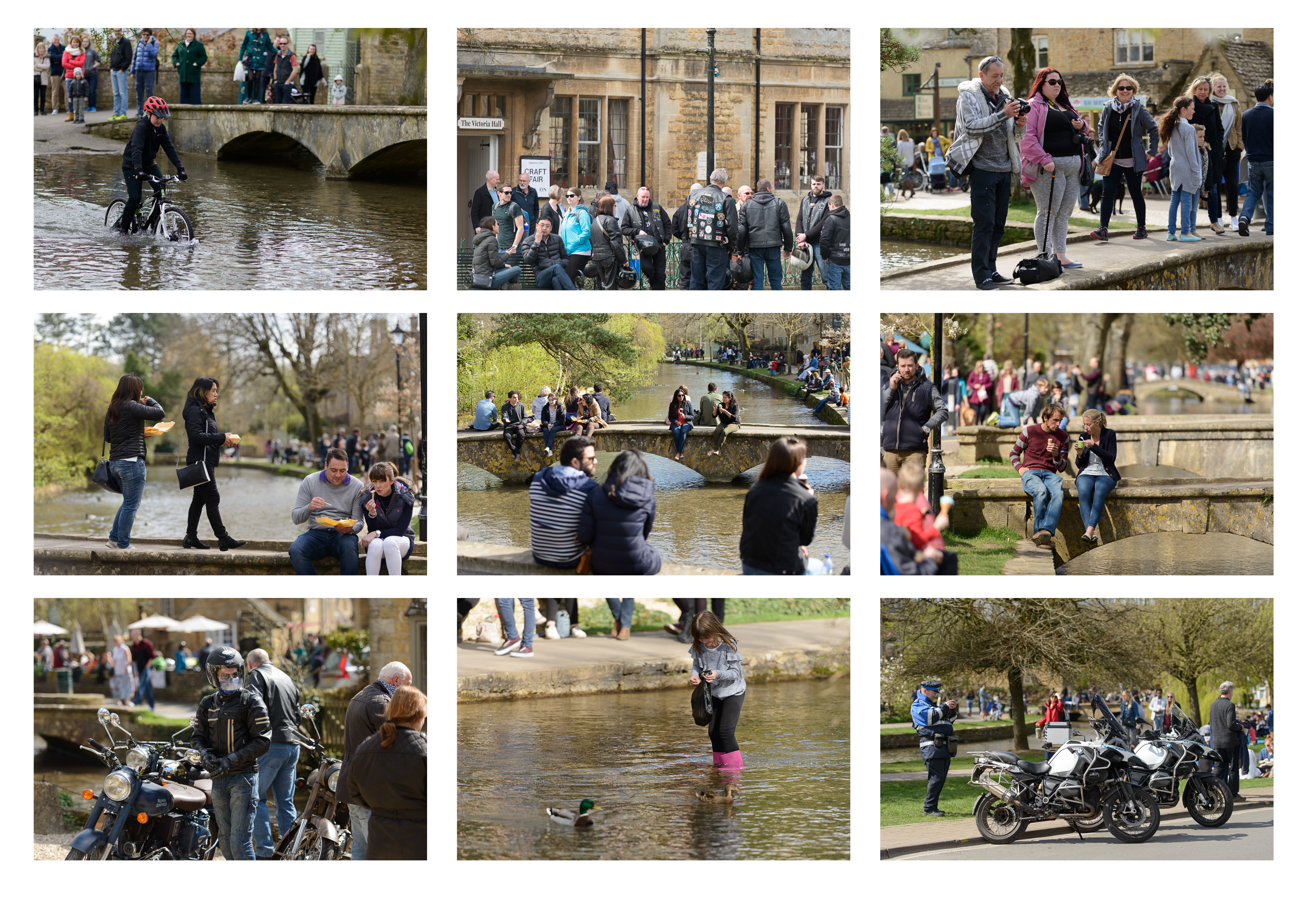
Presented as prints, I would lay out the images as shown in this image.
Contact Sheets
The sheets below provide potential images that were not chosen for the set.