Exercise
Select your longest focal length and compose a portrait shot fairly tightly within the frame in front of a background with depth. Take one photograph. Then walk towards your subject while zooming out to your shortest focal length. Take care to frame the subject in precisely the same way in the viewfinder and take a second shot.
Result
I took these photographs outside the Royal Shakespeare Company in Stratford Upon Avon. The statue is in the theatre gardens and the scene behind the statue is the Theatre House itself.
In the exercise, the size of the person in the frame remain constant. As the lens is lengthened, it is necessary to move further from the subject to achieve this.
In this first image, a wide lens has been used. I was standing very close to the statue so that it filled the frame but the scene behind the statue reflects the wide lens, a large part of the area behind is seen.
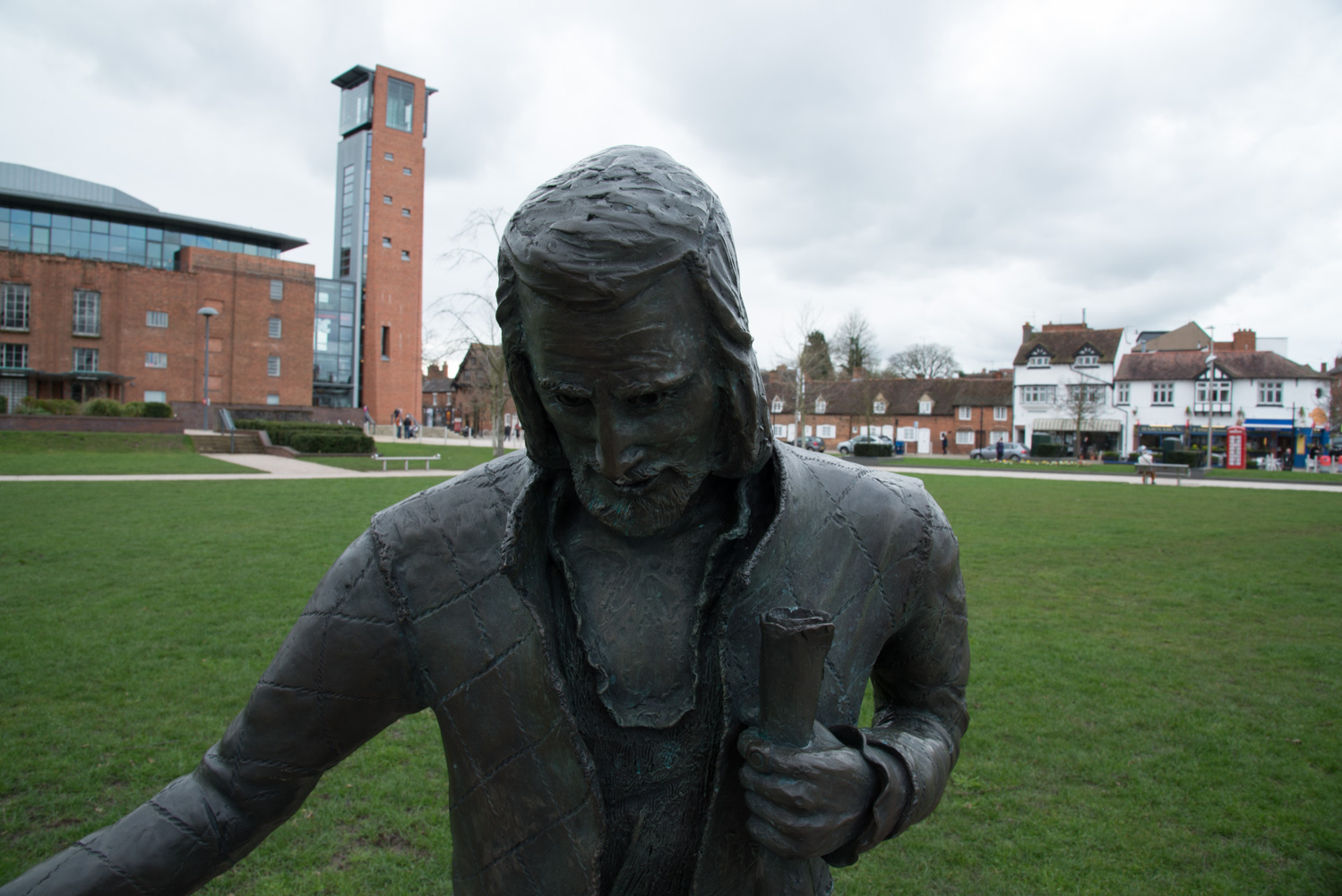
In this second image, a long lens is used. Although I have moved further away from the statue to keep it the same size in the image, the scene behind the statue mirrors this choice of long lens, it is a tight subsection of the view that was visible in the wider lens image.
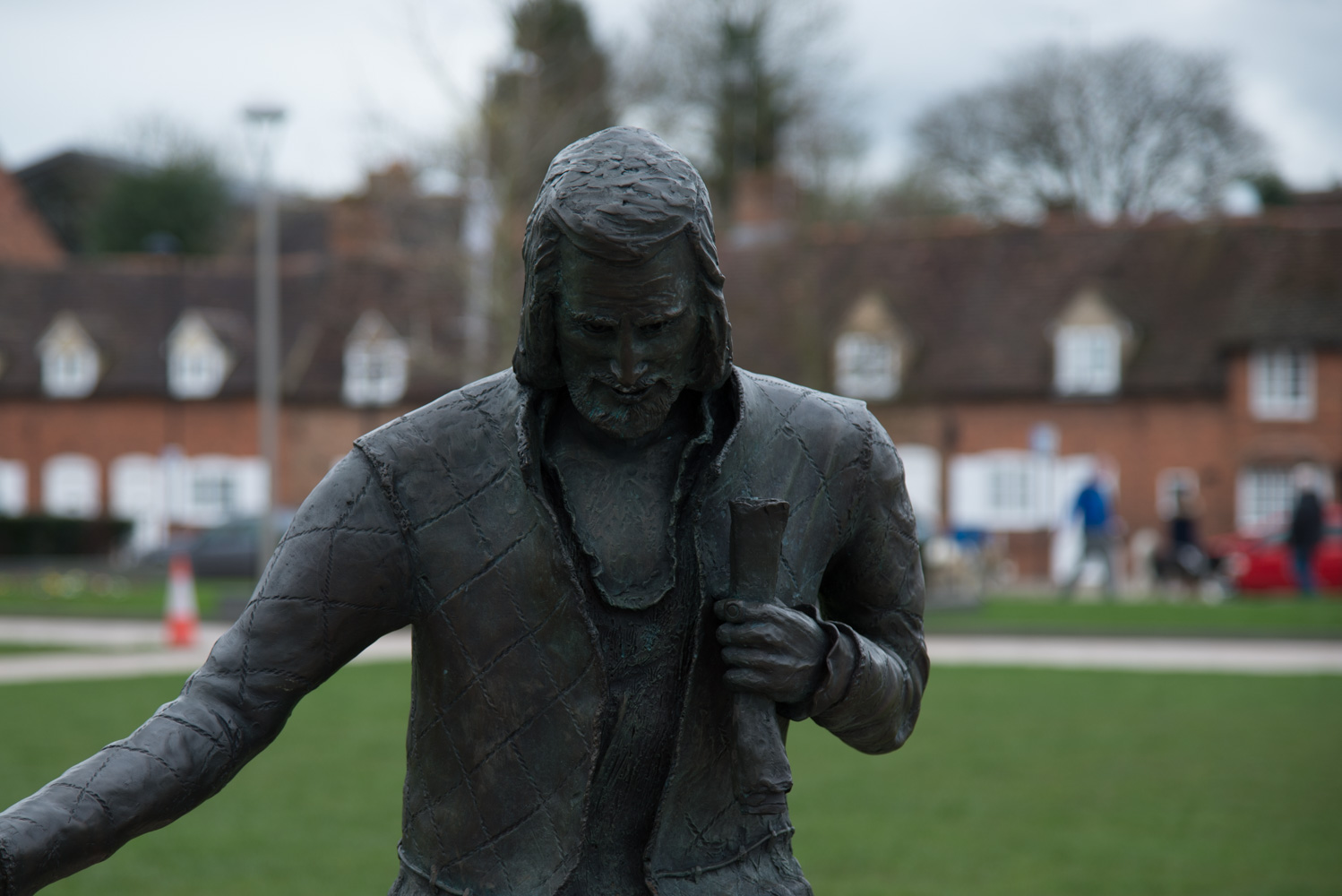
In Exercise 2.1, a part of the image could be ‘enlarged’ by using a longer length but the image perspective of remained constant. Here, the background is changing even though the subject is constant.
Learning Point
When framing a shot with a subject, it is necessary to consider the relationship between the subject and the background. Standing still and zooming in will cause the subject to fill the frame, but it will also narrow the background image. Walking closer to the subject will also cause the subject to fill the frame but it will not be necessary to increase the focal length and therefore the background image will remain wide.
Either effect could be useful depending on the intent of the photographer, it is understanding the two effects to make use of them.