Exercise
Take a good number of shots, composing each shot within a single section of the viewfinder grid. Don’t bother about the rest of the frame! Use any combination of grid section, subject and viewpoint you choose.
When you review the shots, evaluate the whole frame, not just the part you’ve composed. Take the same approach you used to evaluate the point and line exercises: examine the relationship of elements to the frame. Composition is part of form and formal analysis will be a useful skill for your exercises and assignments as you progress through the course.
Results
The gallery below contains the images that I took looking at one part of the frame only. Across the images the daffodils are placed in different segments.
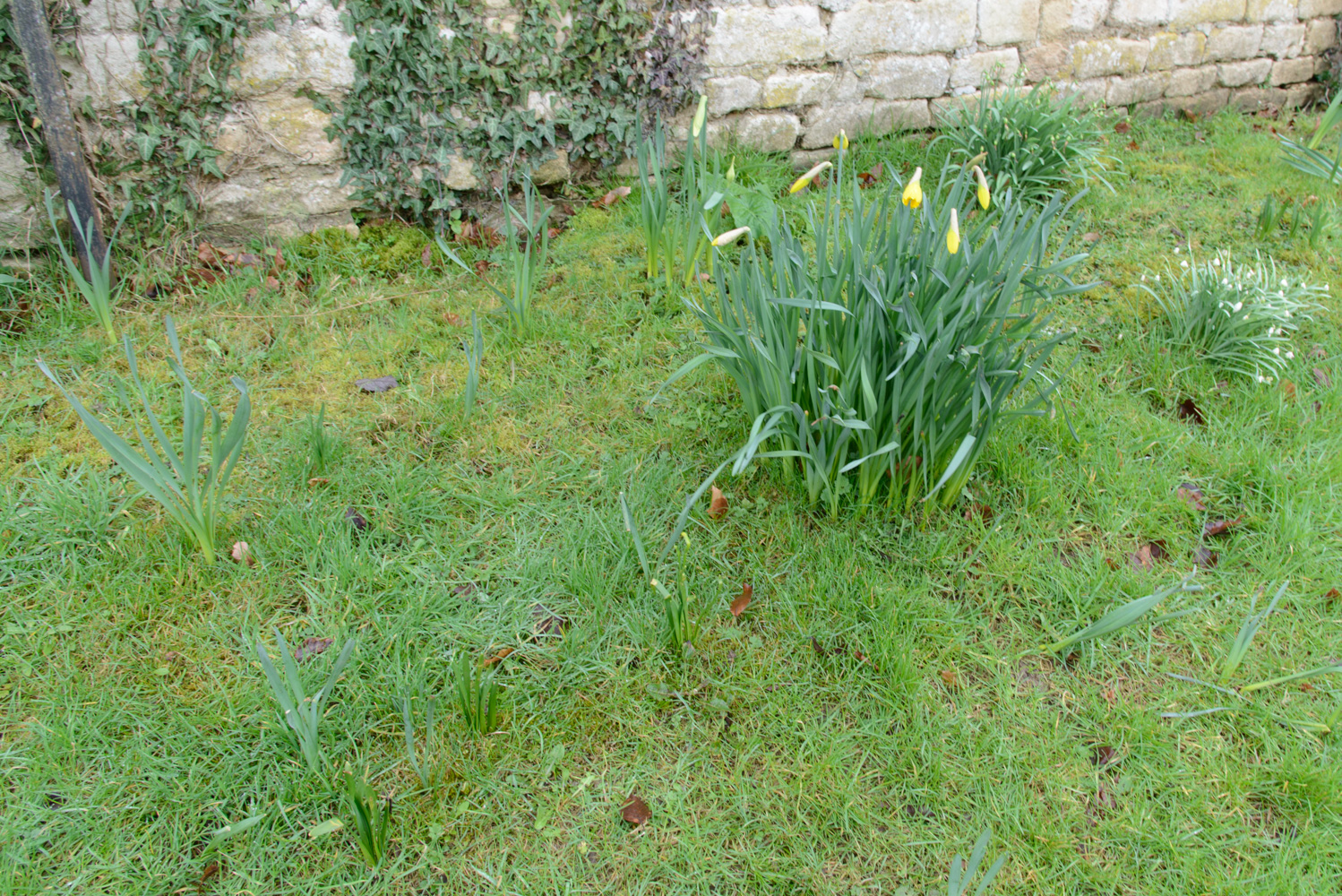
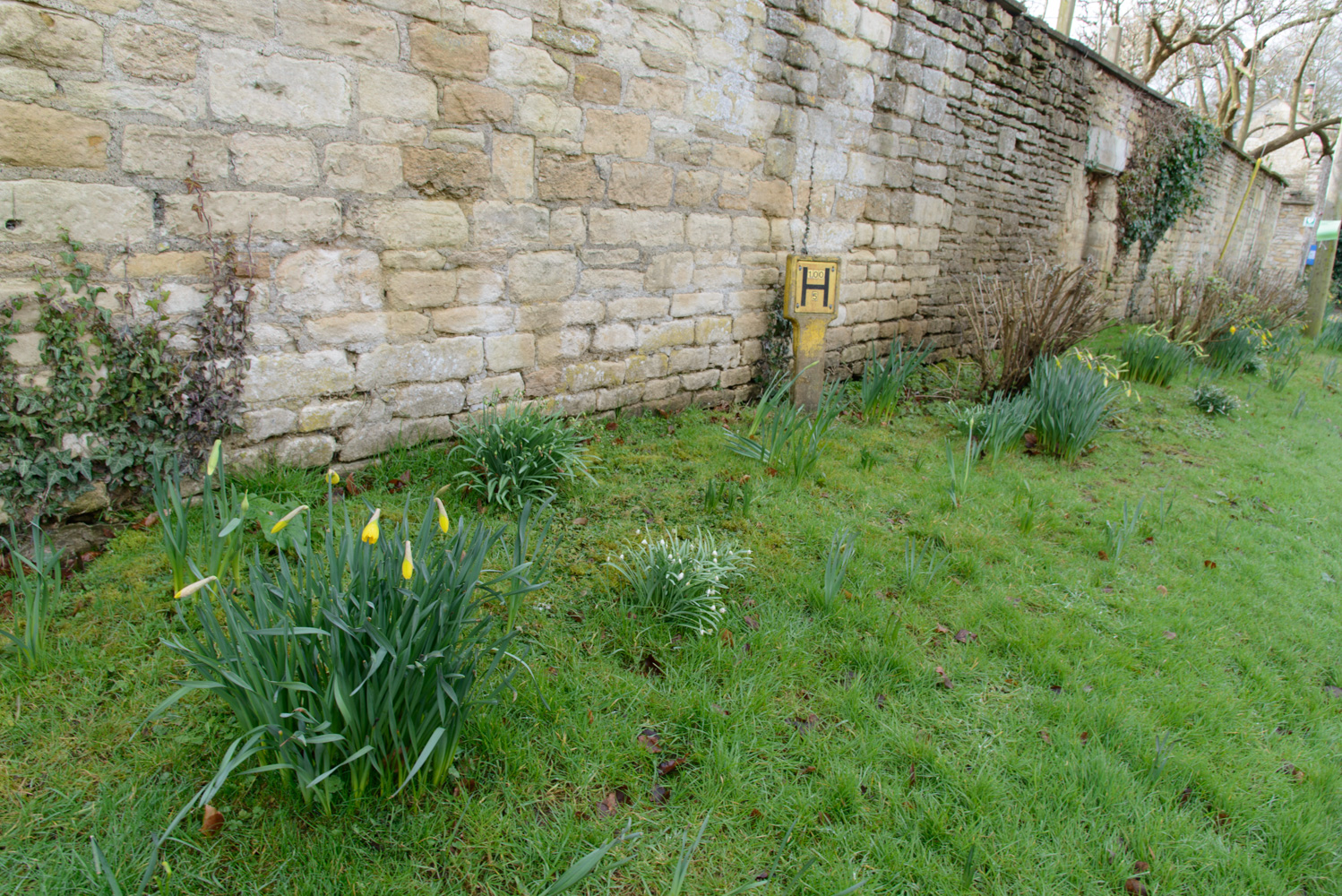
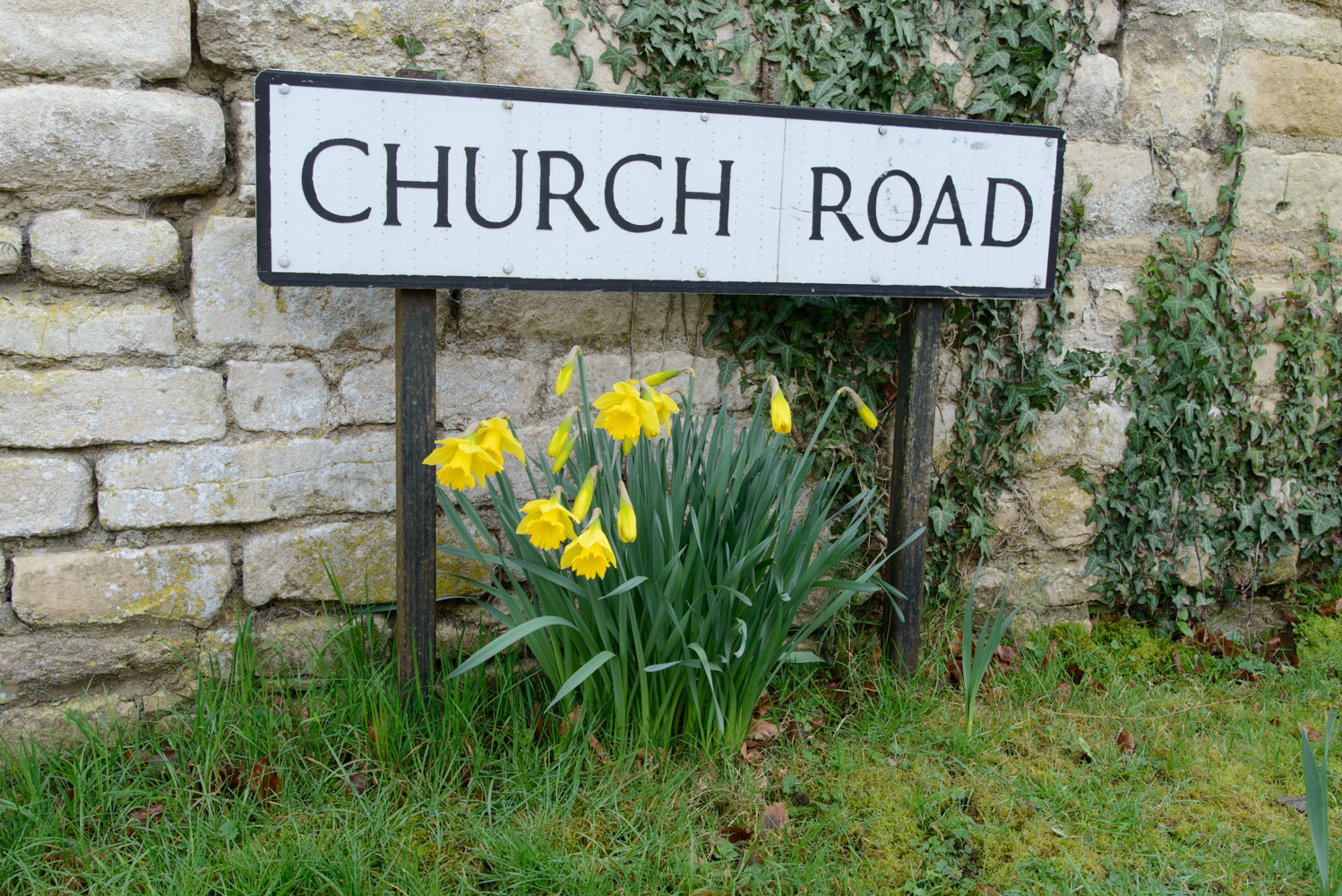
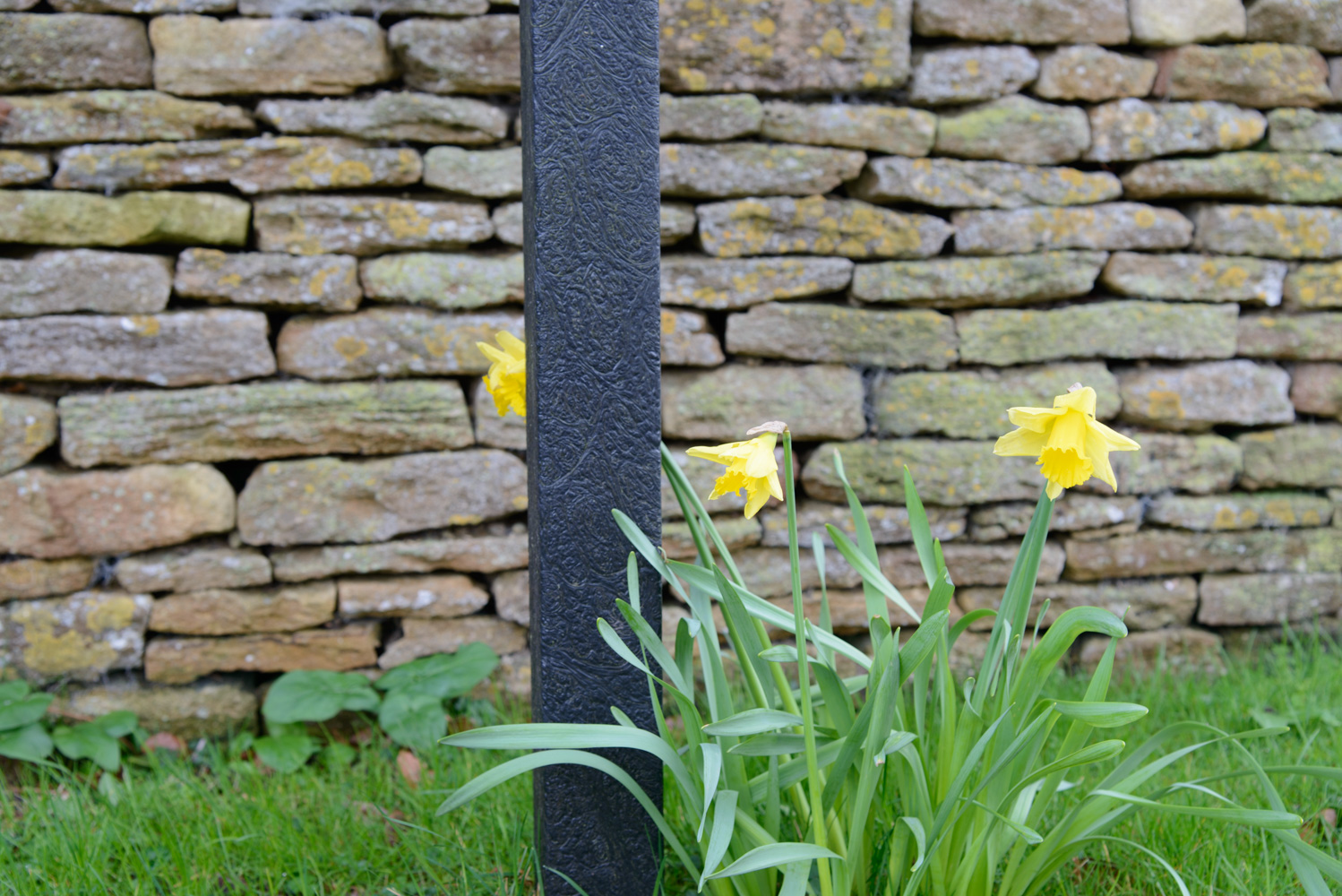
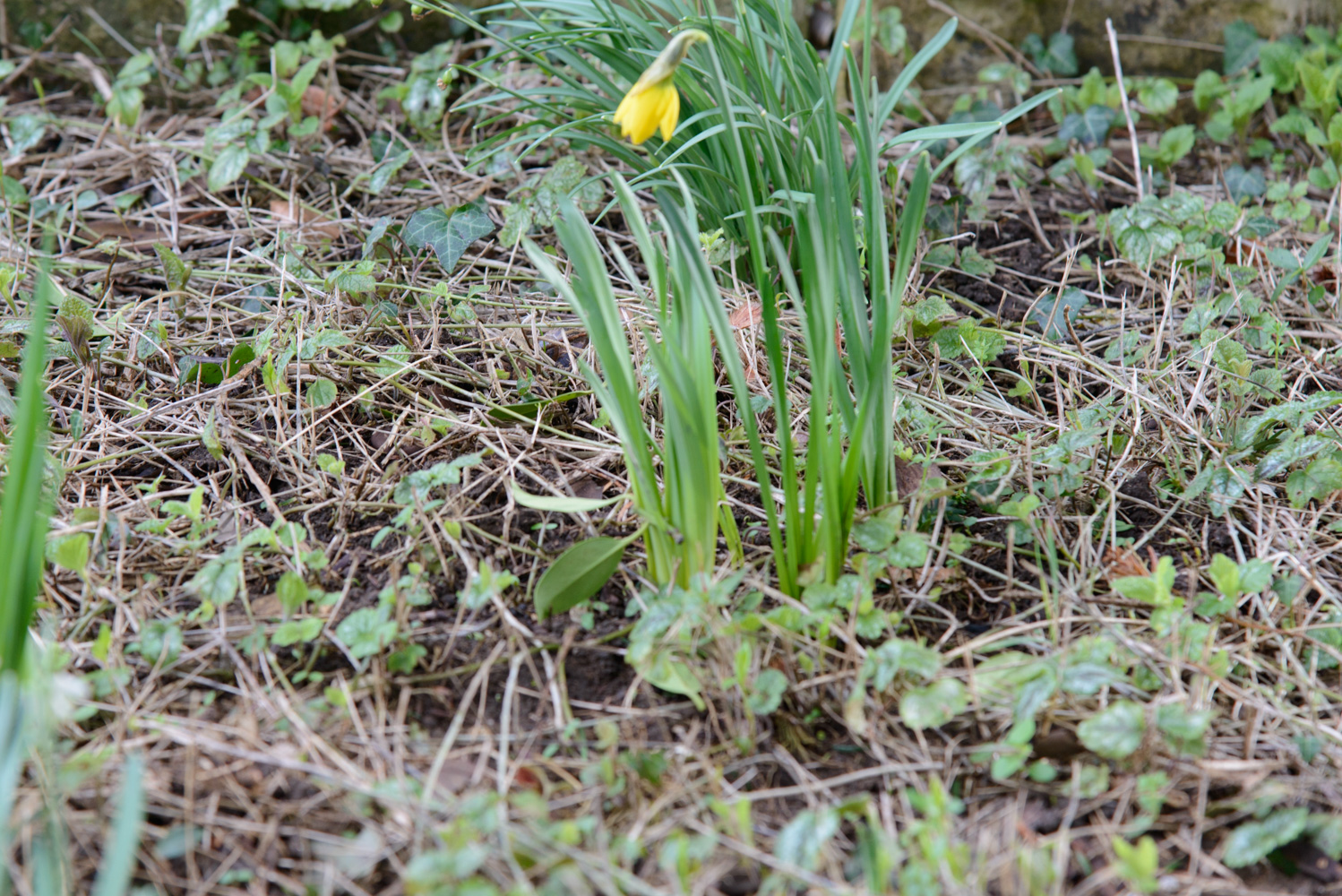
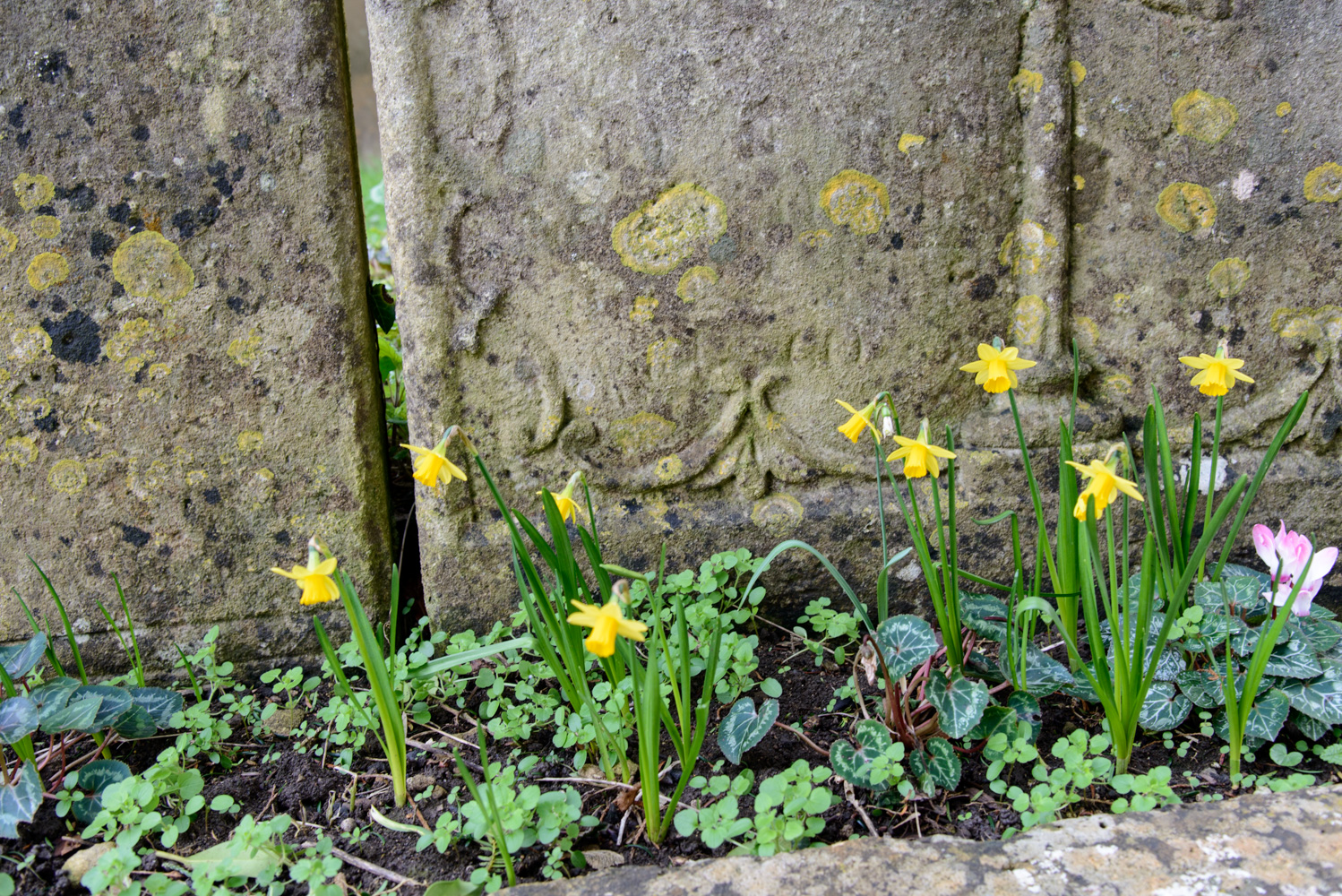

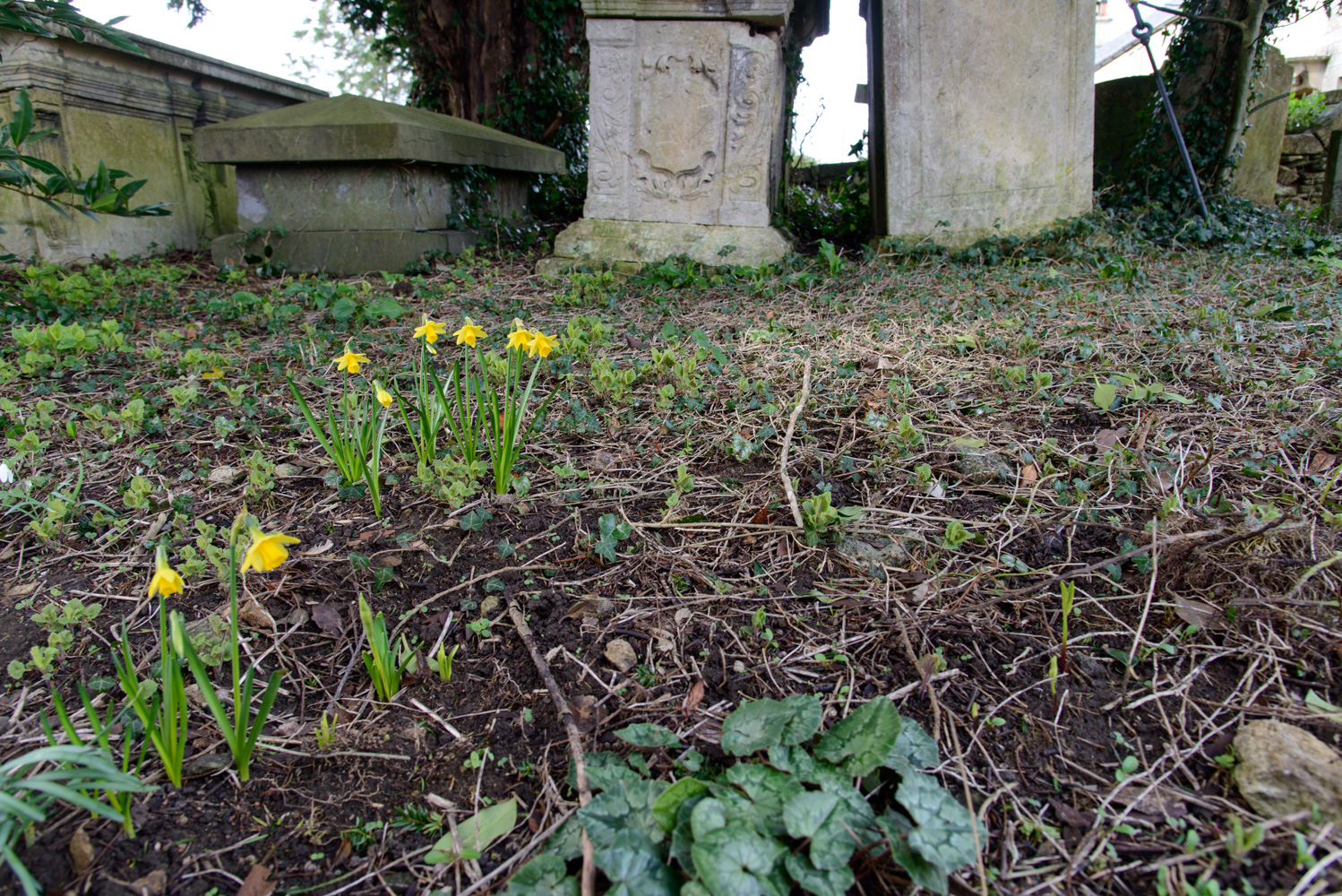
I found this exercise a little odd, looking only at one segment of the frame and ignoring the rest seems a very un-natural thing to do as it means that framing of the image as a whole is almost left to chance.
Of the images shown I have selected some that illustrate this effect.
Image 1
In this image, the daffodils were positioned top right. This has resulted in the majority of the frame (bottom left) being filled with empty grass and a few green shoots. Although this foreground interest is a bit bland, I do find that it gives a nice framing effect to the daffodils themselves and serves to hold my eye on the brighter flowers in top right. There is just enough detail in the bottom left with the green shoots to prevent the area being too bland. I find this critique intriguing as I would never have have created a full frame in the way the full image is shown.
Image 2
In this image, the main flowers are bottom left. The effect of doing this is that a leading line of flowers extends from the front flowers diagonally up and right, out of the picture. In contrast to Image 1, the effect is that my eyes flow along the same line and out of the picture. There is nothing at the end of the line to hold my attention and so I simply lose sight of the picture as a whole. Not an effect that I should be aiming for!
Image 3
Here the image is taken more head on. The flowers are in the centre of the image and they are nicely framed by the road sign. I find that this framing of the flowers creates a pleasing effect and because there are no leading lines out of the image, the sign and the detail in the wall give added interest. I find my eyes wondering all over this image and then always returning to the centre for the flowers. A good outcome.
Image 5
The flower is positioned top-centre and surrounded by undergrowth. As with Image 1, the effect is that the undergrowth creates a frame around the outside of the single flower. I find the brightness of the flower draws my eye at the start, then I inspect the detail of the undergrowth but always drawn back the flower and its brightness. I think the flower is a little close to the top of the frame, I find myself wanting to look a little higher. When viewed as a single segment of the frame (top-middle) the framing works fine, but taken in the context of the whole image, it would benefit from a little more space at the top.
Image 8
This image is a little different to the others in that it has other items of interest elsewhere in the frame. The flowers are positioned bottom left of the frame but then behind them, there are more daffodils and then gravestones. In other words, there is plenty to distract the eye away from the core subject. I find that my eye does start with the main flowers but it quickly moves off, first attracted to the brightness of the second clump of daffodils and then to the interest of the gravestones. I do find that my eye comes back to the subject but with some many things in the frame, I find myself wondering what the intended subject of the image is designed to be.
Learning
Some images worked, others did not. My learning from this exercise is that whilst it is important to look at the positioning of the subject itself (in terms of its location within the whole frame), it is equally important to consider what else is in the rest of the frame. The remainder of the frame can compliment, enhance, or detract from the subject itself.
Composition
Exercise
Select six or eight images that you feel work individually as compositions and also together as a set. If you have software for making contact sheets you might like to present them as a single composite image.
Set
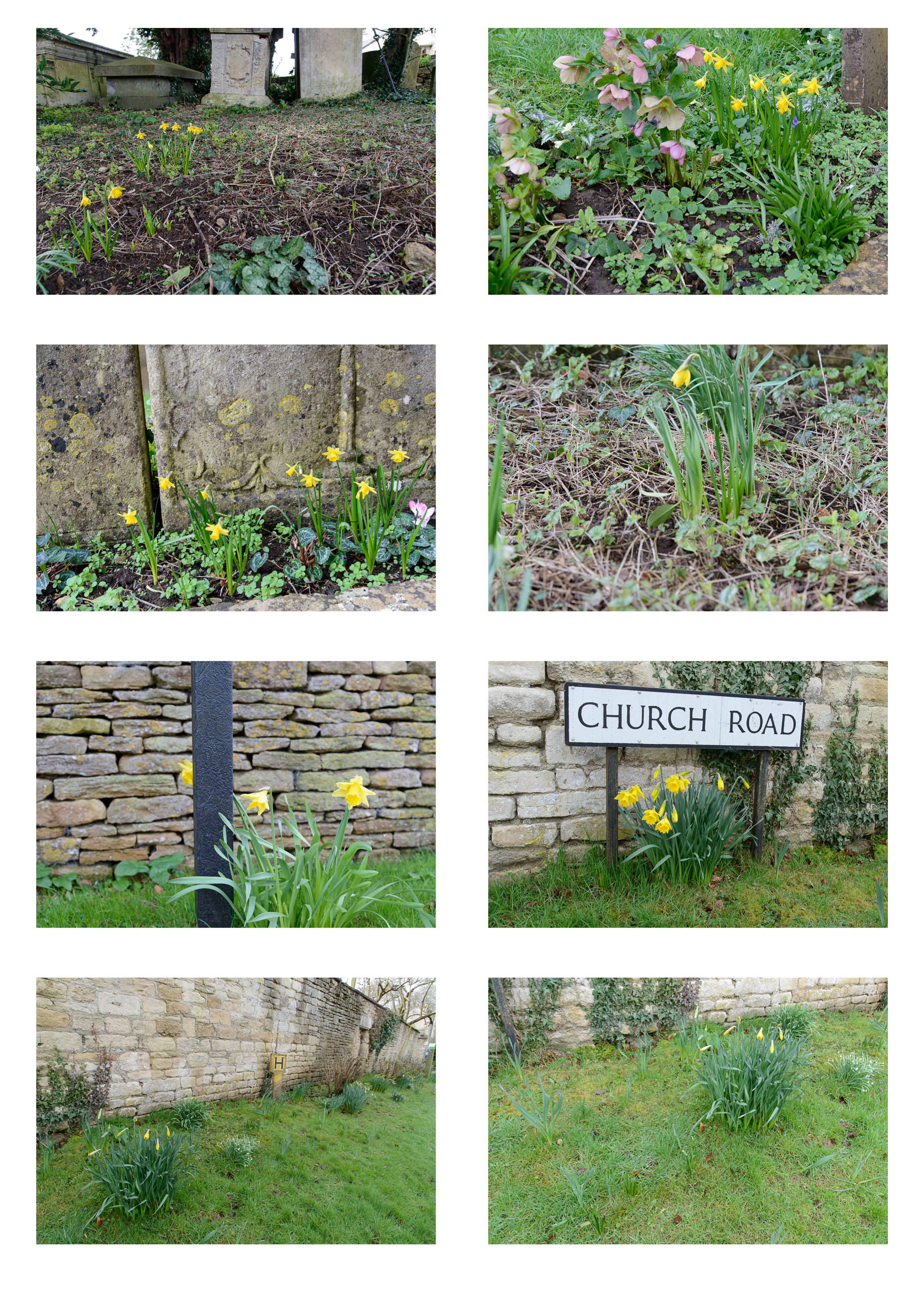
The contact sheet below contains all the images from the above analysis laid out as a set on a contact sheet.
Learning
As each image frames the daffodils differently, I found that as a set, the variety makes them fit together quite nicely. Had I composed all of the images deliberately looking at the frame as a whole, I probably would have framed a lot of these images identically. Doing so would have created a poor set as too many of the images would have looked the same within the collection. I have seen this already in my feedback for Assignment 1; my original submission contained 3 image which had very different content yet were all framed with a path up through the middle of the frame, this created too much sameness.
As a piece of learning, this reinforces the need to frame images differently when considering creating a set of images that will work together as a whole.